Your EV died in Pasadena on the 210 or the 110. You need charge or a 12-volt jump at the car. Charge Pro LA is a referral line. We match stranded drivers with independent local operators. That’s EV roadside assistance across Los Angeles County. Those operators come to you. They quote before they start, and they bill you directly.
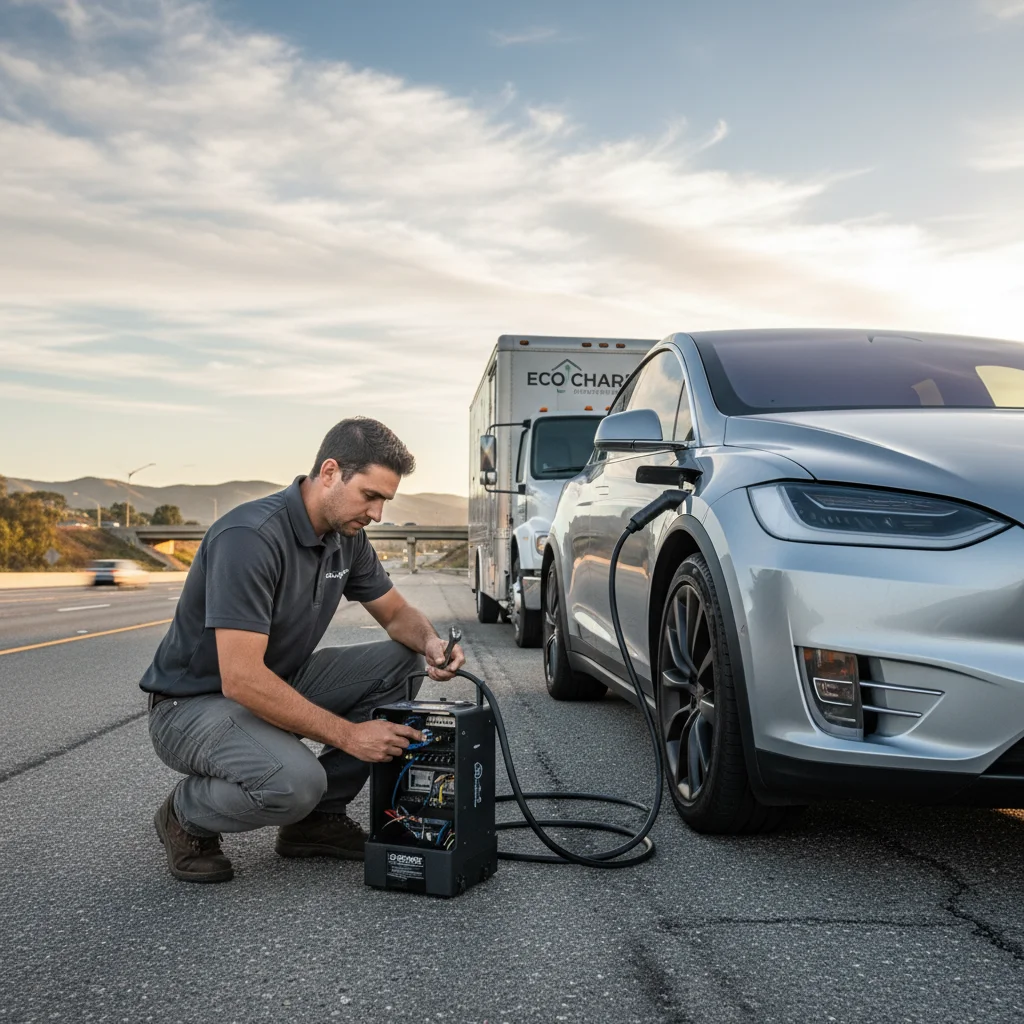
The 210, the 134, and the Arroyo Seco
Pasadena sits in the San Gabriel Valley at the foot of the San Gabriels. The city covers 22.96 square miles. Census ACS 2019-2023 counted 136,462 residents. The 2024 Census estimate is 137,195. The freeway story is the hub, not the headcount. I-210 is the Foothill Freeway along the north side. SR-134 runs west toward Glendale. SR-110 ends here as the Arroyo Seco Parkway.
That parkway has no real shoulder. A stall puts you in a tight historic lane. You’re not on a wide modern breakdown strip. California Vehicle Code 21718 bars stopping on a freeway except in listed cases. A disabled vehicle that’s already summoned help is one of those cases. Keep the hazards on. Stay with the car if you can do it safely. CVC 21809 is the move-over rule. Other drivers must change lanes or slow for warning lights.
Don’t wait for hours and walk away. CVC 22651 lets an officer remove an unattended freeway vehicle. That clock starts at four hours. Call for help, then stay put if it’s safe.
Foothill neighborhoods and valley heat
Hastings Ranch, Linda Vista, and San Rafael climb off the 210. Those grades are short on a map. They’re hard on an EV anyway. San Gabriel Valley summers run hotter than the coast. Cabin AC on a foothill climb is a real range factor. Recurrent Auto’s published research ties heavy air conditioning to lost range in heat. We aren’t posting a Pasadena temperature. Station normals weren’t attached to the research for this page. You can still plan for a faster drop than a coastal cruise.
Colorado Boulevard is Route 66 through town. Old Pasadena sits on that corridor. It’s lights and stop-and-go, not a mountain pass. The drain still adds up with AC on. Lake Avenue and Fair Oaks are the north-south spines. Drivers cut it fine between a public plug and a hill address. The 210 east toward Arcadia keeps following the foothills. If you’re already low, that stretch is where the dash gets honest.
Pre-1980 housing and public plugs
About 73.0 percent of Pasadena housing was built before 1980. That’s the Census ACS 2019-2023 figure. Bungalow Heaven and older streets off Fair Oaks predate garage EV circuits. A lot of the Caltech-area blocks do too. Many owners never added a dedicated Level 2 breaker. They leave the house on public plugs. A full stall or a down unit eats that buffer. That’s the buffer you wanted for the 210.
That isn’t a claim that the city lacks chargers. This research didn’t name specific Pasadena sites, so we won’t either. Check the app you already trust before a longer loop. If the pack is already at zero, you need a mobile boost.
Pasadena Water and Power runs the city’s electric grid. It isn’t Southern California Edison. Nearby SCE cities don’t share that municipal utility. Some neighbors buy generation through Clean Power Alliance. Pasadena doesn’t sit in that list. We could not confirm a current EV rebate on the utility’s own pages. We also couldn’t confirm a special EV rate name. Confirm home-charging programs at cityofpasadena.net/water-and-power before you spend on a panel. Charge Pro LA doesn’t do electrical work. A licensed electrician does. If the house still can’t host a circuit, mobile charging is the backup. We’ve explained an old panel and a mobile charge for LA County nights like that.
Rose Bowl parking, Caltech, and a car that won’t wake
The Rose Bowl district fills for games and big events. A long sit in a hot lot is rough on the small 12-volt battery. That 12-volt pack runs computers, locks, and contactors. When it dies, the car acts like a brick. The drive battery can still hold energy. Caltech lots and Old Pasadena structures show the same pattern after a long day. A Huntington Health visit can look identical when you return and nothing wakes.
An empty traction pack is a different failure. You’ve used the last rated mile. The car won’t move until it takes charge. A jump won’t fill a zeroed drive battery. A Level 2 boost won’t revive a 12-volt that’s already failed again. Tell the operator which one you’re seeing.
Private garages can still tow. CVC 22658 sets the private-property rules: posted signs, written authorization, and notice. California doesn’t publish one statewide tow-rate cap we could verify. Don’t guess a number. If you’re in a structure, stay with the car. Wait until a quote is on the table.
Freeway patrol, a tow, or a charge at the bumper
Metro Freeway Service Patrol is free to motorists. Caltrans, the California Highway Patrol, and LA Metro run it. It roams congested Los Angeles County freeways. Published hours are typically weekday peak commute windows. There’s extra coverage on some construction zones and busy corridors. Dial 511 and say Motorist Aid.
The published help list starts with a gallon of gas. It also covers a radiator refill and a tire change. It’ll tow you at no charge to a CHP-chosen safe spot. That list doesn’t name mobile EV charging. It doesn’t name out-of-charge battery help. We read metro.net and chp.ca.gov on 2026-09-18. An EV at zero sits outside that menu. The exception is a free tow to a safe location.
CHP can also dispatch a rotation tow for a disabled freeway vehicle. A tow still leaves you needing a working plug. If the only problem is an empty pack, you need charge at the car. Out-of-charge recovery is that bumper boost. For the parkway itself, read what to do when you run out on the 110.
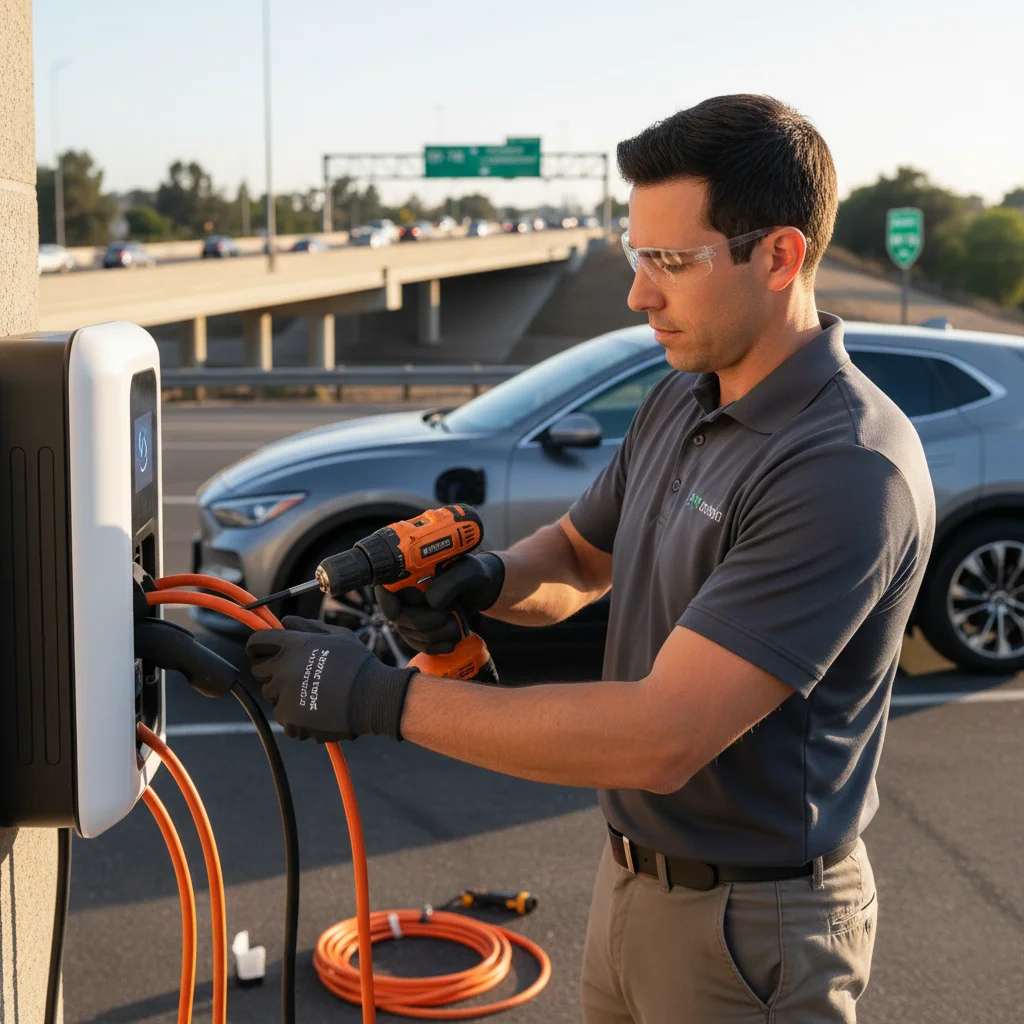
What the operator brings, and what this brand doesn’t
Charge Pro LA holds no contractor license for this work. We don’t own trucks, a yard, or charging gear. We don’t employ technicians. We don’t publish hours, and we don’t promise an arrival clock. The brand connects you with independent operators who already work Los Angeles County. The pros we connect you with are licensed and insured. Coverage includes Pasadena. The Pasadena charging hub is the city page for this patch.
On these calls, mobile EV charging is a 240-volt Level 2 source at the car. Teslas take a native NACS plug. Other EVs use a CCS or J1772 adapter. A typical boost adds 10 to 20 miles of range. Charging time is usually 15 to 30 minutes. That’s plug time. It isn’t a travel estimate. The operator quotes before starting. They bill you directly. We never set that figure.
They can also jump or replace a dead 12-volt battery on site. That covers Tesla and every major EV brand. If something else is wrong, say so. A flat or a stuck charge port may still need a shop. A drivetrain code might too. An empty pack alone doesn’t.
On the 210, the operator sets up behind you with warning triangles. On a quiet street in Bungalow Heaven the scene is calmer. The gear doesn’t change.
Say the exit, not just the city
“Pasadena on the 210” wastes the first question. Name Fair Oaks, Lake Avenue, or the 134 junction. On SR-110, say Arroyo Seco Parkway. Don’t say Harbor Freeway. Those roads share a number and aren’t the same. If you’re in Linda Vista, San Rafael, or a Colorado Boulevard garage, say that too. Don’t walk the parkway looking for a plug. There’s no real shoulder to hike.
The 210 east drops you into Arcadia fast. We’ve got EV roadside assistance in Arcadia for that side of the foothills. South you’re toward Alhambra, Monterey Park, and El Monte. West on the 134 you’re in Glendale’s pattern. The operator still needs the city and the ramp.
When this is the right call
Call when you’re at zero on the 210 or the 134. Call when you’re at zero on the Arroyo Seco too. Call when the 12-volt has killed wake-up in a Rose Bowl lot. Call when you’re on Lake Avenue and you don’t trust the remaining miles. Nobody here scolds the math.
Reach Charge Pro LA at (858) 925-5546. We’ll match you with a local operator. They quote the job before they touch the car.