The 57 and the 60 meet in the hills at Diamond Bar. If the pack just hit zero there, you’re in a disabled-vehicle stop. This isn’t a parking problem. Get fully onto the right shoulder. Switch the hazards on. Stay with the car while you call for help.
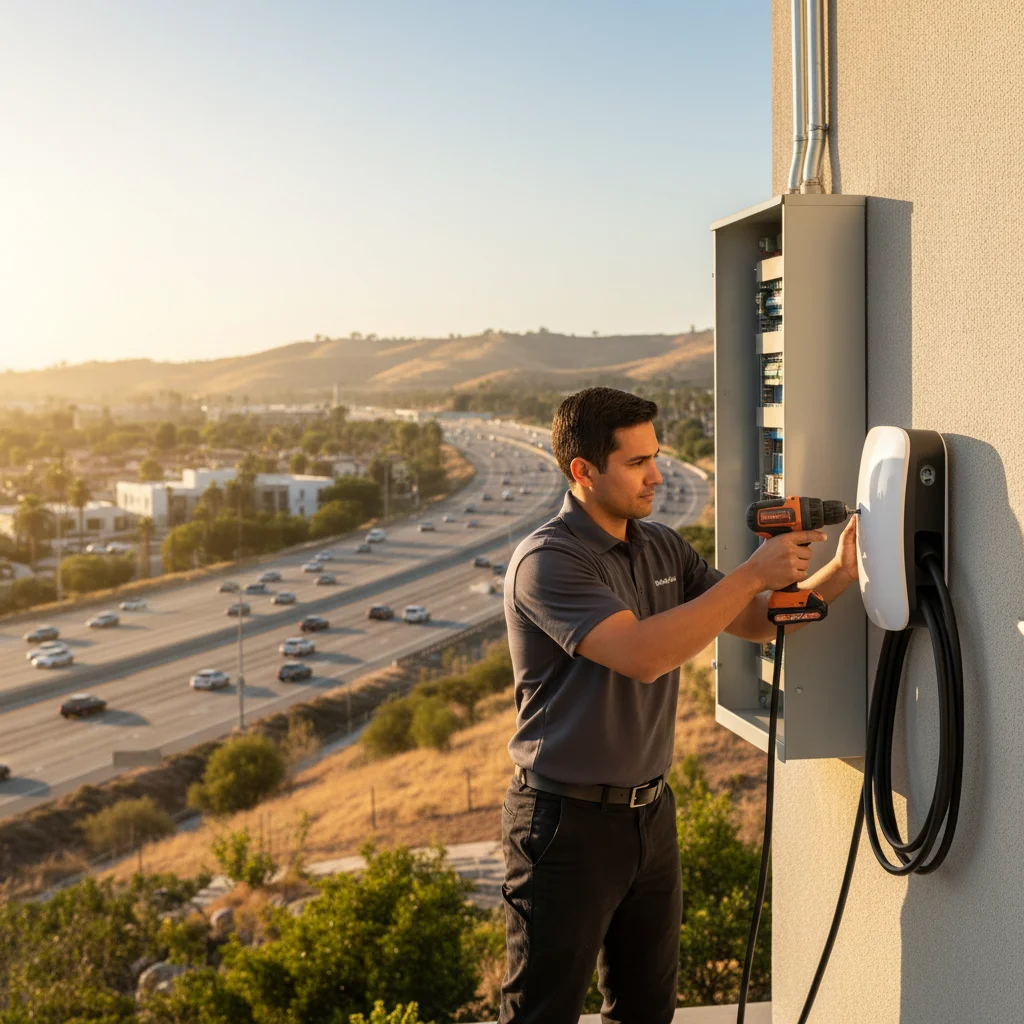
Why packs fade at the 57/60 interchange
Diamond Bar sits on the eastern edge of Los Angeles County. The city is built around the 57/60 interchange. That’s the Orange Freeway crossing the Pomona Freeway. Commuters use both roads for Orange County and Inland Empire trips. Freight uses them too. None of that’s a coastal cruise.
Foothill grades are the first drain. You’re climbing as you come in from Pomona on the 60. You’re climbing again on the 57 as the road stacks. Regenerative braking helps on the way down. It doesn’t pay you back on the way up.
Heat is the second drain. Diamond Bar sits in the San Gabriel Valley. Summers here run well above the basin. They’re hotter than the coast and cooler than the desert. Cabin AC on a slow freight crawl pulls real energy. A range number you trusted at 8 a.m. can look worse at 4 p.m.
A Westside trip on flatter pavement doesn’t train you for this. Neither does a morning run down Grand Ave. The interchange is where those loads stack.
The 57/60 knot, not one straight road
The 60 is the east-west spine. It carries people and trucks across the San Gabriel Valley. West of here it runs toward West Covina. East of here it feeds the same commute toward Pomona.
The 57 is the north-south cut. It’s signed as the Orange Freeway. Drivers use it for a long commute that never quite feels local. When both roads are packed, the stack turns into a rolling parking lot. Low speed, grade, and AC hit a thin pack first.
Surface streets matter once you exit. Grand Ave and Diamond Bar Blvd are the named corridors in town. The Country, Diamond Bar Village, and the golf-course district sit off those roads. Leave the freeway with 3% left and you still have hills in the city. Don’t treat an exit as a save until the car is plugged in.
About 53,750 people live in Diamond Bar, per the Census ACS 2019-2023 count. Cal Poly Pomona sits next door in Pomona. Campus traffic feeds both freeways on class days. This interchange isn’t a Metro ExpressLanes corridor. Those lanes run on the 10 and the 110. FasTrak rules from the El Monte stretch don’t apply here.
Empty pack, or a car that won’t wake
Two failures get called in as “the EV died.” They aren’t the same job.
An empty traction pack is a range problem. The car rolled until the high-voltage battery had nothing left. Hazard lights still work for a while. Doors usually still open. You need energy at the charge port.
A dead 12V is a wake problem. The big pack can still hold charge. The small battery that runs computers and latches doesn’t. The car looks bricked. Screens stay dark. You may not get in the usual way. A jump or a 12V swap on site is the first fix, not a fill.
If you’re not sure which one you have, say that. Tell the operator whether the dash still lights. Tell them whether the charge port will open. Don’t guess a percent if the screen is black.
The pros we connect you with handle Tesla and every major EV brand. Teslas take a native NACS plug. Many other EVs need CCS or J1772. That’s adapter work, not a different rescue.
Get off the lane, then stay put
California Vehicle Code 21718 bans stopping on a freeway. A disabled vehicle is an exception when you’ve called for help. Your empty EV fits that exception once another vehicle is on the way. You’re not parked. You’re disabled.
Move as far right as you can before the car quits. Hug the shoulder line. Don’t straddle a lane to protect the rims. A live lane behind you is worse than a rough verge.
Hit the hazards while you’re still rolling if you can. Traffic behind you needs that warning early. CVC 21809 is the move-over law. Other drivers must change lanes or slow down. That applies to a stopped emergency vehicle, tow, or Caltrans truck with lights. Your hazards don’t replace that law. They still help people see you.
If you stop on the right shoulder, get out on the passenger side. The driver’s door puts you in the traffic gap. Stay behind the right rear corner. Don’t walk the shoulder looking for a better spot.
Stay with the car. CVC 22651 lets an officer remove a vehicle left unattended on a freeway. Four hours or more on the freeway is enough. Walking toward Grand Ave doesn’t help the next truck see you. It also makes you harder to find.
Call CHP if you’re in a live lane or the shoulder is tight. 911 is the right number for that. Give a direction, a mile marker, and the last exit you saw. “Diamond Bar, 57/60 interchange, eastbound 60” is usable. “Somewhere by the 57” isn’t.
What Metro’s freeway patrol can do
Metro Freeway Service Patrol is the free shoulder service on congested Los Angeles County freeways. Caltrans, CHP, and LA Metro run it together. You reach it by dialing 511 and saying “Motorist Aid.”
FSP can change a flat. It can tape a hose and refill a radiator. It can hand a gasoline driver a gallon of gas. It can tow a disabled vehicle, at no charge, to a CHP-chosen safe spot.
Its published list doesn’t include mobile EV charging. It doesn’t list an out-of-charge pack fill. That’s an observed gap in the published materials. We checked metro.net and chp.ca.gov on September 18, 2026. If the pack is empty, FSP’s useful offer is usually the free tow. That tow goes to a CHP-chosen safe location.
Coverage is typically weekday peak hours, plus some construction zones. Midday and weekend patrols exist on the most congested corridors. Confirm whether a truck is on your segment when you call 511. A CHP rotation tow can move a disabled freeway vehicle too. That still isn’t a charge.
Charge in place, or wait on a tow
A tow gets the car off the shoulder. It doesn’t put miles back in the pack. Flatbed is the safe way to move a dead EV. Charge Pro LA doesn’t tow.
A mobile Level 2 stop is the other path. An independent operator brings a 240-volt source to you. They plug in on the shoulder or in a safe turnout. You get a quote before work starts. You pay that operator directly.
Typical charging time is 15 to 30 minutes. That window is time on the plug, not a promise about when someone arrives. The usual result is about 10 to 20 miles of added range. That’s enough to roll to a public stall you choose. It can also get you home if you’re close. It isn’t a full pack.
Don’t treat the next charger as a known distance. We didn’t confirm a named site at this interchange for this page. Open your charging app. Pick a stall that’s actually available. Tell the operator where you plan to go.
If you died in a lot on Diamond Bar Blvd, stay with the car. Private-property tows follow CVC 22658. Lots need the required 17-by-22-inch entrance signs, plus written authorization. If you return before the car leaves the lot, they have to release it. We didn’t confirm a Diamond Bar lot’s posted rate, and we won’t invent one. Read the sign.
The 10 has the same east-county commute problem. See stranded on the 10 in the San Gabriel Valley. City-level help for this town is in our Diamond Bar EV roadside assistance guide. The Diamond Bar charging hub is the local map page.
Charge Pro LA is a referral line. We match stranded drivers with independent local operators. We don’t own trucks. We don’t employ technicians. We don’t hold a contractor license for the work. The pro who shows up quotes you, does the job, and bills you.
Mobile EV charging is the 240-volt visit. Out-of-charge recovery is the same idea when the pack is already at zero. If the 12V is dead, the charge port may not cooperate. That’s a jump-first job. Don’t force the door or the latch.
No one here can promise an arrival clock. Traffic on the 57/60 interchange is the reason you stalled. Ask for a quote. Ask what range they expect to add. Then decide. The pros we connect you with are licensed and insured. That claim is about the network, not Charge Pro LA.
What to tell the operator
Give a location that a stranger can drive to. Direction, freeway, and the last exit beat a neighborhood nickname.
Useful: “Westbound 60, Diamond Bar, right shoulder, just west of the 57 connector.” Also useful: “Northbound 57 through the 60 stack, right shoulder.” Less useful: “Near The Country” with no freeway name.
Add the street if you’ve already exited. Grand Ave and Diamond Bar Blvd are the names people actually use. Give the car: year, make, model, and color. Add the connector if you know it. Give the state of the car, including percent if the screen still shows one. Note whether doors open and whether the port opens. If the shoulder is narrow or you’re in a gore point, say that too.
If CHP is already on scene, say so. If FSP already offered a tow, say so. You can take a free FSP tow to a safe spot. You can still call for a charge after you’re off the freeway.
If you’re still rolling and the number is falling
Don’t hunt for a stall from the left lane. Move right. Slow down smoothly. Pick a real exit with a place to sit. Skip a connector that dumps you back into the stack.
Turn off extra loads you don’t need. Cabin AC is the obvious one in San Gabriel Valley heat. You still need enough cool air to stay safe. If you can reach a parking lot on Grand Ave, do that. A lot is a better work site than a connector ramp.
If you make it home to The Country with a sliver left, plug in. Same if you’re in the golf-course district. Do it before the 12V starts a second drama. We serve every city in Los Angeles County. That includes Diamond Bar, Pomona, West Covina, Glendora, Azusa, and Whittier.
Frequently asked questions
What do I do if my EV dies on the 57/60 interchange?
Pull as far right as you can and turn on the hazards. Exit from the passenger side if you’re on the right shoulder. Stay with the car. Call CHP if you’re blocking a lane or the shoulder is tight. Then call for a mobile operator. CVC 21718 treats a disabled EV that’s waiting for help as a legal stop. Don’t walk toward Grand Ave to find a plug on foot.
Can a mobile charger help on the 60 through Diamond Bar?
Yes. Independent operators in this network bring a 240-volt Level 2 source to the car. They carry a native NACS plug, plus CCS or J1772 adapters. That covers Tesla and other major EVs. You get a quote before anything starts. Typical plug time is 15 to 30 minutes for about 10 to 20 miles of range. That’s charging time, not an arrival time.
Does Metro Freeway Service Patrol charge an empty EV?
Not on the list it publishes. FSP is free. It handles gas, tires, coolant, and a tow to a CHP-safe spot. Dial 511 and say “Motorist Aid” if you want that truck. Its motorist-assistance list doesn’t name mobile EV charging. That check was on metro.net on September 18, 2026. An empty pack still qualifies you for the free tow off the freeway. It doesn’t fill the battery.
You’re on the 57 or the 60 right now. Call Charge Pro LA at (858) 925-5546. We’ll connect you with a local operator who quotes the job before it starts.