You’ve just finished the SR-14 climb, and the estimate is collapsing. Lancaster sits at the top of that grade. It’s over 2,300 feet up in the Antelope Valley. Triple-digit summer heat can finish a thin buffer. A near-freezing night can do the same. The cabin AC or the heater has been on the whole way. That’s the search behind EV roadside assistance in Lancaster. Drivers want enough miles to reach The BLVD or Avenue I.
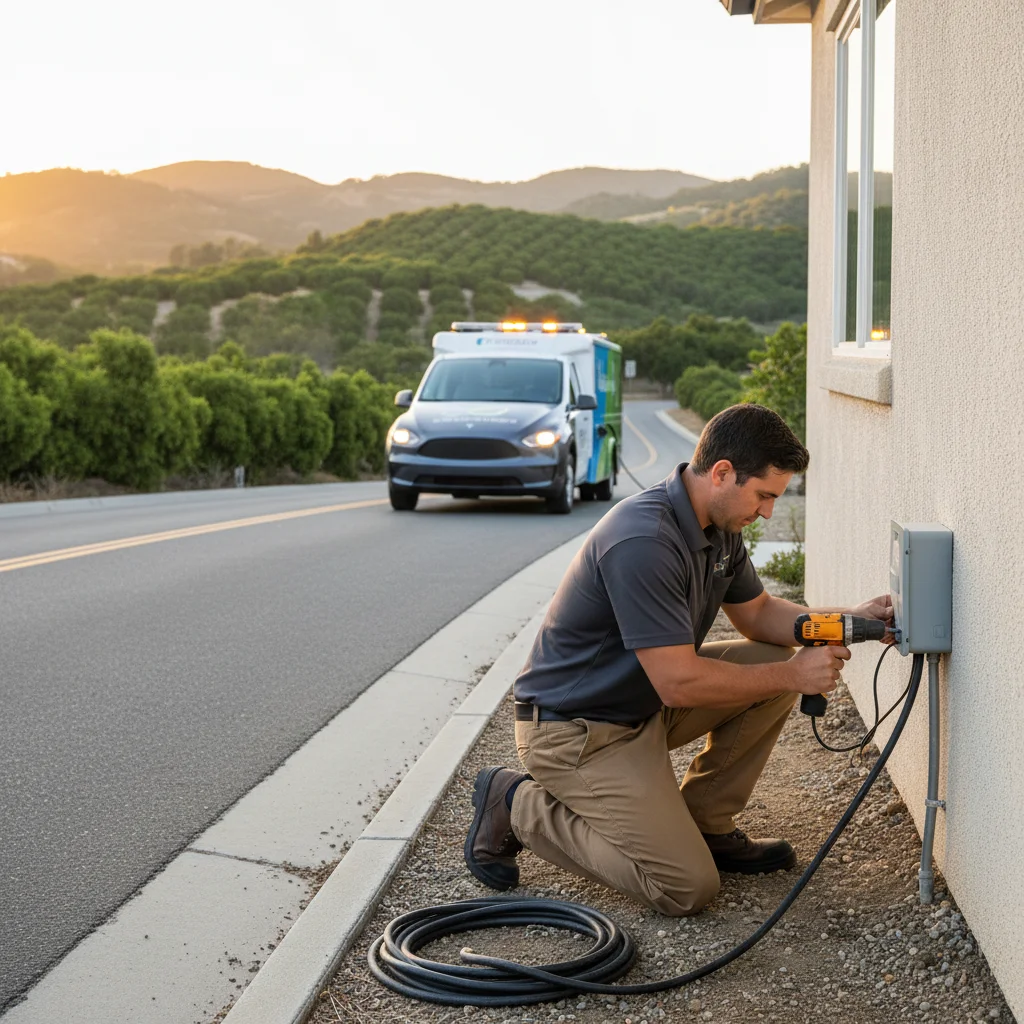
High-desert heat and cold cut the sticker number
Lancaster covers about 94 square miles of high desert. The Census ACS count for 2019 to 2023 is 170,013 people. The 2024 Population Estimates Program lists 167,426. About 34 percent of housing here was built before 1980. Elevation is over 2,000 feet across town. The freeway approach sits over 2,300 feet. City ZIPs run 93534, 93535, 93536, and 93551.
Recurrent Auto published the temperature figures worth citing. Across more than 30 models, EVs kept about 78 percent of rated range at 32°F. At 20°F the average fell to about 70 percent. Cabin heat is the main drain. AAA’s cold-weather tests found about 10 to 12 percent loss from the cold alone. Running climate control pushed that loss toward 40 percent. Recurrent also reports that summer heat and heavy AC cut range. A heat pump helped in the cold versus a resistive heater. The published gain was roughly 10 percent at 32°F.
Official Lancaster station normals weren’t confirmed for this page. Check weather.gov for today’s high and low. The National Weather Service Los Angeles/Oxnard office is the agency that describes the pattern. High-desert days run hot enough that the compressor rarely rests. Winter nights get near freezing. Both chew the miles you thought you had left after Acton or Santa Clarita.
A day that starts in Santa Clarita can end on The BLVD. That stacks the climb with climate load. Palmdale sits just south on the same desert floor. Acton sits down the 14. Castaic and Stevenson Ranch sit over on the I-5 side. For the county-wide version of this problem, read how to care for an EV battery through LA heat, cold, and grades.
SR-14, SR-138, and the in-town streets
The Antelope Valley Freeway is the spine. Drivers also use SR-138, Sierra Highway, Avenue I, and 10th Street West. The Metrolink line cuts through town. Those are the corridors people stall on. They’re long, and the climate leaves little margin.
West Lancaster and the Quartz Hill edge send daily trips toward Palmdale. Other drivers drop back down the 14. The Fox Field district sits on the west side. The Poppy Reserve area sits farther out. Downtown Lancaster, The BLVD, is the in-town core. A short hop between those areas still costs more in July or January. The same miles feel easier on a mild coastal night.
People often lose the last miles on the grade before city streets. If that’s you, start with out of charge on the 14 near Acton. If you made Palmdale and then stopped, use EV roadside assistance in Palmdale.
California Vehicle Code 21718 generally bars stopping on a freeway. A disabled vehicle that has already summoned help is an exception. Stay in the car with hazards on if the shoulder is safe. California Vehicle Code 21809 is the move-over law. Other drivers must change lanes or slow for lights on a stopped service vehicle. That rule exists to protect you while you wait.
California Vehicle Code 22651 lists when an officer can remove a vehicle. One trigger is a vehicle left on a freeway for more than four hours. Call for help. Don’t treat the shoulder as a parking space.
Empty pack, or a 12-volt that won’t wake
Not every dead EV in Lancaster is out of range. A 12-volt battery can fail after a parked afternoon on The BLVD. The same thing happens in a lot near Fox Field. The high-voltage pack may still hold plenty. The car just won’t unlock, shift, or wake the screen. Local operators can jump or replace that 12-volt on site. It’s a different job from adding miles.
If the high-voltage pack is truly at zero, a jump won’t fix it. You need energy in the charge port. The independent operators Charge Pro LA connects you with bring a 240-volt Level 2 source. They plug it into your car. Teslas take a native NACS plug. Other brands use a CCS or J1772 adapter. A typical session adds about 10 to 20 miles of range. That takes 15 to 30 minutes of charging. That clock is charge time. It isn’t a promise of when someone arrives.
Keep the charge port able to open if you can. An operator can’t feed a port that won’t open. If the 12-volt is dead, they may need to wake that first. Don’t keep the climate roaring while you wait with a dying pack.
Tesla, Rivian, Ford, Hyundai, Chevy, and the other major EV brands are in scope. If your port is CCS or J1772, see non-Tesla EV rescue in Lancaster.
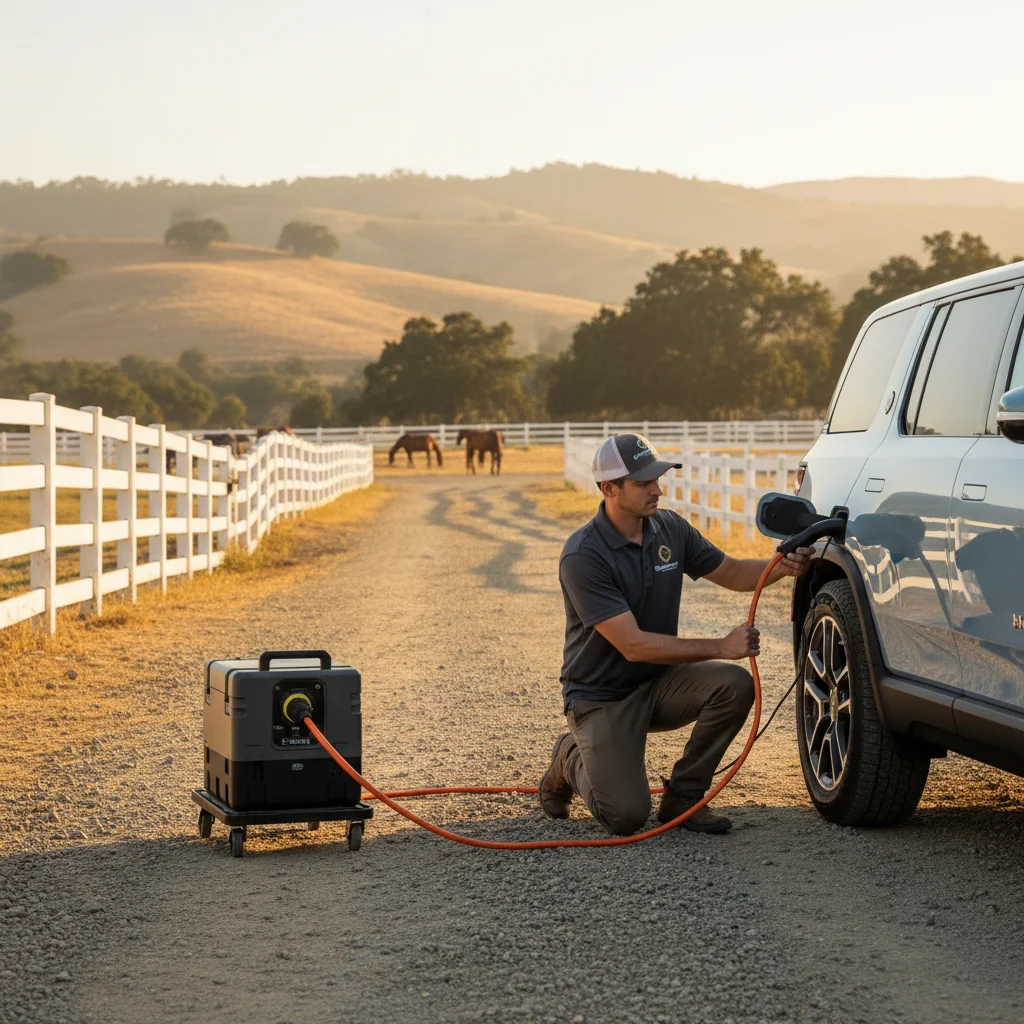
Freeway patrol, a tow, or a charge on site
Metro Freeway Service Patrol is a joint Caltrans, CHP, and LA Metro program. It’s free. Crews roam congested county freeways to clear stalls. Dial 511 and say Motorist Aid. Published help includes a gallon of gas. They can refill a radiator and tape hoses. They can change a tire. They can tow a disabled vehicle free to a safe spot CHP chooses.
The published list is written for gasoline cars. It doesn’t name mobile EV charging or an out-of-charge boost. Metro.net and CHP materials, read September 18, 2026, don’t list that help. It isn’t a claim about a hidden policy. An empty EV on SR-14 may get a free tow to a safe location. Those pages don’t describe a Level 2 charge from FSP.
CHP can also send a rotation tow for a disabled vehicle on the freeway. Details of the local CHP rotation list weren’t confirmed here. Confirm current practice with CHP if a tow is already rolling.
A flatbed still has a place. A locked parking pawl or a car that won’t roll needs a wrecker. That wrecker should know EV tow points. Towing is the last call when the pack is only empty. You still have to charge after the drop. The operator who arrives for mobile EV charging quotes you first. That person bills you directly. Charge Pro LA doesn’t set the price and doesn’t own the truck.
What to share when you call
If the car will roll, get fully onto the shoulder or into a lot. Hazards on. Stay with the vehicle if it’s safe. Share the nearest cross street. Add a mile marker if you see one. A landmark such as The BLVD, Avenue I, or 10th Street West also helps. Quartz Hill and West Lancaster addresses beat “somewhere on the 14.”
Palmdale, Acton, Santa Clarita, Castaic, and Stevenson Ranch sit on the same desert pattern. The referral line covers Los Angeles County, including those places. The operator who accepts your job is an independent local. The pros we connect you with are licensed and insured. Charge Pro LA isn’t the crew and holds no trade license.
Call when the estimate is single digits and you won’t make a planned plug. Call when the car is a brick and the 12-volt is the suspect. Call when you’re already stopped on SR-14, SR-138, or Sierra Highway.
Charge Pro LA is a referral line. It matches stranded EV drivers with independent mobile rescue operators. It doesn’t promise an arrival time. It publishes no hours. The operator quotes before starting.
Call (858) 925-5546 and we’ll match you with a local operator. That operator quotes you before any work begins.