You jump a Tesla on the 12V battery, not the drive pack. In this county, that small battery often dies after a long LAX stay. Economy Parking at LAX is the usual scene. The floor pack can still show range, but the car will not wake. You need the right posts, a jump pack, and a calm clamp order.
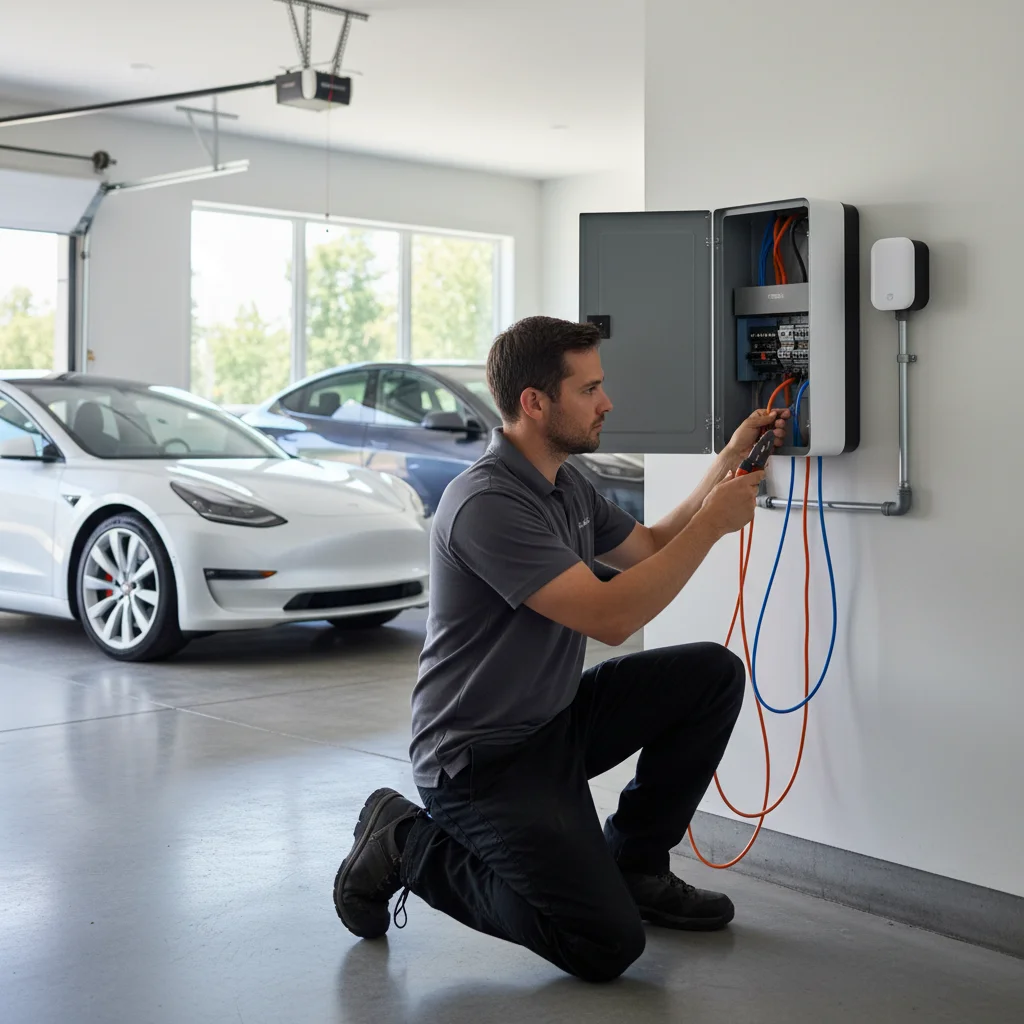
Why a long LAX stay flattens the 12V
Los Angeles World Airports runs LAX, with terminal parking in structures P1 through P7. Those structures offer Level 2 and DC fast charging. The Economy Parking garage has more than 4,000 stalls. That count includes 514 active EV chargers, with more coming.
Chargers in the garage do not keep a sleeping 12V healthy. A Tesla left for a week still draws on that small battery. Computers, handles, and the frunk latch sip power the whole time. You land, open the app, and nothing answers. That is a 12V failure, not an empty traction pack.
A dead car in a private garage can be towed under California Vehicle Code 22658. The lot needs the required 17x22-inch entrance signs and written authorization. Confirm the posted rules on the wall. An LAX fee schedule is not confirmed here.
The same sit-and-die pattern shows up after trips through Hollywood Burbank Airport. It also shows up at Long Beach Airport. Charging stall counts at those airports could not be confirmed here. Check each airport’s own parking page before you leave a car. The 12V still dies on a long stay either way.
Drivers coming back through El Segundo hit this after long trips. A dark Tesla in airport parking is a jump job first. It is not a Supercharger problem until the car can wake.
Make sure you are jumping the right battery
A Tesla runs two separate systems. The high-voltage pack under the floor moves the car. No handheld jumper can charge that pack. The 12V battery powers computers, lights, locks, and the wake sequence. When the 12V is dead, the car behaves like a dead sedan.
Sort the failure before you touch a clamp.
- Screen black, app silent, key card ignored: start with the 12V.
- Locks still work, but the display shows low range: that is the drive pack.
- Cabin lights flicker, or the outside lamps look dim: 12V again.
Slow boots and random alerts for weeks mean the 12V was already fading. Odd overnight wakes fit that pattern too. A jump can get you off the property. Replacement still belongs on the calendar. Tesla 12V battery failure: the signs, not the rumor mill covers those early tells.
A jump does not rebuild the 12V like a long drive. Tesla uses a DC-DC converter. Once the car is awake or plugged in, the converter feeds the 12V. It pulls that charge from the high-voltage pack. After a successful jump, plug in if you can. Keep the car awake if you cannot. Tesla’s current recharge guidance lives on its support site. Check Tesla support for your model year.
The layout by model is in Do Teslas have a 12V battery? A model-by-model answer.
Model 3 and Model Y: start at the bumper
Model 3 and Model Y share a useful design. Dedicated jump posts sit behind the front tow-eye cover. You can feed the 12V without opening the frunk.
Look at the driver’s side of the front bumper. Find the small rectangular cap near the lower corner. Work the notch with a plastic pry tool or a flat screwdriver. Inside you should see a red positive post. A chassis ground sits close to it. Use that pair when the frunk motor has no power.
If the frunk is already open, go under the carpet and foam. The 12V sits there, with a red cover on the positive post. The negative post is black. Use those terminals only when the lid already lifts.
Model S and Model X: posts live in the frunk
Older Model S cars keep the 12V under the frunk floor. That means cars before the 2021 refresh. Model X cars of that era are the same. Lift the mat, pull the foam, and find the labeled terminals.
From 2021 on, Tesla moved the S and X jump posts. Look on the driver’s side of the frunk, near the firewall. A small cover hides a red positive post. The chassis ground is on that same side.
Match your VIN to the year on Tesla’s support pages. Do that if the frunk does not match either layout. Wrong posts are how modules get hurt.
A dead 12V also kills the frunk latch motor. Model 3 and Y drivers can skip the lid. They can use the bumper posts instead. Model S and Model X drivers often cannot. Those posts sit inside, so you need the manual release first.
Tesla puts pull loops in the front wheel wells, behind liner flaps. On many Model S cars you reach through the driver’s side liner. Pull the yellow or orange loop twice if you need to. The first pull pops the primary latch, and the second releases the secondary. On many Model X cars the loop is orange. It sits a short way behind the front of the liner. Pull firmly, and the lid should rise a little.
Loop locations have moved across model years. If the liner does not match those notes, stop. Open the owner’s manual on your phone. Search your year on Tesla’s support site. Do not yank a cable that feels seized. A broken release is a shop job.
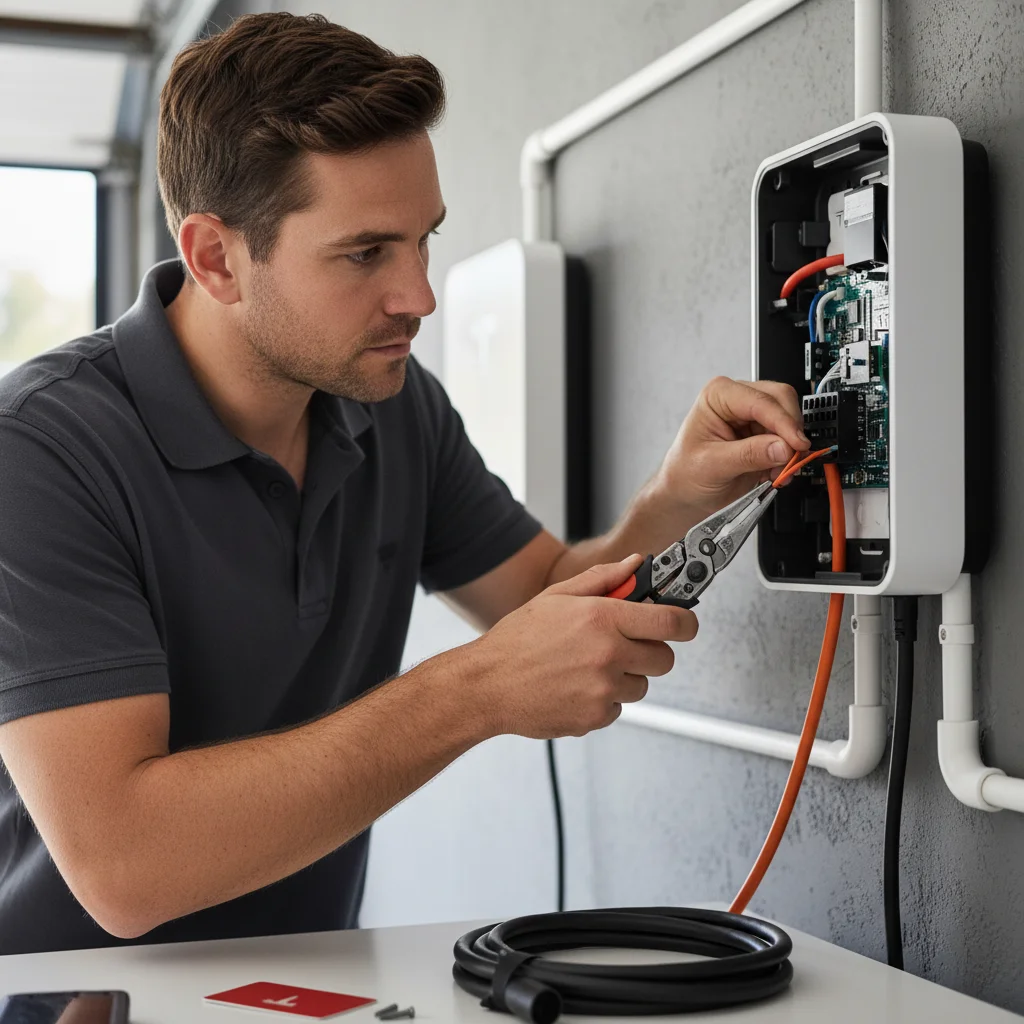
How to actually jump start a Tesla
Use a portable lithium jump pack. You do not need a running gas car beside you. An idling engine can spike voltage into Tesla electronics. Tesla also tells owners not to use another Tesla as a donor. Do not jump one Tesla from another Tesla’s 12V posts.
Keep the key card in your pocket. Confirm the pack itself has charge.
- Set the pack next to the nose.
- Open the 3/Y tow-eye cover, or the S/X frunk posts.
- Clamp red to the red positive post first, and seat it firmly.
- Clamp the black lead to unpainted chassis metal. The tow-eye opening has a ground next to the post. In the frunk, prefer a bare bracket when you can see one.
- Switch the pack on if it has a switch. Give the body computer a short wait to see voltage.
- Try the key card or the door handle. Watch for the screen to light.
- When the car is awake, pull black first, then red.
- Plug in if a charger is next to you. Keep the car awake after that so the converter can feed the 12V.
If the car is locked and dark, jumping is only half the work. Use Tesla won’t unlock and the pack looks dead: rescue steps for the door.
If it wakes, then dies in the garage
A jump that lasts a few minutes, then fails, is not a second-jump problem. The 12V cannot hold a charge. Repeating the clamp routine just burns time in P1 through P7. Get the car to a shop for a test and a replacement.
The same repeat-fail shows up in long event parking in Inglewood. It shows up in studio lots in Burbank. It shows up in older Westside structures in Santa Monica and Culver City.
Heat in Lancaster and Palmdale is hard on packs in general. Recurrent Auto’s published tests show heat, cold, and cabin climate cut real range. That is a traction-pack issue. A dark screen after a long sleep is still the 12V.
Do not mix the two failures. A climb toward the Grapevine north of Castaic can empty the floor pack. A Sepulveda Pass run on the 405 can do the same. The silent Tesla after a week at LAX is a jump call.
Freeway shoulders, FSP, and when to stop
If the Tesla dies on a freeway, DIY jumping is usually the wrong first move. California Vehicle Code 21718 bars stopping on a freeway except in listed cases. A disabled vehicle with help already summoned is one of those cases. Read the current text on leginfo.legislature.ca.gov. California Vehicle Code 21809 is the move-over law. Other drivers must change lanes or slow for flashing service lights.
Metro Freeway Service Patrol covers congested LA County freeways at no charge to the motorist. Caltrans, the California Highway Patrol, and LA Metro run it together. Dial 511 and say Motorist Aid. Published help includes a gallon of gas and a radiator refill. It also covers a taped hose and a tire change. It can tow you at no charge to a CHP-chosen safe spot. That list does not name a 12V jump or mobile EV charging. A dead Tesla 12V sits outside those listed services, other than the tow.
Stop DIY if bumper damage hides the tow-eye cover. Stop if you cannot reach the wheel-well loops. Stop if you are unsure which post is positive. Wrong connections can damage body computers. Stop in a tight downtown garage if you cannot work the nose safely.
See how to jump start an electric car without damage for other brands.
When to call Charge Pro LA
Charge Pro LA is a referral line for Los Angeles County. It matches stranded Tesla drivers with independent local operators. It owns no trucks and employs no technicians. It does not set a price. The operator quotes you before work starts, and bills you directly.
The operators we connect you with jump Tesla 12V batteries on site. They can replace a dead 12V on site when a jump will not hold. They also bring a 240V Level 2 source for an empty floor pack. Typical Level 2 rescue charging adds 10 to 20 miles of range. That takes 15 to 30 minutes of charge time. That is charge time, not an arrival time.
If the car is a brick in Economy Parking, that is a 12V dispatch. Tesla 12V battery jump is the page for that match. Call (858) 925-5546 when you want that match. Stay with the car if you are on a shoulder.