Your Tesla is on the I-405 through Sepulveda Pass with zero range. Tesla Insurance usually includes roadside assistance on a California policy. That dispatch is often a tow, not a charge truck. An empty pack on that climb may sit outside what the policy will do.
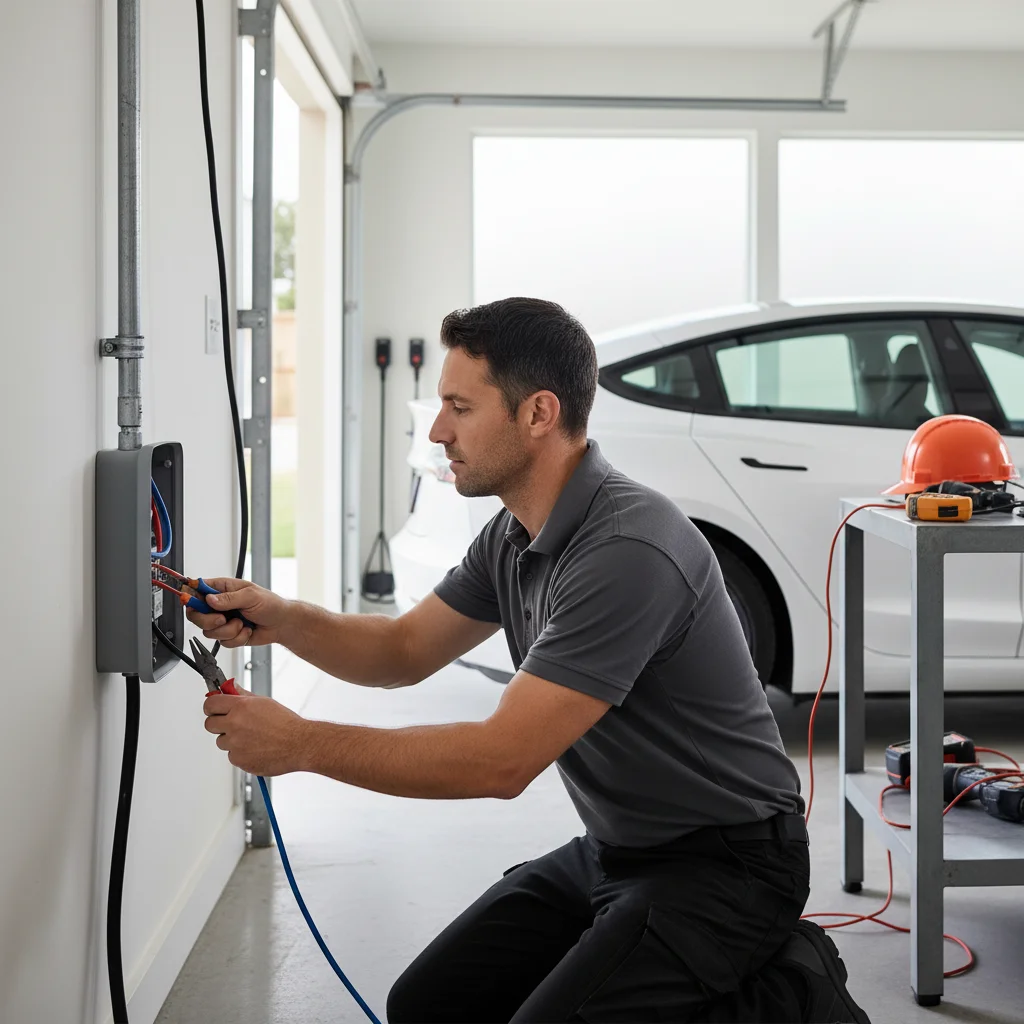
Two Tesla roadside programs that are not the same
Tesla owners mix two programs that share a name. One comes with the car, and the other comes with the insurance policy.
Tesla’s New Vehicle Limited Warranty includes roadside assistance. Tesla has long published that help for four years or 50,000 miles. Confirm the current term in your warranty booklet, because Tesla can change it. That clock starts with the car, not the policy. If you’re still inside that window, you already have Tesla’s manufacturer roadside. You may not need the insurance layer yet.
Tesla Insurance roadside is a different layer on the policy you bought from Tesla. It’s not the warranty, and it doesn’t restart that clock. When the warranty roadside ends, the insurance layer is what you have left.
You request both kinds of Tesla help through the Tesla app. That shared screen is why people think they’re the same, and they’re not. Our map of what Tesla roadside assistance covers walks the manufacturer tiers. The billing split is in whether Tesla roadside is included or billed.
Confirm the insurance piece on your declarations page. Tesla Insurance in California typically writes roadside into the policy. A public, itemized Tesla Insurance roadside schedule could not be confirmed for this page. Your own declarations page is the source that counts.
What an empty pack on the Sepulveda Pass needs
The Sepulveda Pass is the I-405 climb from the Westside into the Valley. Westside drivers from Santa Monica or Culver City use it to reach Burbank and Glendale. UCLA traffic in Westwood and the Getty Center exit feed the same corridor.
An empty traction pack on that grade is a range problem. The car needs electrons, or a tow to a charger. Insurance roadside often sends a contractor with a hook. Plenty of those trucks can tow a Tesla. They don’t all carry a 240-volt Level 2 source.
That’s the skip that matters on this pass. Coverage can exist on paper, yet the arriving truck may be the wrong tool. If you need miles added in place, a tow-only dispatch won’t add them.
California Vehicle Code 21718 bars stopping on a freeway in most cases. A disabled vehicle is an exception once you’ve summoned help. Stay with the car if it’s safe, and don’t walk off later. California Vehicle Code 21809 makes other drivers move over or slow for lit service trucks. California Vehicle Code 22651 lets an officer remove a vehicle left unattended on a freeway. That removal clock starts at four hours on a freeway.
For shoulder steps, see out of charge on the 405 at Sepulveda Pass. This page covers the insurance question, and that linked guide covers the next shoulder move.
Metro’s freeway patrol is not an EV charge truck
You may see a Metro Freeway Service Patrol truck before anyone from Tesla. FSP is a joint program of Caltrans, the California Highway Patrol, and LA Metro. It’s free to motorists on congested Los Angeles County freeways.
FSP’s published help list is written for gasoline cars. It names a gallon of gas and a radiator refill. It also names a taped hose and a tire change. It will tow a disabled vehicle free to a CHP-chosen safe spot. It doesn’t list mobile EV charging or an out-of-charge pack boost. An empty Tesla sits outside that published list, other than the free tow.
Coverage hours are typically weekday peak commute times. Metro also lists all-day help in some construction zones. It lists growing midday and weekend coverage on the busiest corridors. Confirm current hours on metro.net before you count on a truck. Dial 511 and say Motorist Aid if you want FSP. Don’t expect that call to bring a charger.
Metro also runs ExpressLanes on the I-10 and the I-110. The I-405 Sepulveda Pass ExpressLanes are a later, separate Metro project. Metro’s published ExpressLanes FAQ doesn’t spell out a disabled-EV procedure. Don’t assume a shoulder or a charge drop inside a priced lane. Treat that as unconfirmed until Metro publishes it.
The Grapevine north of Castaic is a longer grade than this Valley climb.
What we could not confirm on Tesla Insurance
We couldn’t confirm a public Tesla Insurance roadside schedule with a towing-mileage cap. Some auto policies cap how far a covered tow will go. Your declarations page is where that number would appear. If it isn’t printed there, ask Tesla Insurance in writing. Ask before you need a long tow across the county.
We couldn’t confirm a public per-year incident cap. We also couldn’t confirm extra limits on a second empty-pack call. If your form lists an annual roadside limit, that’s your limit. If it doesn’t, don’t invent one on the shoulder.
We couldn’t confirm that Tesla Insurance roadside includes on-site charge delivery. Tesla’s manufacturer roadside has long focused on a tow to service or a charger. Insurance language may differ from that warranty script. Read the roadside section for tow, winch, lockout, and flat-tire words. Look for fuel or charge delivery in the same list. If charge delivery is missing, assume an empty pack may only get a tow.
Tesla Insurance is Tesla’s own insurance product in California. Dispatch still runs through Tesla’s contractor network, and the app tracker shows a provider. It doesn’t tell you whether that provider carries Level 2 gear. Ask before they roll, if you can reach a person.
A Tesla also needs the right tow method. The wrong wheels off the ground can damage the drive unit. If a dispatched truck isn’t set up for an EV, that’s a safety issue. Compare the three options in Tesla, AAA, or a local mobile rescue.
If the car will not wake, check the 12V
Some stranded Teslas still have charge in the main pack. The low-voltage battery wakes the computers, locks, and contactors. When that 12-volt unit is flat, the car acts like a brick. The app may not connect, and the door handles may not play along.
Tesla Insurance roadside can still send a tow for that. A tow is the wrong first fix if the pack is fine. You need a 12-volt jump, or a replacement on site. The person who does it should know the Tesla access point.
The operators we connect you with jump or replace a dead 12V on site. They handle Tesla and every major EV brand. Start with Tesla 12V battery failure signs if the dash is dark.
Don’t guess from the curb if you can still open the app. Check the rated range before you assume the pack is empty. If the pack shows miles and the car still won’t ready, think 12V. If the pack shows zero, think charge or tow.
Insurance tow versus a mobile Level 2 boost
Charge Pro LA is a referral line, not a shop. We don’t hold a contractor license, own trucks, or employ technicians. We match stranded EV drivers with independent local mobile rescue operators. Those operators quote you before they start, and they bill you directly.
The pros we connect you with are licensed and insured. They bring a 240-volt Level 2 source to the car. Teslas take a native NACS plug on that truck. Other EVs use a CCS or J1772 adapter. A typical on-site session adds about 10 to 20 miles of range. That takes 15 to 30 minutes of charging. That’s charging time, and it’s not an arrival time.
That boost is what an empty pack on Sepulveda Pass often needs. It can be enough to roll to a charger you choose. It’s not a full fill, and it’s not a shop repair.
We serve every city in Los Angeles County. That includes Westside cities on the south side of the pass. It includes Valley cities on the north side. A Culver City commute over this corridor is a normal weekday pattern.
If you want the Tesla-specific dispatch, use Tesla roadside rescue. If the car is a 12V brick, start with the 12V path instead.
Build a backup before you need one on the 405
Tesla Insurance roadside is worth having if your declarations include it. It’s not a complete plan for an empty pack on a grade.
Read the roadside section now, not on the shoulder. Note whether an empty pack is a tow, a charge drop, or left blank. Write down any tow-distance language you find. Save a second number if Tesla’s contractor can’t add range in place.
The US Department of Energy hosts an AFDC station locator at afdc.energy.gov. Use it to map chargers along a route you already drive. Don’t treat a map pin as a promise the stall works.
If you’re stranded with a dead pack or a dark 12V, call (858) 925-5546. We’ll connect you with a local operator who quotes the work before it starts.