A Chevy Silverado EV won’t start because the 12-volt battery died. The Ultium pack is usually still fine. Harbor and 710 work trucks sit between shifts long enough to kill that small battery. The dash stays dark. The fob does nothing. The range you last saw doesn’t matter until the 12V wakes the computers.
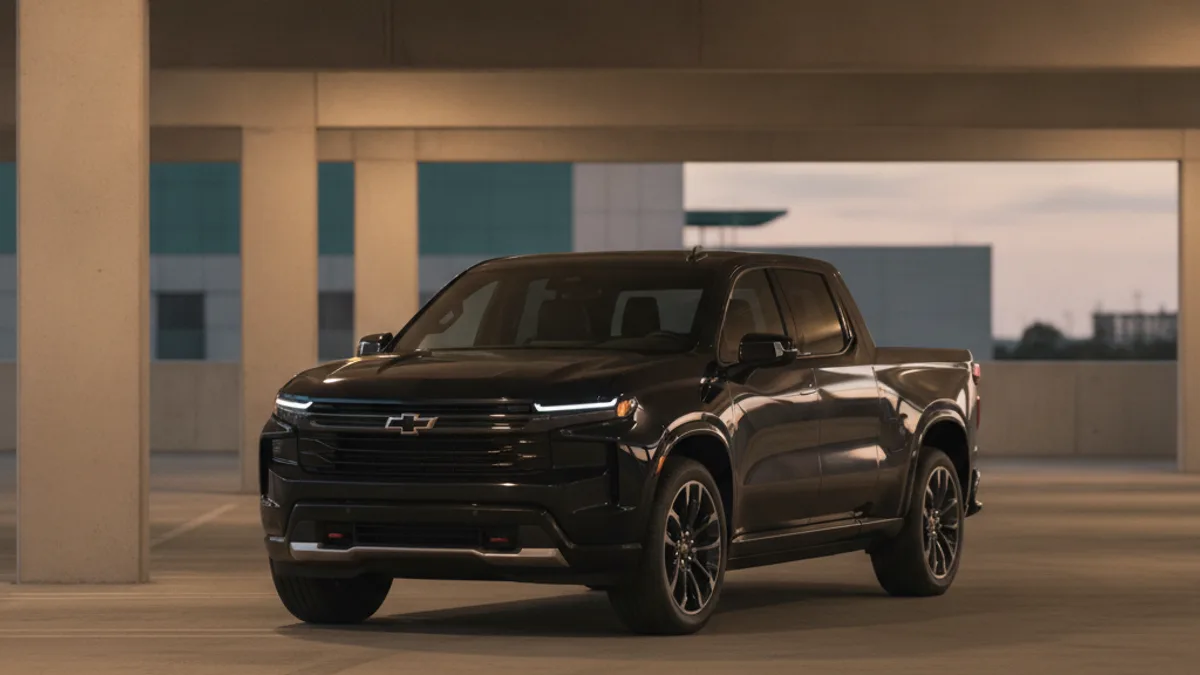
The 12V boots the modules and closes the contactors to the high-voltage pack. When it drops too far, the truck goes quiet. Crews along the Harbor and the 710 see this after an overnight at the yard.
The 710 sits long enough to kill a 12V
The Silverado EV is a work truck first. It spends real time parked, not just commuting. Between loads it sits in Long Beach, Carson, Compton, or Commerce with miles still in the pack. The low-voltage side doesn’t get that same rest.
Always-on modules keep drawing. So do cameras, alarm circuits, and telematics. Plug a compressor or tool charger into the eTrunk outlets and the drain climbs. The Ultium pack barely notices. The 12V does. By the next shift the screens won’t wake, and the electric door handles ignore the fob.
Long Beach is the Harbor’s big city, with 458,491 people in Census ACS 2019-2023 figures. Carson sits on the same South Bay and Harbor belt. Compton sits on the 710 and the 91. Commerce is a small eastside industrial city of 12,072. A parked Silverado EV with a tired 12V will brick itself in a powered lot. This is a boot failure, not an empty-pack failure.
Why the Ultium pack can’t start the truck alone
GM’s Ultium pack stores the miles. It doesn’t wake the truck by itself. The 12V battery powers the low-voltage electronics. Those electronics have to come up first. Then they close the contactors that connect the pack to the motors.
If the 12V can’t hold enough voltage, that handshake never finishes. You can have plenty of range sitting in the pack. The truck still acts like a brick. No dash. No shift-by-wire. No way to open the eTrunk with the button.
Every EV uses a DC-DC converter for this job. It steps pack voltage down to about 12 to 14 volts and keeps the small battery topped off while the truck sits. When the converter lags, or the 12V is worn out, you get the same dark cabin. A jump can bring it back. A 12V at the end of its life will drop you again within days.
What happens when an EV 12V battery dies covers the same brick-like behavior. The Silverado EV just hides the battery behind an electric lid.
What a dead 12V looks like from the curb
You won’t get one clean warning. You’ll get a pile. The 12V feeds dozens of modules at once. When voltage sags, several of them throw codes together. Owners read that as many failures. It’s usually one weak battery.
Don’t keep stabbing the start button to clear the stack. Restoring 12V voltage is what settles it. If the truck just left a shop, don’t yank the 12V terminals to force a reset. GM is clear that pulling that battery at the wrong moment can send you back to the dealer.
Symptom to likely cause
| Symptom | Likely cause |
|---|---|
| Dash completely dark, fob does nothing | 12V fully discharged |
| eTrunk ignores the fob, dash button, and fascia button | 12V too low to run the electric latch |
| A stack of unrelated warning lights | Voltage dropped far enough to confuse several modules |
| Won’t shift into drive, range still looks high | 12V can’t finish the Ultium handshake |
| No-starts return within days of a jump | 12V won’t hold a charge and needs replacement |
If you’ve already jumped the truck more than once in a few weeks, stop nursing it. That battery needs to come out. EV 12V battery replacement covers the signs and the next steps. We don’t publish prices. Confirm the current parts and labor figure with the shop that does the work.
The eTrunk is the lockout that stops a Harbor crew
GM put the Silverado EV’s 12V under the hood, inside the eTrunk, on the passenger side. A plastic cover with tabs hides the terminals. With power, that’s a short job.
The latch is electric. It opens from the fob, a dash button, or a button on the front fascia. A dead 12V kills all three. You’re standing at a work truck that won’t open the compartment holding the battery you need.
Hummer EV owners hit the same electric-frunk trap. If you have a Hummer in the same fleet, GMC Hummer EV won’t start: why the 12V usually failed walks that lockout.
Don’t pry the fascia to force the lid. You can crack clips and still miss the battery. Use the cable GM put under the dash.
The gray cable under the dash
There’s a mechanical release that doesn’t need power. Sit in the driver’s seat. Reach under the dash on the lower left, where a gas truck would keep a hood lever. You should feel a gray cable with a loop on the end. Pull it twice. The eTrunk pops.
It’s tucked up. Give your hand a second to find it. Once the lid is up, lift the passenger-side plastic cover. A flathead screwdriver helps if the tabs are stiff. Go slow so you don’t crack the cover. The negative terminal uses a 10mm bolt. The positive sits beside it.
How to wake it without damaging the electronics
Clip a jump pack or donor positive clamp to the Silverado’s positive terminal first. Then clip negative to the Silverado’s negative terminal, or to nearby unpainted metal. Wait about a minute before you try to power the truck.
If the screens stay dark, leave it connected a few more minutes. A deeply drained 12V sometimes needs a slow trickle before it can finish the startup handshake. Don’t keep slamming the start button while the clamps are loose.
For clamp order and safety notes, use our guide to jump starting an electric car. You’re only bringing the 12V back into range. Don’t use this truck as a donor for a gas car.
After it wakes, look at the range. If the pack is actually at zero, a 12V jump won’t put miles in the truck. You then need energy in the Ultium pack.
Harbor, 710, and the other ways this truck goes dark
A contractor Silverado EV in Long Beach often sits with accessories still live. Job-box lights, a compressor, or the eTrunk outlets keep sipping through lunch or overnight. The high-voltage gauge barely moves. The 12V is what fails by morning.
Trailering does the same thing on a longer clock. Extra lights and trailer electronics pull accessory power the whole run up the 710 through Compton and into the eastside yards around Commerce. A weak 12V that survived the drive may not recover once the truck is parked.
Heat is a second tax once you leave the marine layer. The Harbor stays milder than the San Gabriel Valley and the Gateway Cities. Cabin cooling and battery thermal systems keep working while the truck sits, and that draw finishes off a tired 12V.
Airport parking is the slow version. Leave a Silverado EV in LAX terminal parking for a week and the 12V can still die. Los Angeles World Airports lists Level 2 and DC fast charging in structures P1 through P7. The Economy Parking garage has 514 active EV chargers. None of that keeps a failing 12V alive.
If it died on the 710 or the Harbor Freeway
California Vehicle Code 21718 bans stopping on a freeway except in defined cases. A disabled vehicle that has already summoned help is one of those exceptions. Get out of live lanes. Use the shoulder if you have one.
CVC 21809 is the move-over law. Other drivers must move to a non-adjacent lane when they see flashing lights on a stopped emergency vehicle, tow truck, or Caltrans vehicle, or slow to a reasonable speed if they can’t. That law protects you and whoever is standing next to the truck.
Don’t leave it sitting for hours. CVC 22651 lets an officer remove a vehicle that’s been unattended on a freeway for four hours or more. Call for help, then stay with it if you can do so safely.
Metro Freeway Service Patrol roams congested Los Angeles County freeways at no charge to the motorist. It’s a joint program of Caltrans, CHP, and LA Metro. FSP will offer a gallon of gas, refill a radiator, change a flat, or tow a disabled vehicle to a CHP-chosen safe spot. Hours are typically Monday through Friday during peak commute periods. Dial 511 and say Motorist Aid.
The published assistance list is written for gasoline cars. It names gas, coolant, and a tire change. It doesn’t list mobile EV charging or a 12V jump for an electric truck. A dark Silverado EV is outside what those patrol trucks are set up to restore. They can still move you to a safer place.
The I-110 Harbor Freeway also carries Metro ExpressLanes. A FasTrak transponder on a funded account is required to enter. Metro’s published FAQ doesn’t spell out a disabled-vehicle procedure inside those lanes. Treat a stall there as a disabled vehicle and wait for the help you called. We couldn’t confirm a shoulder rule for those lanes from Metro’s FAQ.
Private yards along the 710 follow CVC 22658. A lot can tow only with the required 17-by-22-inch signage at the entrances, written authorization, notice to the registered owner, and notice to local law enforcement within one hour. If you return before the truck leaves the lot, they have to release it. Storage rates can’t exceed law-enforcement or CHP-approved rates. California doesn’t publish one statewide tow-price cap that we could verify on 2026-09-18. Confirm the current figure with the yard before you pay.
Jump, replace, or put miles back in the pack
Sort the failure before anyone hooks a chain. If screens are black and the eTrunk is locked, start with the 12V. If the truck wakes and range is actually at zero, you need energy in the Ultium pack.
Operators in our network bring a 240-volt Level 2 source to the vehicle when the pack is empty. They use a native NACS plug, or a CCS or J1772 adapter for non-Tesla EVs. That boost typically adds 10 to 20 miles of range in 15 to 30 minutes of charging time. That’s charging time, never an arrival time. For a dark truck with range still in the pack, they jump or replace the 12V on site.
Charge Pro LA is a referral line. We match stranded EV drivers with independent local mobile rescue operators. We don’t own trucks, employ technicians, set prices, or promise an arrival time. The operator quotes you before they start and bills you directly. The pros we connect you with are licensed and insured. They handle Tesla and every major EV brand, Silverado EV included.
If the 12V is fine and you’re empty on a public stall, that’s an EV roadside assistance call for a mobile boost. For GM’s CCS trucks, non-Tesla EV rescue covers the adapters those operators bring.
What to do right now
Stay out of traffic. Find the gray eTrunk cable if you can do it safely. If you can’t get under the dash, call for an operator instead of forcing the fascia.
Charge Pro LA serves Los Angeles County, including Long Beach, Carson, Compton, Commerce, and the rest of the Harbor and 710 corridor. The operators we connect you with carry jump equipment for large-pack trucks like the Silverado EV.
Call (858) 925-5546 when the Silverado EV won’t start and you need a local operator. They quote the job before they begin.
Frequently asked questions
Why won’t my Chevy Silverado EV start if the range still looks fine?
The range number comes from the Ultium pack. The 12V is what boots the computers and closes the contactors. When that small battery is dead, the truck can’t finish startup. Miles in the pack don’t matter yet. A 12V jump almost always brings the screens back.
How do I open the eTrunk when the 12V is dead?
Reach under the dash on the driver’s side, down on the lower left. You want the gray cable with a loop. Pull it twice. The eTrunk releases mechanically, with no electrical power. Then lift the passenger-side cover to reach the 12V terminals.
Does a jump fix a Silverado EV that keeps dying after a shift?
A jump gets you off the curb. It doesn’t fix a 12V that can no longer hold a charge. Harbor and 710 trucks that sit between shifts will go dark again if that battery is worn out. Replace it instead of jumping it every Monday.