A dead delivery van EV in Carson needs a mobile charge on the route. A yard tow pulls the van, and the freight, off the day’s windows. Port traffic on the 710 already eats the clock.
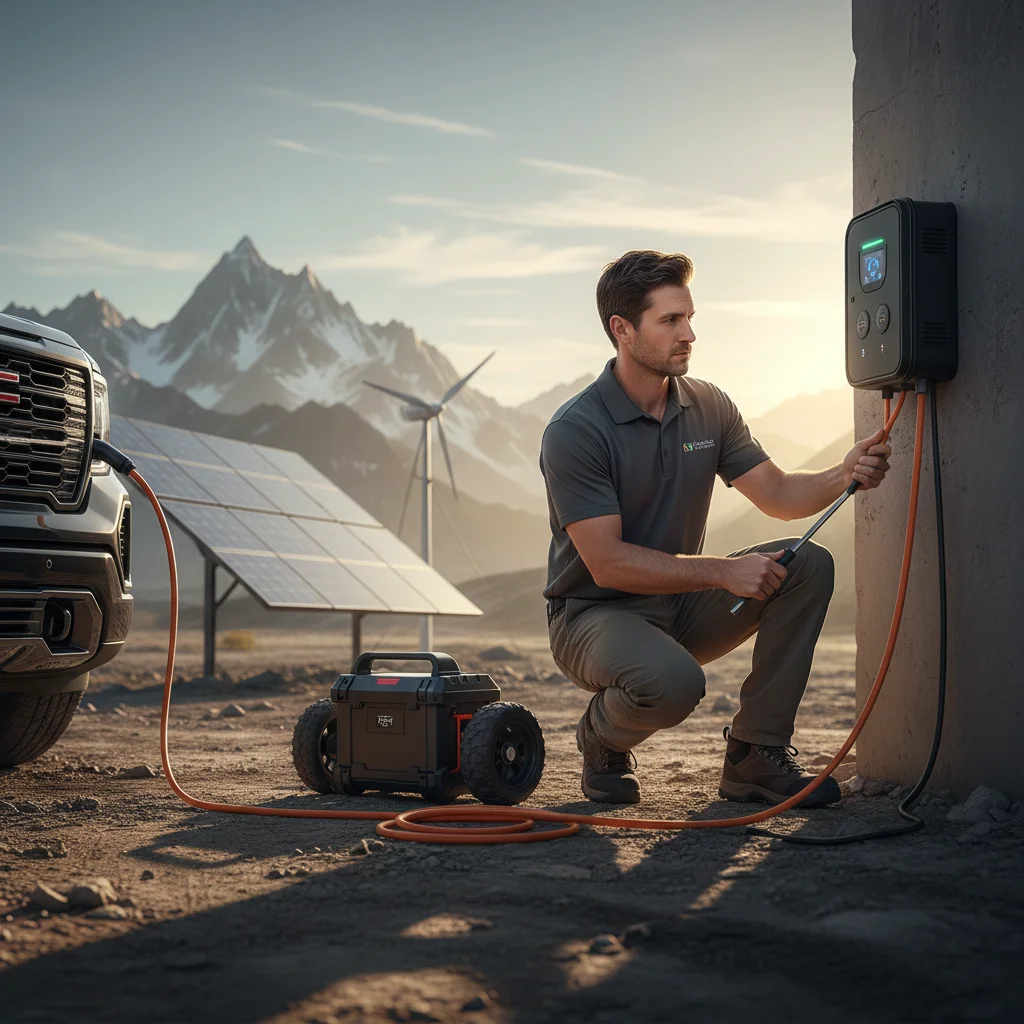
Port routes, the 710, and why vans go empty
Carson is a compact Harbor city in the South Bay. Census ACS figures list 93,523 residents here. Freight still moves through it every hour.
The I-710 edge is the truck spine for port logistics. Refinery and yard traffic also pile onto the 110 and the 405. SR-91 cuts the north side. Avalon Blvd, Del Amo Blvd, and Carson Street tie the drops together.
A work EV on that loop isn’t a highway cruiser. It’s stop, lift, crawl, repeat. Cargo weight sits in the box all day. On 90F-plus Basin days, air conditioning is another draw. Winters here stay mild, so heat and crawl are the real range hits.
Campus loops around CSU Dominguez Hills add short hops. The sports park district does the same on event days. Scottsdale, Carriage Crest, and Dominguez take last-mile stops on older streets. Census data shows 79.5 percent of housing was built before 1980.
Neighboring Compton, Gardena, Torrance, Long Beach, and Lakewood sit on the same grid. A van can die on a Carson block. The next stop may already sit in Long Beach.
Two ways a delivery van dies on route
Treat a no-start as a 12V story until proven otherwise. The small battery runs computers, locks, radios, and often the lift gate. When it drops, the van can look totally dead. You’ll see no dash lights, no fob, and no telematics ping.
If the van wakes and shows zero miles, the drive pack is empty. HVAC, idling electronics, and Harbor freeway crawl got there together. The van may still unlock, but it just won’t roll.
Both problems can be handled on site when the rest of the hardware is fine. A 12V jump or replacement wakes the computers. A mobile EV charge puts miles back in the pack.
You don’t unload the route to do either job. Freight can stay in the box. The driver stays with the van.
Why a tow often fails a loaded van
A loaded delivery van is a rolling schedule. Windows slip while you wait on a bed. Cold or timed cargo doesn’t improve on a hook. After the drop you still need power before the van earns again.
Commercial tows also need a bed that fits and a legal place to land. Don’t leave a loaded van sitting on the 405. CHP may remove it after four hours under Vehicle Code 22651.
A disabled EV can stay on a freeway once you’ve called for help. That’s the Vehicle Code 21718 exception. Keep hazards on and stay out of live lanes. Approaching drivers must move over or slow under CVC 21809. That applies when warning lights are out.
Metro Freeway Service Patrol is free on congested county freeways. It can bring gas, tape a hose, or change a tire. It can also tow you to a CHP-chosen safe spot. Dial 511 and say Motorist Aid. The published help list doesn’t include charging an empty EV. An out-of-charge van still needs a charging truck, not a gallon of gas.
The Harbor Freeway’s Metro ExpressLanes need a funded FasTrak tag. If you stall, treat it as a disabled vehicle and call for help. Don’t sit in a live express lane.
The county breakdown is in when a stalled EV needs a charge instead of a tow.
What the operator brings to the curb
Charge Pro LA is a referral line. We match stranded drivers with independent local operators. We don’t own trucks, run a yard, or employ techs. We don’t set prices or promise when someone arrives. The operator quotes you before work starts and bills you directly.
The truck they bring is a 240-volt Level 2 source. Native NACS covers Tesla. CCS or J1772 adapters cover other EVs, including work vans. Typical charging adds 10 to 20 miles of range in 15 to 30 minutes of plug time. That’s charging time, never travel time.
Ten to twenty miles is often enough to reach a depot plug or a working public stall. If a fault won’t clear with a boost or a jump, the operator should say so. Then you go to the fleet shop, not another curb session.
The hardware is laid out in what’s on a mobile EV rescue truck. Carson-specific next steps live on EV roadside assistance in Carson.
What to do on the next dead-van stop
Pull out of the travel lane if you can. Keep hazards on and stay with the cargo.
Tell dispatch, and the operator, the make and the exact pin. “Near Carson Street and Avalon” beats “somewhere by the yards.” If you’re at campus or the sports park, name the lot.
Carson power comes over Southern California Edison lines. The city’s a Clean Power Alliance member, so generation is a separate line on the bill. That split doesn’t change a roadside charge.
Operators handle Tesla and every major EV brand. That includes commercial vans on Harbor routes. If the route continues into Compton or Long Beach, the same pattern applies. County context is on the Los Angeles EV charging hub.
Frequently asked questions
Can an operator charge a van that’s still full of packages?
Yes. A 12V jump and a Level 2 top-off both happen with the load aboard. You don’t strip the van first. The driver stays with the freight while the operator works.
How much range does a delivery van usually get?
Most roadside boosts add 10 to 20 miles. That’s often enough for a depot charger or a public fast stall. A full recharge belongs at a station, not on the shoulder.
What if it’s a fault code, not an empty battery?
The operator should tell you when a charge won’t fix it. Don’t buy a boost that can’t move the van. From there, use the fleet’s shop or dealer line.
A dead battery doesn’t have to cancel the rest of the route. Call (858) 925-5546 and we’ll match you with a local operator who quotes before they start.