Hawthorne Boulevard is still climbing, and the car has already gone quiet. That’s EV roadside assistance in Rancho Palos Verdes in one turn. You’re on a hilltop peninsula in the South Bay and the Harbor. A pack or 12V failure here leaves you on a grade, not a flat block. Charge Pro LA is a referral line. We match stranded drivers with independent mobile rescue operators. Those operators quote you before they start, and they bill you directly.
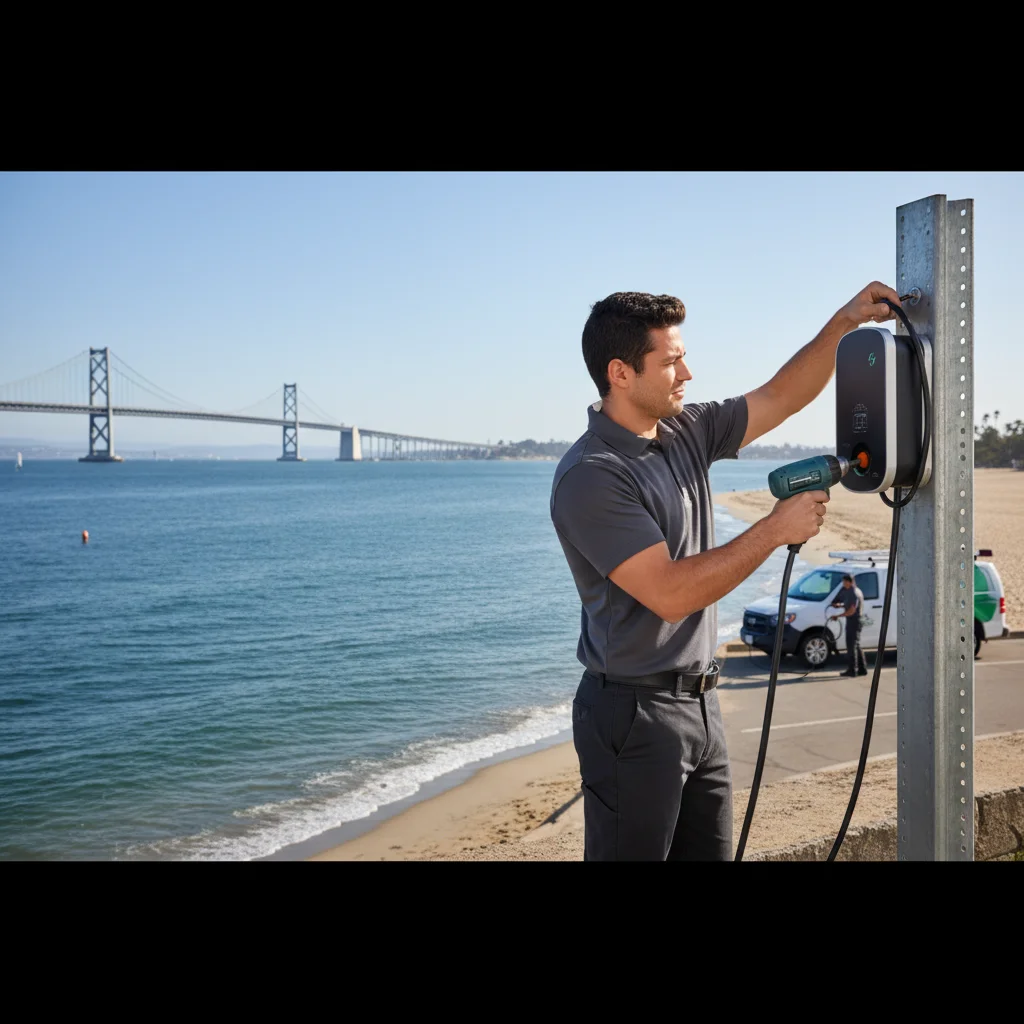
Peninsula grades, not a grid of easy stops
Rancho Palos Verdes covers 13.473 square miles on the Palos Verdes Peninsula. The ACS 2019-2023 count is 41,259 people, and the 2024 Census estimate is 40,064. ZIPs 90274, 90275, and 90732 cover the city. Eighty-five percent of housing was built before 1980, and much of it sits on the ridgeline.
The roads are the story on this hill. Palos Verdes Drive loops the peninsula, and Hawthorne Boulevard and Crenshaw Boulevard climb it. SR-1, Pacific Coast Highway, runs at the base. Miraleste, Portuguese Bend, Del Cerro, and Eastview sit above those climbs. Streets switchback, and shoulders get thin. Once the car dies up there, you’re not coasting onto a wide commercial curb.
Heat isn’t the range problem most days, and the marine layer stays mild. May Gray and June Gloom keep summers cool and damp. Stop-and-go beach traffic is what spends the miles. You leave PCH thinking the pack is fine. The Hawthorne or Crenshaw climb takes the rest.
Torrance, Redondo Beach, Carson, Gardena, and Manhattan Beach sit next to this hill. A stall on the peninsula still has to be handled on the peninsula. The operator comes to your pin, not a flatter city you’d rather have reached.
Empty pack versus a 12V that won’t wake
From the curb, both failures look the same. Screens stay dark, handles may not present, and drive won’t engage. That isn’t always zero miles on the high-voltage pack.
The 12V battery runs the computers, locks, and contactors. If it’s dead, the drive pack can still hold a charge. The car just refuses to use it. Tesla still uses a 12V system. So does every other major EV brand the operators see. A jump or a 12V replacement on site can wake the car. You may not need a flatbed.
If the miles were falling and then hit zero on the climb, treat it as a pack problem. Hit the hazards and stay out of the travel lane. Stay with the car if you’re on a live road. Then ask for EV roadside assistance that can charge where you sit.
A dark car after it sat in a ridgeline driveway is often the 12V. A quiet car after Portuguese Bend or the Hawthorne grade is often the pack. Don’t mix those up when you describe the stall. Our walkthrough on whether to charge, jump, or tow lays out that split.
What the operator brings to the shoulder
The pros we connect you with are licensed and insured. They bring a 240-volt Level 2 source to the car. Teslas use a native NACS plug. Other EVs use a CCS or J1772 adapter. Charging time is typically 15 to 30 minutes. That usually adds about 10 to 20 miles of range. That’s charging time, not an arrival window.
Ten to twenty miles won’t refill your week. It can get you off the grade. Confirm a public stall on a charging map before you roll. Don’t guess at the next plug.
Operators also jump or replace a dead 12V on site. That’s a different job from feeding the drive pack. If the car is dark but you had range left, ask for a Tesla 12V jump. The same 12V logic applies to non-Tesla EVs.
We don’t own trucks, stock parts, or employ the technicians. They handle Tesla and every major EV brand. When the pack is simply empty, out-of-charge recovery is the match. For a picture of the truck itself, see what an EV charging truck carries.
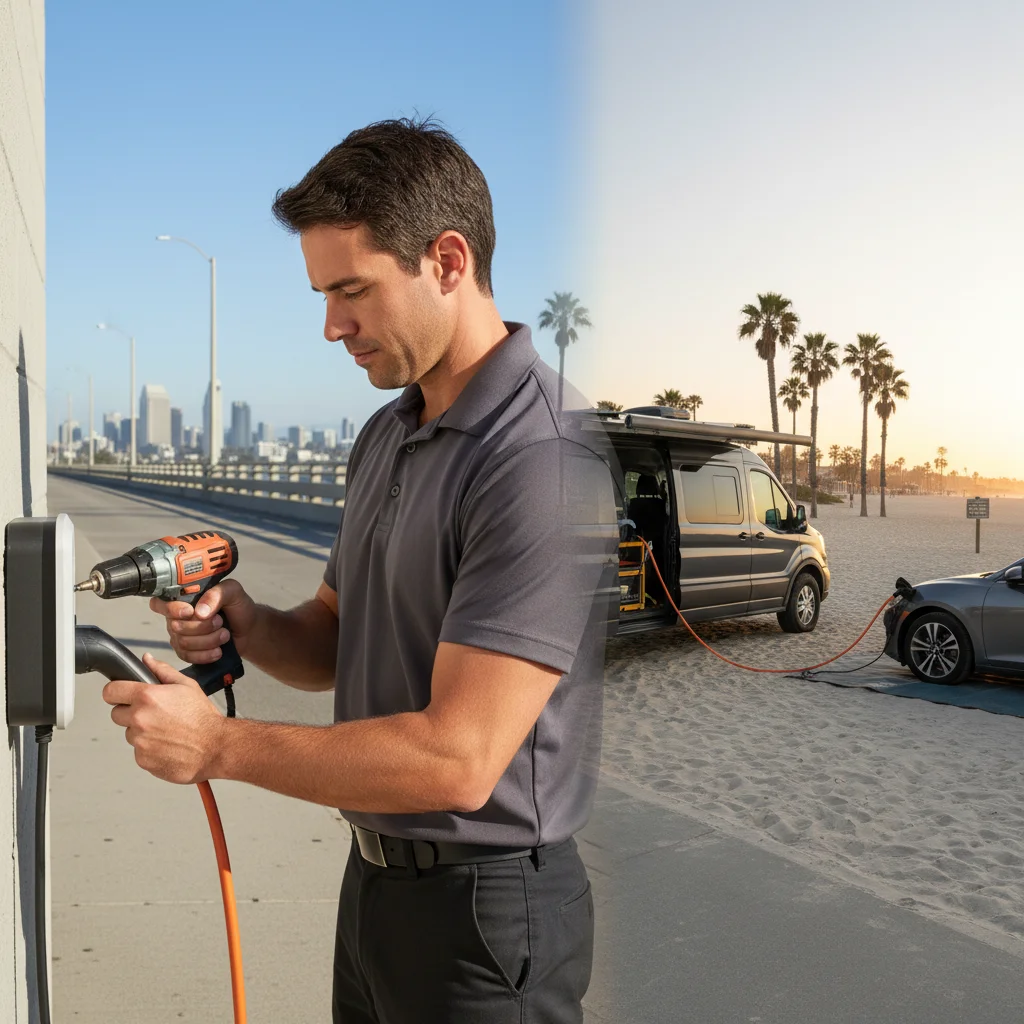
PCH, a freeway stall, and a private lot
Palos Verdes Drive is a loop, not a freeway. Hawthorne and Crenshaw are city climbs. If you stop on those streets, hit the hazards. Stay visible, and don’t stand in moving traffic.
PCH at the base is tighter. Cars stack, and the shoulder can disappear. If you’re disabled there, stay belted in the car unless you’re in immediate danger. Then call for help.
California Vehicle Code 21718 bans most freeway stops. If you reached a Los Angeles County freeway, that rule applies. A disabled vehicle is an exception when you’ve summoned assistance. Call first, then wait with the car. California Vehicle Code 21809 is the move-over law. Drivers must change lanes or slow for flashing lights on a stopped emergency, tow, or Caltrans vehicle.
Metro Freeway Service Patrol covers congested county freeways. Caltrans, CHP, and LA Metro run it, and it’s free to motorists. Dial 511 and say Motorist Aid. The published list names a gallon of gas, a radiator refill, and a tire change. It also names a free tow to a safe spot CHP chooses. It doesn’t list mobile EV charging or an out-of-charge boost. An empty pack sits outside that list. FSP can still move you off the freeway. It won’t charge the car. Hours are typically Monday through Friday in peak commute windows. Confirm current patrol hours on metro.net.
California Vehicle Code 22651 lets an officer remove a vehicle in listed situations. One of them is a car left unattended on a freeway for more than four hours. Don’t walk away from a stall on the Harbor Freeway and assume it will sit.
I-110, the Harbor Freeway, has Metro ExpressLanes toward the South Bay. You need a funded FasTrak account to enter those lanes. If you stall in an ExpressLane segment, treat it as a disabled vehicle. Metro’s published FAQ doesn’t spell out a special EV procedure.
A shopping lot or HOA pad is private property. California Vehicle Code 22658 sets the tow rules there. Entrances need the required 17-by-22-inch signage. The owner or agent has to authorize the tow in writing. Local law enforcement gets notice within one hour. If you return before the car leaves the lot, they have to release it. Storage rates can’t exceed law-enforcement approved rates. A dead EV can still get hooked. Charge in place if the car will take power.
Southern California Edison serves most of Los Angeles County outside municipal-utility cities. Rancho Palos Verdes isn’t on the municipal-power list we checked. It also wasn’t on the Clean Power Alliance member list we verified. Your generation choice doesn’t change a roadside rescue. The operator plugs into the car, not into your house meter.
Charge on the hill, or wait for a flatbed
A tow off the ridgeline is a long afternoon. We don’t publish tow prices. California doesn’t set one statewide cap we could verify. Non-consensual tows are constrained by CVC 22658 on private property. Freeway tows follow CHP rotation agreements. Ask the driver on scene for the number they’ll charge.
If the car will take a charge, on-site Level 2 is usually the cleaner path. If a port fault or latch failure shows up, stop. Same if the pack refuses power. These operators are rescue, not a repair shop. Then a flatbed to a qualified service center is the honest move.
The same South Bay pattern shows up in Torrance on the 405. EV roadside assistance in Torrance covers that corridor if that’s where you actually stopped.
Who to call from Rancho Palos Verdes
Call Charge Pro LA when the car is stuck on this peninsula. You need a charge or a 12V wake-up on site. That includes Palos Verdes Drive, the Hawthorne and Crenshaw climbs, and PCH at the base. It also includes streets in Miraleste, Portuguese Bend, Del Cerro, and Eastview. We serve every city in Los Angeles County.
We don’t promise an arrival clock. The operator quotes the job before anything starts, and you pay that operator. For this city’s page, use EV charging in Rancho Palos Verdes.
Call (858) 925-5546 when you’re ready to be matched with a local mobile rescue operator.