The GV60 sat in a Glendale driveway overnight. Next morning the start button does nothing. Flush handles stay flush. Screens stay black. The traction pack can still hold plenty of range. The small 12V battery is the part that usually failed. Genesis EVs in Valley heat show the same 12V no-start as every other EV on this network. The cabin is quieter. The electrical layout isn’t unique.
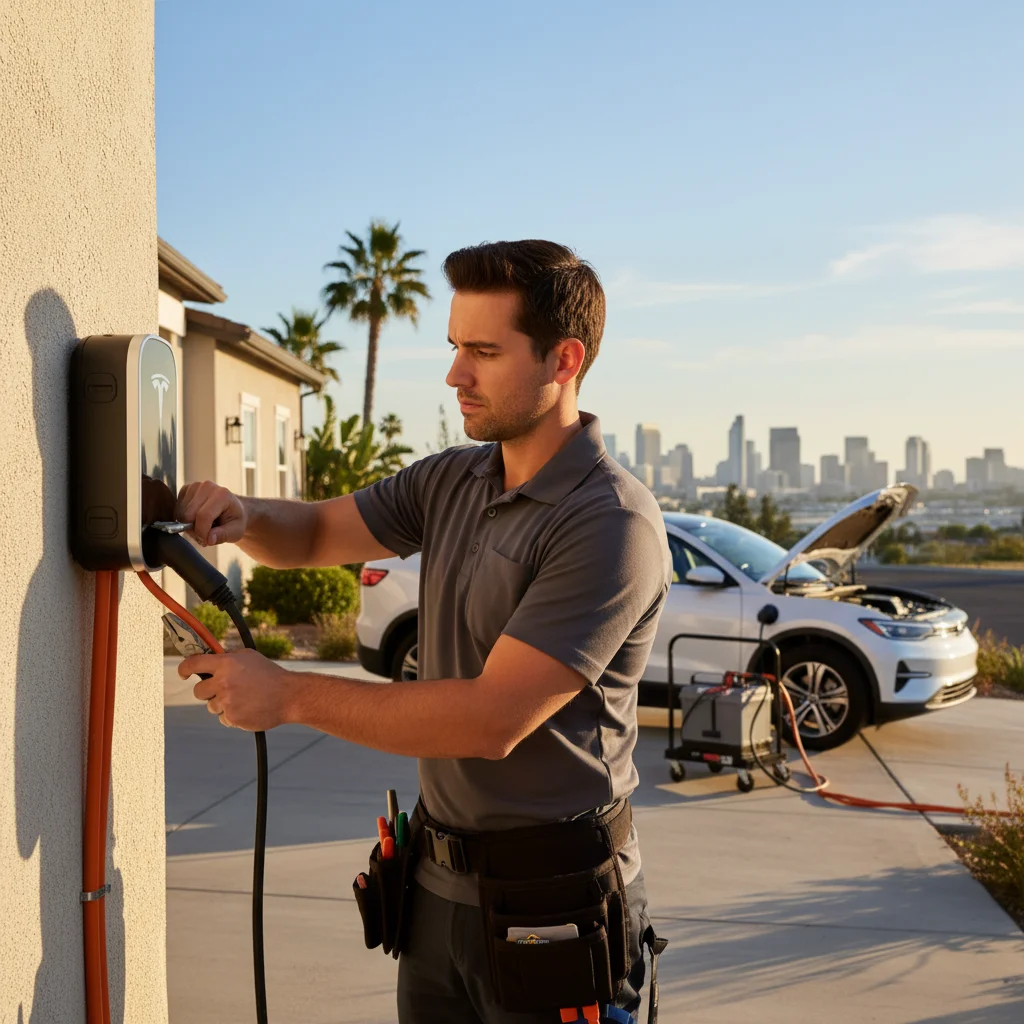
Dark cabin, range still in the pack
A GV60 and an Electrified GV70 each run two batteries. The high-voltage pack turns the motors. The 12V wakes the computers, locks, and lights. It also boots the path into the pack. Kill the 12V and the car ignores you. It can’t start. It can’t show a range figure. It can’t pop the charge port on command.
That’s why a Genesis can look like an empty EV when it isn’t. People hunt for a stall. They call a tow. They skip the small battery that actually died.
The GV60 and Electrified GV70 ride on Hyundai’s E-GMP platform. So do the Ioniq 5 and the Kia EV6. They share the 12V design and the same drain habit. The Ioniq 5 12V checks cover that architecture under another badge. If you already know that page, this is the Genesis version of the same failure.
One platform quirk still surprises owners. When the traction pack sits very low, the car can stop feeding the 12V. Park it that way for a few days and the auxiliary battery can go flat. You didn’t run out of miles. You ran out of wake-up power.
What the car does when the 12V is gone
A flat 12V doesn’t look like a low pack. Watch the cabin, not the sticker range.
- Nothing happens when you open the door. No lights. No chime. No screen.
- Flush handles never present, even with the fob in your hand.
- The frunk release and the charge-port button stay dead.
- A new fob battery changes nothing.
- You might hear one faint click, then silence.
If the dash wakes and talks to you, stop. A low-range warning, or a refusal to enter Drive with screens alive, points at the traction pack. That’s a charging problem. A 12V jump won’t add miles.
What happens when an EV 12V dies walks the full blackout if you want the system view first.
Inland heat isn’t Westside weather
Los Angeles County isn’t one climate. Santa Monica and Redondo Beach still get marine air. The San Fernando Valley doesn’t get that same relief. Glendale, Burbank, and San Fernando sit inland of the hills. Calabasas and Agoura Hills sit on the west end of the Valley. Those streets run hotter than the beaches.
The San Gabriel Valley follows the inland pattern too. Pasadena, West Covina, and El Monte sit well away from the ocean. Lancaster and Palmdale, in the Antelope Valley, see triple-digit summer heat and near-freezing winter nights. A 12V under a hood lives through that swing every parked day.
Public stalls exist across the county. Heat still ages a small 12V. A GV60 parked outside in Glendale in July takes more heat than one in a Santa Monica garage. Genesis doesn’t ship a special auxiliary battery because the cabin is nicer.
Range is a separate story. Recurrent Auto’s published testing shows summer heat and air-conditioning load cut real EV range below the window sticker. Cabin cooling on the Grapevine climb north of Castaic is a pack problem. Sepulveda Pass on the 405 is a shorter climb between the Westside and the Valley. Those grades can empty a traction battery. They don’t explain a car that won’t light up. No lights means start with the 12V.
Cars that sit: airport garages and spare bays
A week in airport parking is a classic 12V killer on any EV. Los Angeles International is the lot with published charger facts. Los Angeles World Airports runs terminal structures P1 through P7 in the Central Terminal Area. Those structures offer Level 2 and DC fast charging. The LAX Economy Parking garage has more than 4,000 stalls, including 514 active EV chargers. You can still come back to a Genesis that won’t wake. A 12V failure isn’t an empty pack. Chargers in the garage don’t keep a weak auxiliary battery alive while you fly.
Hollywood Burbank Airport and Long Beach Airport see the same sit-and-die pattern. Charger counts for those two lots couldn’t be confirmed from the sources used here. Check each airport’s own parking page if you’re leaving an EV for days.
A second car that sits in a Calabasas garage does the same thing. So does a GV70 left on a Burbank street between studio days. The car looks fine when you walk away. Days later the 12V has nothing left.
Already on a freeway shoulder
California Vehicle Code 21718 bars stopping on a freeway, with exceptions. A disabled vehicle waiting for summoned help is one of those exceptions. Call for assistance, then stay out of live lanes.
CVC 21809 is the move-over law. Drivers must move over or slow for a stopped emergency vehicle, tow truck, or Caltrans truck with flashing lights. It exists to protect people standing on the shoulder.
CVC 22651 lets an officer remove a vehicle left unattended on a freeway for four hours or more. Don’t wander off and assume the Genesis can wait. If you can stay with the car safely, stay.
Metro Freeway Service Patrol is a joint program of Caltrans, CHP, and LA Metro. It’s free on congested county freeways. The published list names a gallon of gas, a radiator refill, a tire change, and a free tow to a CHP-chosen safe spot. That list doesn’t mention mobile EV charging or a 12V jump for an electric car. An empty pack is outside what FSP advertises, other than the tow. Dial 511 and say Motorist Aid for FSP. For a Genesis 12V jump or a Level 2 boost, you need a mobile EV operator.
Metro ExpressLanes run on the I-10 and the I-110 and need a funded FasTrak account. A stall inside those lanes is a poor place to wait. If you can still roll to a regular lane or a surface street, do that first. Metro’s published FAQ didn’t confirm a disabled-vehicle procedure for those lanes.
Where the 12V sits, and where you actually jump
The two body styles don’t hide the battery in the same obvious place. On the GV60, the 12V sits up front under the hood, like the Ioniq 5. On the Electrified GV70, it can sit behind trim instead of in plain view. You still jump from engine-bay points, not the battery posts.
| Spot | What you should find |
|---|---|
| Driver’s-side fuse box under the hood | Positive jump terminal under a red cap |
| A bare, unpainted chassis bolt in the bay | Ground for the negative clamp |
| Front compartment or behind trim | The actual 12V battery |
Pull the interior hood release. Find the black fuse-box cover on the driver’s side. Lift the red cap. Pick a clean, unpainted metal bolt for ground. Trims and years move small parts. If the bay doesn’t match, use the owner’s manual for your model year.
The jump order that keeps modules intact
A portable jump pack is the clean option. A second car with cables works if you stay on the marked points.
- Open the hood from inside the cabin.
- Find the driver’s-side fuse box in the bay.
- Lift the red cap on the positive terminal.
- Clamp the red lead to that terminal.
- Clamp the black lead to a bare chassis bolt, such as a strut tower or a firewall bolt. Don’t use the battery’s own negative post.
- On a donor car, match positive to positive and negative to negative, then start it.
- Wait two or three minutes so the Genesis 12V can take a charge.
- Press start. The boot can take longer than a normal wake.
If it comes up, get it to a charger and let the 12V recover. One jump isn’t a repair. If it dies again soon after, the 12V needs replacement, not another boost. How to jump start an electric car covers the safety order in more depth.
When the pack is empty instead
A lit dash and a range warning isn’t a 12V story. Jumping it wastes time. The car needs energy in the traction battery.
Charge Pro LA doesn’t charge your car. Independent operators bring a 240V Level 2 source to the curb. They carry a native NACS plug and a CCS or J1772 adapter for a Genesis. Typical on-site charging adds about 10 to 20 miles of range in 15 to 30 minutes of charging time. That clock is charging time only. It isn’t an arrival window.
If the charge port won’t open, the 12V may still be holding the latch. Wake the 12V first, then try the release. For a pack at zero, out-of-charge recovery is the matching service. Non-Tesla EV rescue is how Genesis, Hyundai, and Kia get the right adapter on site.
Utility names don’t change the roadside job. Los Angeles city power is LADWP. Most other cities sit on Southern California Edison lines. Glendale, Burbank, and Pasadena run municipal utilities. Clean Power Alliance buys generation for Calabasas, Agoura Hills, and West Hollywood, while SCE still delivers. A dead 12V doesn’t care whose logo is on the bill.
Who shows up, and who doesn’t
Charge Pro LA is a referral line. We match stranded drivers with independent local mobile rescue operators across Los Angeles County. We hold no trade license. We own no trucks and no equipment. We employ no technicians. We set no prices. We publish no arrival time and no business hours. The operator quotes you before starting and bills you directly.
For a dead 12V, those operators jump or replace the battery on site. For an empty pack, they add Level 2 range at the curb. They handle Tesla and every major EV brand, including Genesis.
Ask what they plan to do before they start. If the 12V failed, a jump or a replacement is the job. If the pack is empty, you need charging time. A tow is the last call, not the first.
Mobile EV charging in the San Fernando Valley maps the inland pattern if that’s where you stalled. If you want us to connect you with an operator, call (858) 925-5546. Confirm the quote on that call. This page can’t promise when someone arrives.
Frequently asked questions
Why does a Genesis GV60 stay dark with range left?
The 12V auxiliary battery wakes the computers that boot the high-voltage system. If that battery is dead, the traction pack stays locked out. Range left in the main battery can’t help until the 12V is up again.
How do you jump a GV60 or Electrified GV70?
Use the positive terminal under the red cap in the driver’s-side fuse box. Don’t assume the battery posts are the jump points. Ground the negative clamp on a bare chassis bolt. Wait two or three minutes, then try start. Check the owner’s manual if the bay layout differs by year.
Can an operator charge a Genesis on the street?
Yes. Operators bring 240V Level 2 charging and a CCS or J1772 adapter for a Genesis. Typical charging time adds about 10 to 20 miles in 15 to 30 minutes. Charge Pro LA doesn’t perform that work. The operator quotes you before they start.