EV charger installation in Los Angeles County is licensed electrical work. A C-10 contractor hangs the wall box and files the permit. Charge Pro LA doesn’t install chargers. We’re a referral line that matches stranded EV drivers with independent mobile operators. LADWP and Southern California Edison both run home charger rebates. Those programs help with a Level 2 install. They don’t restore a dead wall box before your commute. If the charger failed overnight, the pack can be too low to roll. A mobile Level 2 boost is the backup until the electrician finishes the repair.
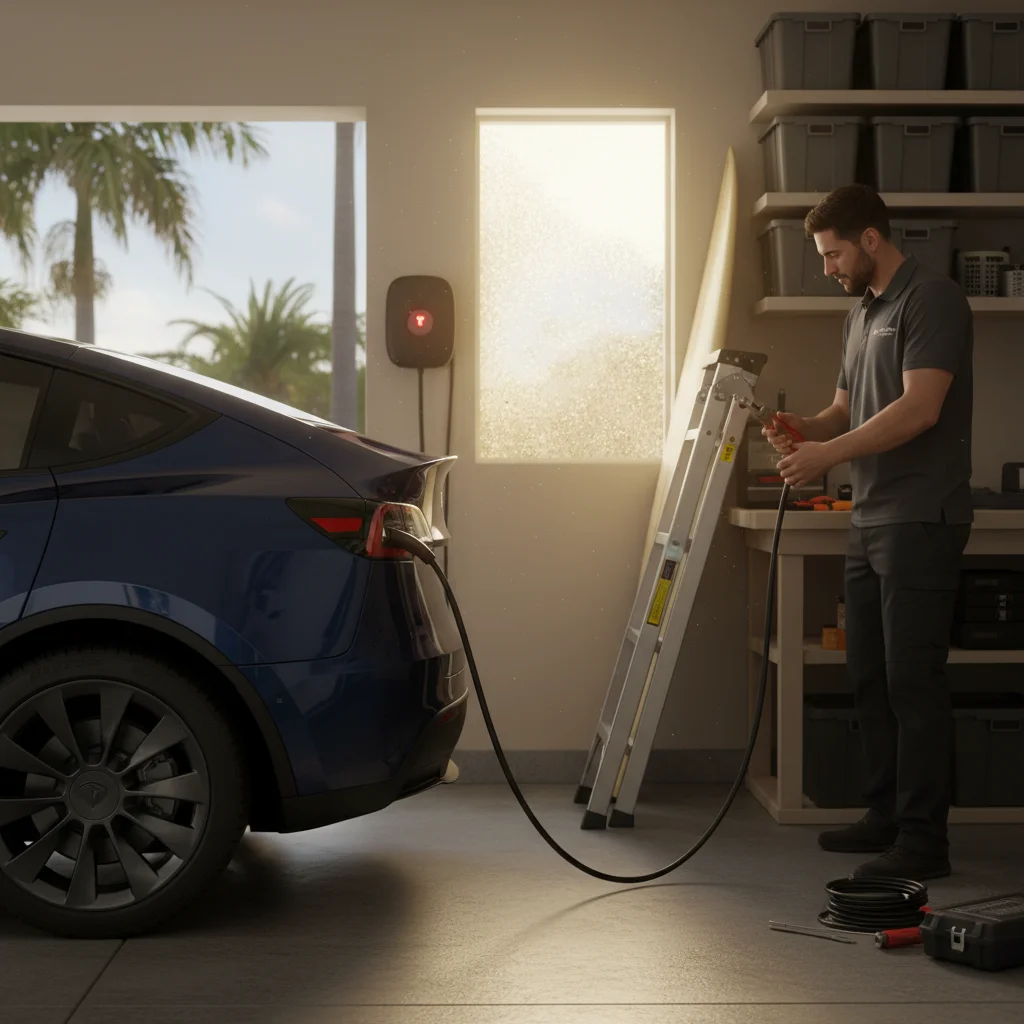
We connect rescue operators. We don’t pull permits.
The brand’s job is matching. We don’t hold a trade license. We don’t own trucks, a warehouse, or charger inventory. We don’t employ technicians. The operator quotes you before starting, then bills you directly.
A home wall box is a different trade. California’s Contractors State License Board issues the C-10 electrical classification. That license covers placing, installing, and connecting electrical wires, fixtures, and apparatus. A hardwired Level 2 charger sits in that scope. Only a licensed C-10 contractor may legally perform that install in California. Look the license up at cslb.ca.gov before you sign. The tool shows whether the license is current. It also shows complaint disclosure.
Permits follow the house, not the rescue truck. Your city building department handles the job inside city limits. Los Angeles County handles unincorporated areas. We couldn’t confirm a single countywide permit fee. Each city sets its own process. Ask the electrician if the quote includes the permit and the inspection. The operators we send don’t hang wall boxes. They don’t replace panels either.
LADWP and SCE both run rebates. Your bill still decides the paperwork.
Los Angeles County has no single electric utility. The City of Los Angeles is LADWP territory. LADWP is the largest municipal utility in the United States. On ladwp.com it lists a Residential EV Charger Rebate Program. That rebate is toward a Level 2 home charger and a dedicated EV meter. LADWP also publishes a dedicated EV time-of-use rate that needs that separate meter. Amounts on those pages aren’t repeated here. Confirm the current rebate with LADWP before you count on it.
Most of the rest of the county is Southern California Edison territory. SCE publishes Charge Ready Home toward Level 2 home charger installation. Confirm eligibility and any amount on sce.com. SCE also lists a Pre-Owned EV Rebate for buying or leasing a used EV. That’s a car rebate, not a wall-box rebate. Confirm every figure on the utility’s own page.
Clean Power Alliance buys generation for many cities. SCE still delivers the power, maintains the lines, and reads the meter. You’ll see two line items on the bill. CPA members include Santa Monica, Culver City, Beverly Hills, West Hollywood, and Malibu. Redondo Beach, Manhattan Beach, Whittier, and Downey are on the roster too. So is unincorporated Los Angeles County. The full list is on cleanpoweralliance.org. CPA doesn’t change a driveway rescue.
Glendale, Burbank, Pasadena, and Azusa run their own municipal utilities. Glendale Water and Power serves Glendale. Burbank Water and Power serves Burbank. Pasadena Water and Power and Azusa Light and Water run those two cities. EV rebate names for those four weren’t confirmed on the utilities’ own pages. Check the name on your bill, then read that utility’s site.
Older streets, newer tracts, and different electrical starting points
A Level 2 charger needs a dedicated 240-volt circuit. That’s the same voltage class as a dryer or a range. The electrician runs a load calculation on your panel. Then they decide if spare capacity exists. We don’t run that math. We also don’t state that your house needs a panel upgrade. Only the electrician who sees the panel can say that.
Housing age still shapes how often that conversation happens. US Census ACS 2019-2023 table B25034, read on 2026-09-18, shows pre-1980 housing by place. The City of Los Angeles is 71.0 percent pre-1980 housing. East Los Angeles sits at 86.2 percent, and Whittier at 88.9 percent. Lakewood is 88.8 percent, Norwalk is 84.3 percent, and Downey is 82.5 percent. Long Beach is 79.6 percent, and Torrance is 83.3 percent. Culver City is 85.5 percent, and West Hollywood is 80.5 percent.
North county stock is younger. Santa Clarita is 30.4 percent pre-1980, and Palmdale is 19.7 percent. Lancaster is 34.0 percent. Stevenson Ranch is 3.4 percent, and Castaic is 7.7 percent. Calabasas is 38.0 percent, and Agoura Hills is 49.7 percent. Newer tracts can still need a dedicated charger circuit. They just start from a later electrical era.
If the panel work is still open, see our old-panel backup guide. San Gabriel Valley city notes are in our San Gabriel Valley charger install guide.
Confirm these points before you hire an installer
Start with the license. Ask for the C-10 number, then check it yourself.
Ask whether they’ve installed your exact wall-box model. Tesla Wall Connectors, ChargePoint Home Flex units, and Emporia boxes aren’t the same job. Small differences in mounting and wiring still matter.
Ask who files the permit. A careful installer handles the city or county application. They also schedule the inspection. You shouldn’t have to learn the city portal yourself.
Ask whether the number they gave you is a firm price or an estimate. The written quote should break out labor, conduit, wire, the breaker, and the permit. Charge Pro LA sets no electrical prices. We won’t guess a typical install cost for Los Angeles County. Cities don’t publish one countywide figure we could verify.
Ask what labor coverage they put in writing. The charger maker’s hardware warranty is separate. We don’t state a standard labor term because we couldn’t verify one. Get the electrician’s terms on paper.
The pros we connect you with for rescue are licensed and insured. That’s the mobile network. It’s not a claim that Charge Pro LA installs chargers.
The overnight session stopped. Here’s what usually failed.
You counted on a full pack. The app shows a sliver. The wall box is dark, blinking, or throwing a code. That can hit a Santa Clarita driveway before the I-5. It can also hit a West Hollywood alley or a Torrance garage off the 405.
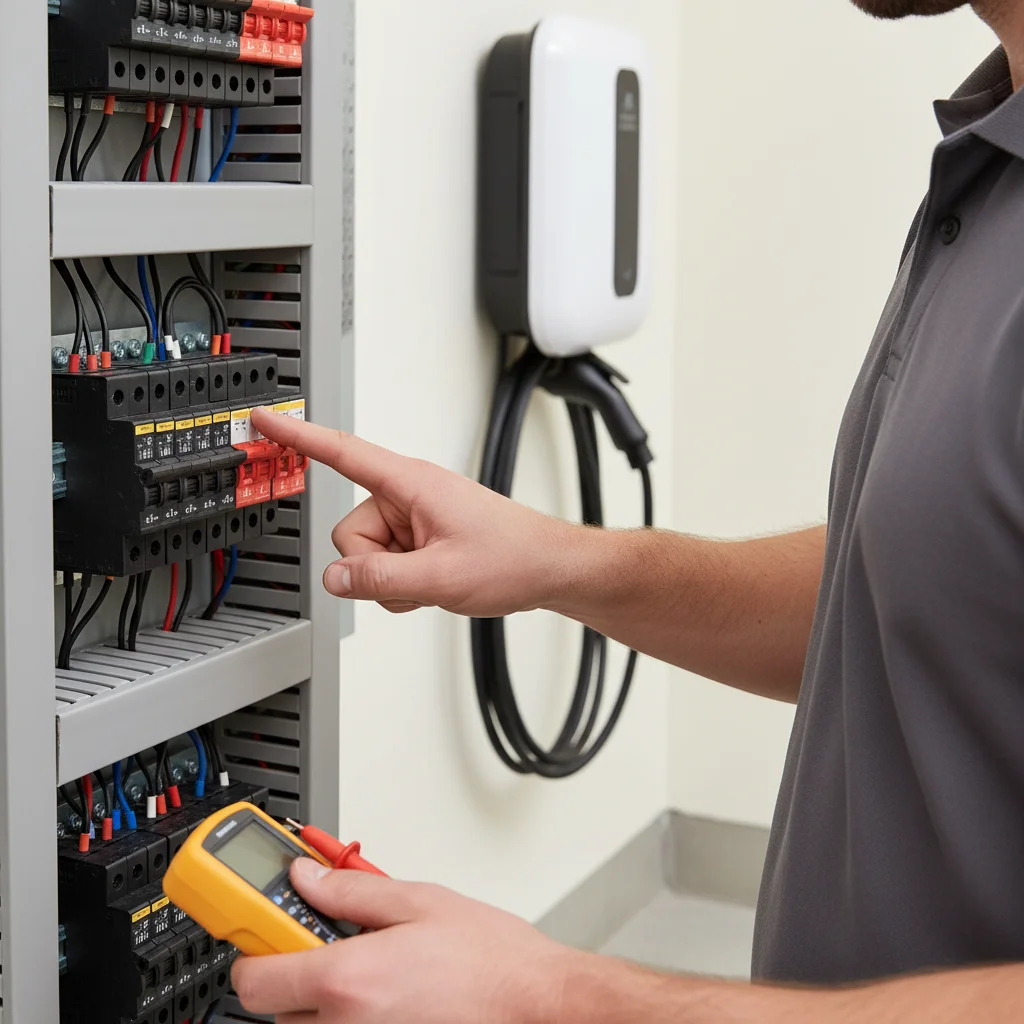
Start at the panel. A Level 2 charge draws hard for hours. A tripped breaker is the first stop. Reset it once if you know which breaker feeds the charger. If it trips again, stop resetting it and call the electrician.
Read the charger’s lights next. A ready light usually means the box is waiting. A fault light means the session halted. Heat, a ground-fault trip, or an internal failure can all look like a dead install. Use the manual for the code. Don’t guess at it.
The car can refuse the session too. The onboard charger may stop to protect the pack. A communication error with the EVSE looks like a wall-box failure. It isn’t always the hardware in the garage.
Handle the cable last. Bent pins, worn latches, and damaged conductors interrupt charging. Unplug it and look at the pins. Try a spare cable if you have one.
If you sat plugged in all night and nothing moved, read our overnight charging guide. Also check the 12-volt battery. A dead 12V can make a healthy pack act like a brick. Operators can jump or replace that 12V on site.
Miles in the driveway, not a tow to a stall
A tow is the last call when the car already sits at home. Dragging it to a public stall still leaves you waiting. If you’re in the driveway, the charger can come to you.
The operators we connect you with bring a 240-volt Level 2 source. Teslas use a native NACS plug. Other brands use a CCS or J1772 adapter. They typically add 10 to 20 miles of range. That’s in 15 to 30 minutes of charging. That window is charging time. It isn’t an arrival time. Details live on mobile EV charging. The voltage split is in home 240-volt charging vs a mobile Level 2 boost.
That’s usually enough to reach work or a working public stall. It isn’t a full pack. Don’t treat it as overnight home charging.
Metro Freeway Service Patrol is free on congested Los Angeles County freeways. Caltrans, CHP, and LA Metro jointly run it. Dial 511 and say Motorist Aid. The published list names a gallon of gas. It also names a radiator refill and a tire change. It will tow a disabled vehicle to a CHP-chosen safe spot. It doesn’t list mobile EV charging. An empty pack is outside that published list, other than the free tow. If the wall box failed at home, FSP isn’t your call.
Heat still matters once you roll. The San Fernando and San Gabriel Valleys run hotter than the coast. Antelope Valley summers and winter nights cut range further. Cabin air conditioning and heat make the loss worse. Those patterns come from published range-loss research. Don’t count on the sticker number for a Lancaster day or a Sepulveda Pass climb.
The repair can take days. The commute doesn’t wait.
A wall-box fault is often not a one-visit electrician job. Parts, permits, and inspection windows stack up. You still have the 10 through El Monte. You still have the 405 through Torrance, or the 14 into Palmdale.
Public stalls can cover some of those days if you can reach one. If you can’t, another mobile Level 2 visit is the backup. We don’t sell a standing top-up plan. We don’t promise a return time. Each visit is quoted by the operator. How mobile EV charging gets quoted in Los Angeles County walks through that call.
Charge Pro LA serves every city in the county. That’s Malibu to Pomona, and Long Beach to Lancaster.
Installer search first. Rescue call if the car won’t move.
If you’re planning the wall box, hire the C-10 electrician. Confirm the rebate with LADWP, SCE, or the municipal utility on your bill. Then file the permit through your city.
If the charger you already have failed, that’s the rescue lane. The pack is too low to leave. We connect you with a local operator. They quote before they start. They bill you directly.
If you’re already stuck, call (858) 925-5546. We’ll match you with an independent operator for a Level 2 boost.