A home EV charger install in the San Gabriel Valley follows the utility and the hills. It isn’t a generic coastal job with the city name swapped. Pasadena Water and Power serves the City of Pasadena. Azusa Light and Water serves Azusa. Most other valley cities sit on Southern California Edison wires. Some of those cities buy generation through Clean Power Alliance. SCE still delivers the power on those meters. Foothill grades on the I-210 change how much overnight charge you need. Climbs into the San Gabriels add to that. Charge Pro LA doesn’t install chargers. We’re a referral line. We match stranded EV drivers with independent local operators. This guide covers the Level 2 circuit you’ll actually need. It covers the questions to ask an electrician. It also covers how to stay charged while that work waits.
What a Level 2 install actually is
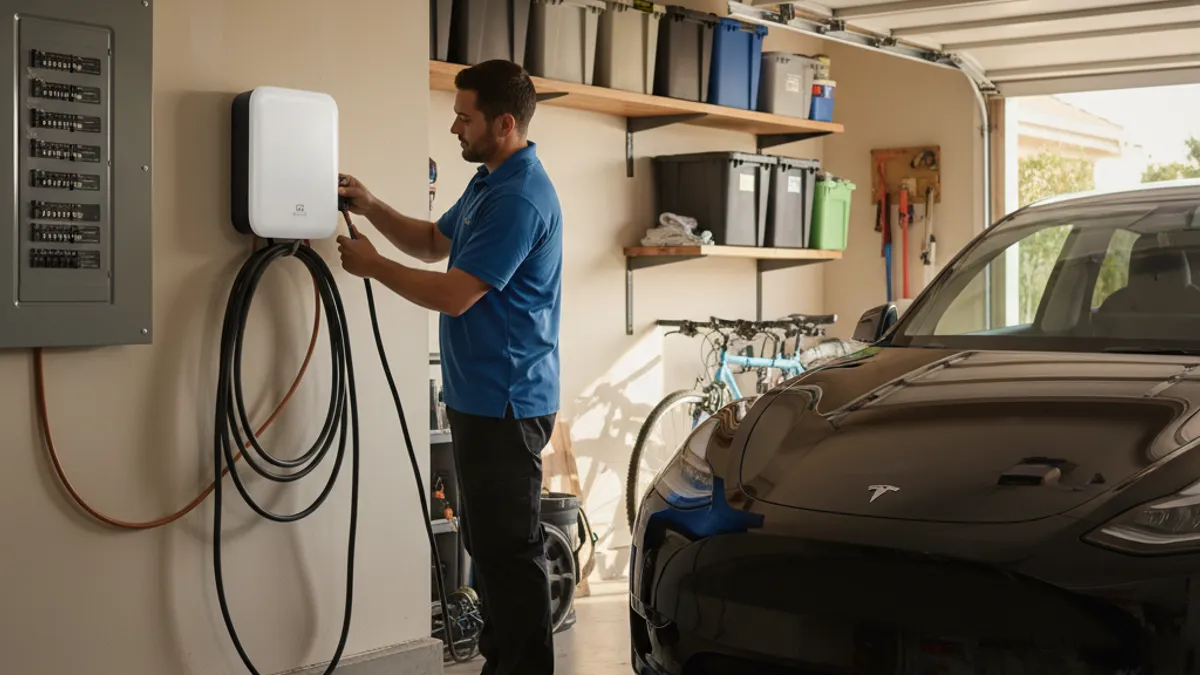
Searchers picture a box on the garage wall. The box is the small piece. A Level 2 charger needs a dedicated 240-volt circuit. That’s the same family of power as a dryer. An electrician adds a breaker. Then they run new wire to the parking spot and mount the unit. How hard that is depends on spare panel capacity. It also depends on the wire run. It depends on which building department you sit in.
The San Gabriel Valley isn’t the Westside. Census ACS 2019-2023 figures show 73.0% of Pasadena housing was built before 1980. Alhambra sits at 72.6%. Monterey Park sits at 78.3%. Glendora sits at 79.2%. West Covina sits at 76.5%. Older stock often means tighter electrical headroom. Diamond Bar is the outlier at 51.8% pre-1980. Two neighbors can still get very different quotes. The difference is usually the panel, not the charger brand.
We don’t do that electrical work. A licensed electrician does. Insist on a written load calculation before you sign.
Foothill grades change how much overnight charge you need
Pasadena sits at the foot of the San Gabriels. The I-210 Foothill Freeway meets SR-134 here. The SR-110 Arroyo Seco Parkway also ends in Pasadena. Colorado Boulevard is old Route 66 through town. Lake Avenue and Fair Oaks Avenue carry local trips. Linda Vista, San Rafael, and Hastings Ranch climb. Those grades eat range a flat commute wouldn’t.
Valley summers also run hotter than the coast. Cabin AC becomes a real range factor. Recurrent Auto’s published research shows heat and heavy air-conditioning cut real range. That loss sits below the sticker number. We couldn’t confirm station-level temperature normals for Pasadena in the sources we used. Check NWS Los Angeles/Oxnard if you want official readings. Plan the charger so overnight charging covers the next day’s climbs. Don’t size it for map miles alone.
If you already stall on those grades, that’s a rescue problem. It isn’t an install problem. Our Pasadena charging page covers that hub.
Three utilities, three different conversations
Los Angeles County has no single electric utility. That fact matters more in this valley than in most of the county.
Pasadena Water and Power
If your meter is inside the City of Pasadena, Pasadena Water and Power is your utility. It’s a municipal grid, not SCE. Confirm current EV rates and any charger programs on cityofpasadena.net/water-and-power. We couldn’t verify a named PWP EV rebate in the research for this page. We also couldn’t verify a named PWP EV rate plan there. Don’t assume an SCE program applies to a PWP meter. Ask the electrician which utility they’ll coordinate with. Ask before they file paperwork.
Old Pasadena, Bungalow Heaven, and the Caltech area mix vintage panels with newer infill. The Rose Bowl district adds event-day driving.
Azusa Light and Water
Azusa is the other municipal island in this valley. Azusa Light and Water runs that city’s grid. Confirm programs on azusalw.com. Named EV rebates for Azusa weren’t verified here. Foothill grades above Azusa also drain packs on the way home. If you stall on those climbs before the wall unit is live, that’s a rescue call. Azusa roadside help covers that backup.
SCE and Clean Power Alliance
Most of the valley outside those two cities is SCE territory. SCE publishes Charge Ready Home. That’s a rebate toward Level 2 home charger installation. It also publishes EV rate plans. Confirm current terms on sce.com. We don’t publish dollar amounts. Rebate figures change. A referral line doesn’t quote utility money.
Clean Power Alliance is the community choice aggregator for several valley cities. Alhambra and Arcadia are on that list. CPA buys the generation. SCE still delivers the power, maintains the lines, and reads the meter. You may see two line items on the bill. That split doesn’t change a stranded-car rescue. It does change who you call about an EV time-of-use plan. Don’t assume the SCE rate page is the last word. If your city is a CPA member, check both. Check cleanpoweralliance.org and your SCE bill together.
LADWP programs don’t apply to these valley meters. Skip them unless your address is actually in the City of Los Angeles.
The panel is the real job
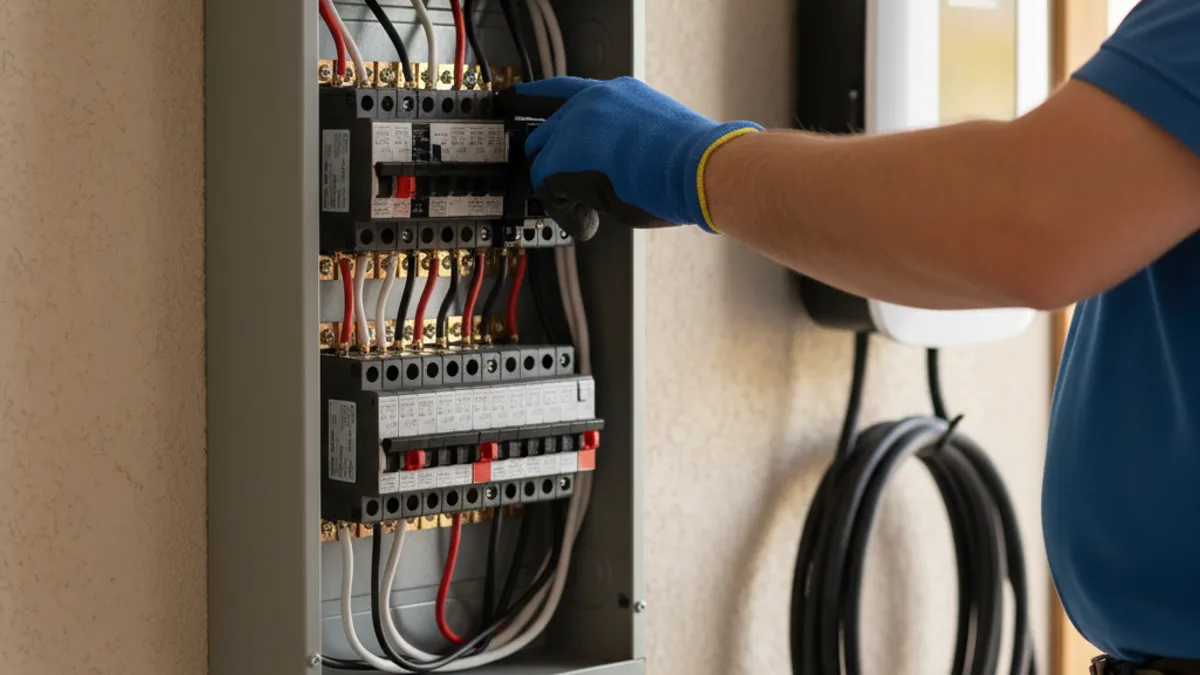
Load calculations add up existing demand. They check whether a 240-volt charger drawing around 40 to 48 amps still fits. If the math fails, electricians usually offer a few paths.
A load-management device can throttle the charger when the house is already drawing hard. That can avoid a panel swap. A panel upgrade is the heavier path. It can trigger extra utility coordination. Circuit-sharing on an existing high-draw circuit works in some garages and not others.
None of those options has a price we can publish. The electrician who installs quotes you. Charge Pro LA sets no electrical prices. If a quote looks cheap and nobody asked about panel age, pause. Our piece on old panels and mobile charging covers that wait. That’s the wait when the panel can’t take the circuit yet.
Garages in this valley also run hot in summer. Heat doesn’t stop a Level 2 unit from working. Daytime charging on a peak time-of-use plan is still the expensive way to fill. Overnight scheduling is the habit that matches valley heat. Confirm the actual off-peak window with your utility.
Permits: confirm the city, don’t guess the rule
We couldn’t confirm a single San Gabriel Valley permit fee from the sources used for this page. We also couldn’t confirm a timeline or over-the-counter rule. Each city runs its own building department. Unincorporated pockets go through the County of Los Angeles. Ask the electrician which counter they’ll use. Ask whether the permit is in the quote. Ask who schedules inspection.
California cities have been pushed to streamline EV charger permitting. That’s a statewide direction. It isn’t a promise that your counter is fast. A panel upgrade is a bigger submittal than a simple circuit. Skipping a permit to save time is a bad bet. Unpermitted 240-volt work can surface when you sell. Your insurer may also want the paper. Confirm that with your carrier, not with us.
City by city in the San Gabriel Valley
These notes use Census ACS 2019-2023 housing figures. They also use 2024 population estimates where they exist. They use the utility map above. They aren’t install quotes.
Pasadena
Pasadena is the valley’s western hub. About 136,462 residents lived here in the ACS 2019-2023 count. The 2024 Census estimate is 137,195. Hispanic or Latino residents are 34.1% of the city. Pre-1980 housing is 73.0%. Neighborhoods include Old Pasadena, Bungalow Heaven, and Hastings Ranch. Linda Vista and the Rose Bowl district sit in the same city. Caltech sits in town. PWP is the utility. Older bungalows and hillside homes are the ones most likely to need a serious load calc. The Arroyo Seco Parkway has little usable shoulder if you run low on the way home. Call for help rather than sitting in the lane. CVC 21718 allows a disabled vehicle to remain when help is already on the way.
Alhambra
Alhambra’s ACS population is 81,483. Pre-1980 housing is 72.6%. SCE delivers. Clean Power Alliance is the generation choice for the city. Older streets and mixed panels are common. Confirm EV rate questions with both CPA and SCE.
Arcadia
Arcadia sits on the 210 with Santa Anita Park as the landmark. ACS population is 55,550. Pre-1980 housing is 70.4%. SCE delivers. CPA is the generation choice. Newer pockets install more cleanly. Older lots still need the load calc in writing.
Monterey Park
Monterey Park’s ACS count is 59,639. Pre-1980 housing is 78.3%, among the older shares in this valley. Plan for a panel conversation before you pick a wall unit.
El Monte
El Monte sits on I-10. Metro ExpressLanes on that stretch need a FasTrak account. ACS population is 107,066. Pre-1980 housing is 69.0%. If you stall on the 10 before the garage circuit is live, use the next link. That freeway guide covers the 10 through this valley. Metro Freeway Service Patrol can tow a disabled car to a safe spot. Its published list doesn’t include mobile EV charging.
West Covina
West Covina’s ACS population is 107,436. Pre-1980 housing is 76.5%. The 10 and the 60 both cut through this part of the valley. Treat the panel as the first question, not the last.
Azusa
Azusa’s ACS population is 49,318. Pre-1980 housing is 69.3%. Azusa Light and Water is the utility. Foothill climbs change the overnight target. Don’t apply SCE rebate copy to an Azusa meter.
Glendora
Glendora’s ACS population is 51,350. Pre-1980 housing is 79.2%, one of the highest shares on this list. Hillside lots can also mean long wire runs from panel to parking.
Pomona
Pomona is the large eastern city. ACS population is 148,391. Pre-1980 housing is 66.8%. The 10, the 57, and the 60 all matter for commuting range.
Diamond Bar
Diamond Bar is newer on paper. Pre-1980 housing is 51.8%. ACS population is 53,750. Headroom still isn’t guaranteed. Ask for the load calculation anyway.
What to ask before you hire an electrician
Use this list on every call.
- Will you put a load calculation in writing?
- Is the panel large enough, or are we talking about an upgrade?
- Which utility serves this address, PWP, Azusa Light and Water, or SCE?
- Is the electrical permit in the quote, and who files it?
- What charger amperage is the circuit sized for?
- How far is the wire run from the panel to the parking spot?
- Can the charger schedule overnight so a time-of-use plan actually works?
Someone who answers those clearly is easier to trust. A low number for the box alone isn’t. Charge Pro LA doesn’t refer install jobs. We don’t hold a contractor license. Hire a licensed electrician for the wall work. The pros we connect you with for rescue are licensed and insured.
If the home charger later trips or dies, that can leave you stranded in the driveway. Who handles a failed home charger in LA County walks through that split.
How to stay charged while the circuit waits
You bought the car. The garage is still on 120 volts. You still have to drive the 210.
A regular wall outlet is Level 1. It adds range slowly. It can cover light local trips. It often can’t cover a foothill commute plus AC.
Public DC stalls help when they work. Don’t treat them as your only plan during a long electrical job.
This is the gap a mobile Level 2 visit fills. Charge Pro LA connects you with independent operators who bring a 240-volt Level 2 source to the car. They use a native NACS plug. They can use a CCS or J1772 adapter for non-Tesla EVs. Charging time is typically 15 to 30 minutes. That window usually adds about 10 to 20 miles of range. That’s charging time, not an arrival clock. The operator quotes you before starting and bills you directly. We don’t set the price. We don’t promise a show-up time.
Compare that boost with a finished wall unit in home 240-volt charging vs a mobile Level 2 boost. For a driveway visit while you wait, start with mobile EV charging.
If the pack is already at zero on the freeway, stay out of traffic. CVC 21809 is the move-over law that protects stopped service vehicles. Metro FSP may tow you to a CHP-chosen safe spot. It doesn’t publish an EV charge as part of that free help.
When the new wall unit fails
Installs don’t always hold. Breakers trip. GFCI devices pop. Cars wake up empty even after a full night on the plug. That’s a stranded-car problem first. Sort the warranty with the electrician after you can drive.
Don’t sit in a garage with no plan. A mobile Level 2 boost gets you to a working public stall or through the next commute. Then you call the installer on your own clock.
Frequently asked questions
How much does EV charger installation cost in the San Gabriel Valley?
No verifiable typical price turned up in the sources used for this page. Electricians quote after a load calculation. Panel upgrades, long wire runs, and utility coordination all change the number. Charge Pro LA doesn’t set install prices. Get at least two written quotes. Confirm whether the permit is included.
Do I need a permit for a Level 2 charger in Pasadena or Azusa?
We couldn’t confirm each city’s current EV charger permit rule from the research behind this page. Pasadena and Azusa run their own building counters. Other valley cities run theirs. Unincorporated areas go through the County of Los Angeles. Ask the electrician to name the counter and include the permit in the quote.
Can I charge before the home install is finished?
Yes. A 120-volt outlet can trickle range for short days. For a real 240-volt boost at the curb, Charge Pro LA connects you with an independent operator. Call (858) 925-5546. The operator quotes before work starts.
Keep the car moving until the garage is ready
A San Gabriel Valley Level 2 install is worth doing. It isn’t only a box on the wall. Name your utility first. Get the load calc in writing. Confirm the permit path with your city. Size overnight charging for foothill grades and summer AC, not for a flat map.
While that work is open, we still connect you with local mobile rescue operators. That’s also true if you run low on the 210 or the 10. They charge on site and bill you directly.