Your Tesla is on the shoulder with the pack at zero. You need miles, not a full overnight charge. A roadside Level 2 boost typically adds 10 to 20 miles. That add takes 15 to 30 minutes of charging. That’s charging time. It’s not how long a truck takes to arrive.
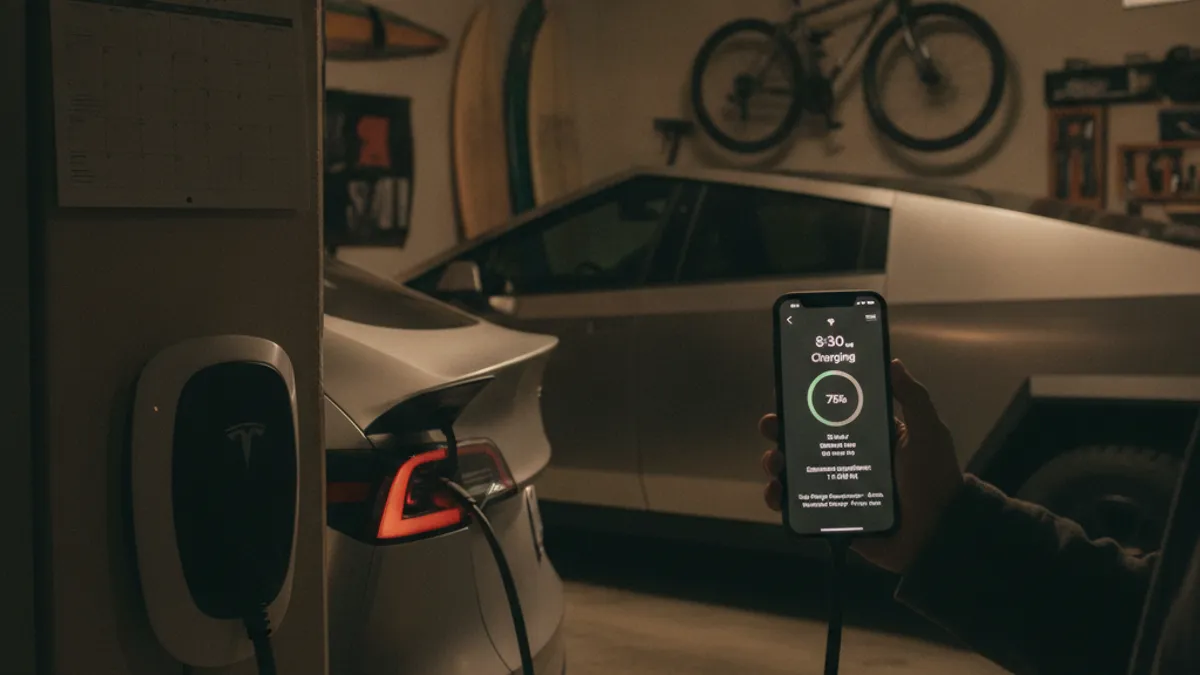
The wait that starts after the plug clicks in
A Supercharger and a home wall connector answer a planned day. Charge Pro LA is a referral line. We match stranded drivers with independent local operators. The pros we send bring a 240V Level 2 source to the car. Tesla uses a native NACS plug. CCS or J1772 adapters cover other EVs. The point is a short boost so you can roll.
Ten to twenty miles is the typical add. Fifteen to thirty minutes is typical charging time. The operator quotes you before any work starts, then bills you directly. We don’t set that price, and we don’t own the truck.
Charging time by the power you actually have
The charger class moves the clock more than the badge on the hatch.
Level 1: a regular household outlet
A 120V wall outlet is the slowest path. It usually adds about 3 to 5 miles of range per hour. A near-empty Model 3 or Model Y fills slowly here. Two to three days of continuous charging is common. That works if the car can sit. It won’t get you off the 110 or the 10.
Level 2: the 240V plug at home or at work
A 240V Level 2 circuit is the home standard. It typically adds about 20 to 44 miles of range per hour. Onboard charger size and circuit amperage set the spread. From near empty to full, most Teslas need about 6 to 10 hours.
In the City of Los Angeles, LADWP is the utility. Confirm current EV rates and charger rebates on ladwp.com. Southern California Edison serves most of the rest of the county. SCE lists EV rates and Charge Ready Home on sce.com, so confirm both there. Clean Power Alliance buys generation in cities such as Santa Monica and Culver City. SCE still delivers the power. None of that changes a roadside boost.
DC fast charging, including Superchargers
A Supercharger feeds direct current into the pack. So does a CCS fast stall from a network such as Electrify America or EVgo. On a newer stall, a Model 3 or Model Y often climbs fast. Around 10% to about 80% can take roughly 25 to 35 minutes. Older Model S and Model X cars run slower. After 80%, the rate falls on purpose. Most drivers stop there on a trip.
Why 80 to 100% feels stuck
Lithium-ion cells take current fastest in the middle of the range. They taper near full to protect the pack. Ten to 80% can look brisk. The last 20% on the same stall can eat almost as much time again. If you only need enough range to leave, you stop early. A mobile Level 2 boost works on that same curve, just slower than DC. The operator isn’t filling the battery. They’re adding enough miles to get you moving.
Weather and grades in this county
Los Angeles County isn’t one climate. The Westside and the beaches sit under a marine layer on many spring mornings. NWS Los Angeles/Oxnard calls out May Gray and June Gloom. A cooler pack accepts DC fast charging more slowly until it warms. Route to a Supercharger in the Tesla nav if you’re headed to one.
Inland valleys run hotter than the coast. Lancaster and Palmdale in the Antelope Valley see hard summer heat and cold nights. Recurrent Auto’s published tests put average retained range near 78% at 32 degrees. At 20 degrees, that average sits near 70%. Heat plus air conditioning also cuts range. A long grade north of Castaic toward the Grapevine spends miles the sticker never showed. So does the Sepulveda Pass climb on the 405.
Santa Ana winds dry the air. They don’t rewrite Level 2 math.
Empty pack or dead 12V
From the curb, both failures look like a brick. The 12V runs locks, screens, and contactors. If it’s dead, the car won’t charge until it wakes. The pros we send can jump or replace a 12V on site. They cover Tesla and every major EV brand.
LAX terminal parking in P1 through P7 offers Level 2 and DC fast charging. The Economy Parking garage lists 514 active EV chargers. A week away can still flatten the 12V. Long-stay garages near UCLA, USC, and Burbank lots see the same stall.
Freeway patrol won’t charge the pack
Metro Freeway Service Patrol is free to motorists. Caltrans, CHP, and LA Metro run it on congested county freeways. The published menu is gas, a tire change, and a free tow. CHP picks the safe spot. Dial 511 and say Motorist Aid. That list doesn’t include mobile EV charging. An empty Tesla sits outside that help, other than the tow.
California Vehicle Code 21718 bars stopping on a freeway. There’s an exception for a disabled vehicle after help has been summoned. Make the call, then stay put if you can do it safely. CVC 21809 is the move-over rule. Other drivers must change lanes when they can. If they can’t, they slow for lights on a stopped service vehicle.
When you can’t wait for a public stall
We serve every city in Los Angeles County. Charge Pro LA matches you with a local operator. That can be out-of-charge recovery, mobile EV charging, or Tesla roadside rescue. EV charging levels for stranded drivers breaks down Level 2 versus DC. What’s an EV charging truck shows what the operator brings. For the 405 at Sepulveda Pass, start with this local pass guide. Nobody here promises a drive-over clock. Once the cable is in, the typical charge session is 15 to 30 minutes.
If the traction pack is empty, that boost is the point. If the indicated pack looks fine, start with the 12V. Tesla at zero on the road covers charge in place versus a tow.
Call (858) 925-5546 when you need a local operator. They can quote a boost before any work starts.
Frequently asked questions
How long does a roadside Tesla charge take?
A typical Level 2 boost adds 10 to 20 miles. That takes 15 to 30 minutes of charging.
How long does a Supercharger take from low to about 80%?
On a newer stall, 10% to 80% often takes about 25 to 35 minutes. Past 80% the rate drops, so most drivers stop there.
Can a regular wall outlet charge a Tesla?
A 120V outlet adds about 3 to 5 miles per hour. A full charge from empty can take two to three days. It’s not a shoulder fix.