A stuck Ioniq 5 cable usually means the latch never got an unlock command. Unlock the car with the fob a few times first. End the session on the charger screen or in the Bluelink app. If the CCS plug still won’t budge, open the rear hatch. Pry the small driver’s-side panel behind the tail light. Pull the loop inside until you hear the pin click. That mechanical cable frees the connector even when the car’s software has gone quiet.
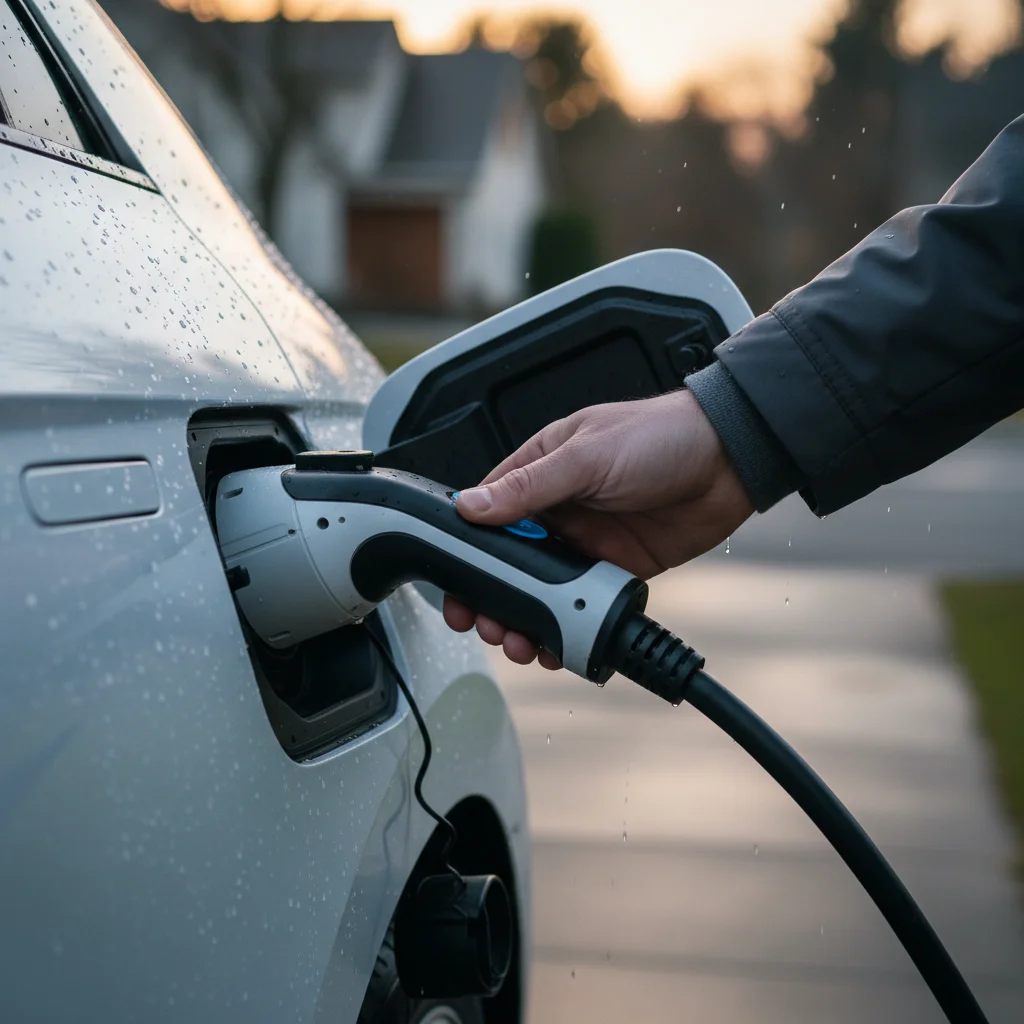
That’s the search answer, and here’s the local bind. A lot of Ioniq 5 drivers in Los Angeles County rent. They finish at a public stall with no wall connector at home. The car is pinned to a space they no longer need. The next driver is waiting on that stall.
Renters, older housing, and a stall you can’t leave
Census housing age explains the bind. In the City of Los Angeles, 71.0% of housing was built before 1980. East Los Angeles sits at 86.2%, and Huntington Park is 76.7%. Whittier is 88.9%, Long Beach is 79.6%, and Santa Monica is 75.0%. Those are older buildings and shared electrical rooms. The landlord owns the panel, so you don’t.
LADWP serves the City of Los Angeles. It publishes a Residential EV Charger Rebate Program. It also publishes a dedicated EV time-of-use rate that needs a separate EV meter. Southern California Edison covers most of the rest of the county. SCE publishes Charge Ready Home toward a Level 2 install. Both programs assume you can alter the building. A renter in a pre-1980 fourplex usually can’t. Clean Power Alliance buys generation for Santa Monica, West Hollywood, and Culver City. It also serves Redondo Beach and unincorporated county areas. SCE still delivers the power. None of that unsticks a CCS handle at a grocery stall.
So the Ioniq 5 is a public-stall car for a lot of people here. That includes Westside work garages and campus lots at UCLA or USC. South Bay errands in Torrance or Gardena use the same public plugs. LAX terminal structures P1 through P7 offer Level 2 and DC fast charging. The LAX Economy Parking garage lists 514 active EV chargers. You can still return to a plug that won’t release. The stall has power, and the latch doesn’t care.
If you rent in Santa Monica, that public session is often your only fill. The same is true in Redondo Beach and Culver City. A frozen cable isn’t a small annoyance. It’s the day’s range, sitting in someone else’s parking space.
Two locks sit on one CCS plug
The Ioniq 5 doesn’t use a simple flap and a single pin. It’s got a motorized charge door. It’s also got a separate electromechanical lock on the connector. Either part can fail in the locked position. The door can sit closed over a plug you still can’t extract. More often, the connector pin stays in the notch on the handle.
That pin is supposed to slide in when charging starts. It’s supposed to retract when the session ends, or when you unlock the doors. The car’s software sends that command. A messy handshake with a public DC unit can interrupt it. So can stopping the session at the wrong moment. So can mashing the fob while the charger is still talking to the car. The pin never gets the retract signal, so the cable stays put.
Hyundai built the car around fast DC charging. The electronics that run that handshake are also what freeze. A healthy stall fills the car. A glitchy one can refuse to let go. Other brands stick too. Read how to unlatch an EV charge cable that’s stuck in place for generic steps.
Try the cheap resets before you open the hatch
Don’t start with the liner panel. Most stuck Ioniq 5 cables are software, not a broken pin. Give the car a chance to send the unlock command again.
Keep the car off and stand by the charge door. Lock the doors with the fob, wait a few seconds, then unlock them. Repeat that three or four times, and don’t rapid-fire the button. The logic needs a pause between presses.
Open the Bluelink app if it still connects. Command a remote stop on the charging session. That stop request can wake the latch even when the fob didn’t. On the charger itself, press Stop or End if the screen still responds. Watch the display for a finished session, not a pause.
If the charger’s phone app still shows an active session, end it there too. A network that thinks you’re still charging will often keep the handle logically locked.
These steps cost nothing, and they avoid yanking a live session. A public unit that’s still in a handshake can throw a fault. That happens if you pull the plug by hand. The next renter in that same lot then inherits a dead stall. Finish the session in software first.
If nothing moves after lock cycles and a confirmed stop, the pin’s still in. That’s when you go to the cargo area.
The trunk loop that retracts the pin
Hyundai put a mechanical override in the cargo hold for this failure. Confirm the diagram in the Hyundai owner’s manual before you pry anything. The usual U.S. Ioniq 5 layout is the driver’s side of the trunk. It’s almost behind the tail lamp.
- Unlock the car and shut it off. Open the rear hatch so you can reach the cargo liner.
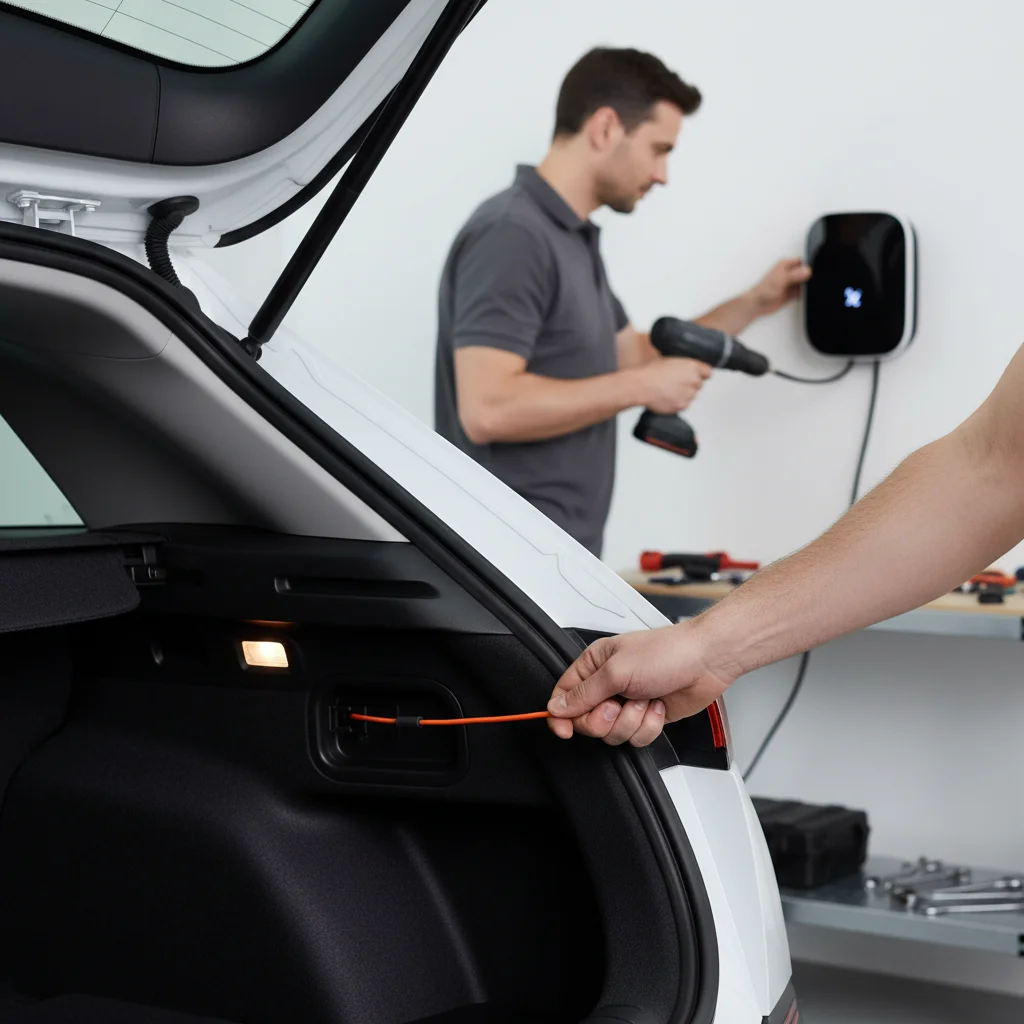
- Look left from inside the trunk, on the driver’s side. Find the small rectangular plastic panel in the liner, close to the tail light.
- Pop that panel with your fingers. If it’s tight, use a plastic trim tool. A key works if you’re gentle, so don’t gouge the liner.
- Inside you’ll see wiring and a small cable loop. It’s often got a plastic grip or an orange tab. That loop is the charge-port release.
- Hold the grip and pull it toward the center of the trunk. Use a short, steady pull, not a yank. You should hear a clunk from the charge port as the pin retracts.
- Walk back to the CCS handle and pull it straight out. It should now slide free like a normal unplug.
Snap the panel back in and close the hatch. If the door motor still works, shut the charge door. If the door stays open, don’t force it. A door that won’t motor closed is a shop issue, not a curb yank.
At a busy public stall, call the network before you pull
A locked handle in a packed lot feels urgent. People are waiting, and you’re blocking a charger you already finished. Still, skip the trunk until the station is actually done with you.
First, run the fob and Bluelink steps above. Then read the support number on the cabinet. Major networks print one on the unit. Give them the station ID. A remote tech can often force-stop the session from their side. That’s the cleanest way to release a public CCS lock.
Only after that fails should you pull the trunk loop. If the station is still talking to the car, a manual unplug can fault it. You get free, and the stall may not. Report the unit in the network’s app after you leave. Other Ioniq 5 drivers in the same county will hit that stall next.
This pattern shows up in Westside beach lots. It shows up in San Gabriel Valley grocery garages and downtown structures. The stall can be healthy, and the handshake still glitches. See public EV charger not working: what to do before you’re stuck. A cable that won’t release is a different failure. Treat it as a latch, not as an empty pack.
Private lots add a second clock. Under California Vehicle Code 22658, a private-property tow has rules. The lot needs 17-by-22-inch entrance signs. The owner or agent has to authorize the tow in writing. If you’re coupled but not yet moved, you can still get released. Storage can’t exceed the law-enforcement or CHP-approved rate. A flat statewide dollar cap isn’t published here. Confirm the current figure with the lot or the city before you pay. Don’t sit on a mall charger for hours hoping the latch rethinks it. Free the cable, or get help, before the property starts a tow.
When the 12V is what froze the port
The latch is an electronic actuator, and it needs the 12-volt battery. If that small battery is flat, the fob may do nothing. Interior buttons may do nothing, and Bluelink may not reach the car. The motorized door may sit wherever it was. People treat this as an empty traction pack, and it isn’t. The drive battery can still have range. The 12V just can’t power the lock.
A dead 12V is a common EV brick. It shows up after a car sits or after heavy accessory use. It also shows up after heat soaks a parked vehicle. Antelope Valley summers in Lancaster and Palmdale run hotter than the coast. Don’t assume a full main pack means the latch has power.
If the fob’s dead and the screens are dark, go easy on the trunk loop. A mechanical cable can still retract the pin with no 12V on many cars. If the loop is slack, frozen, or silent, don’t keep yanking. You can break the cable. Then you’ve got a stuck plug and a broken override.
The next step is a 12V jump on site, not a guess at the port. See Hyundai Ioniq 5 won’t start: the 12V checks to try for the dark-car sequence. Once the 12V is up, try the fob unlock again. Many cables release as soon as the actuator has voltage. If they don’t, then use the trunk loop with power restored.
Hardware damage, grit, and when to stop DIY
Software lockups are the usual story. Hardware is less common, and it’s worse if you force it. The actuator can seize, and road grime can pack into the pin slot. A bent CCS handle can keep the pin from clearing even after it retracts. Coastal lots in Santa Monica, Manhattan Beach, and Redondo Beach see salt air. That doesn’t prove corrosion on your car. It does mean you shouldn’t assume the pin is clean.
If the trunk loop is extremely hard to pull, stop. If you pull and hear nothing from the port, stop. If the handle still won’t come out after a clunk, look at the station’s connector. A damaged handle is the station’s problem. Forcing it can break your port door or the pin. That’s a shop visit, not a curb fix.
Ice is uncommon along the Westside marine layer. It isn’t rare on a winter night in Acton, Lancaster, or Palmdale. If the door is glazed shut, don’t pour hot water into the electronics. Confirm overnight lows with NWS Los Angeles/Oxnard. A published station normal isn’t in the sources used here. High-desert cold can make a sticky latch worse.
A renter with no home Level 2 has no quiet driveway to sort this out. You can’t limp home on a trickle outlet you don’t have. Renters without a wall box hit the same panel problem. See old electrical panel, no home charger: when mobile charging is the backup. You still need the car free of the stall before anyone can add range.
What a local operator can do that you shouldn’t
Charge Pro LA is a referral line. It doesn’t own trucks, and it doesn’t employ technicians. It doesn’t set a price or an arrival window. It matches you with independent mobile rescue operators in Los Angeles County. The operator quotes you before work starts and bills you directly.
Call that kind of help when the trunk loop fails. Call if you suspect a dead 12V. Call if you aren’t willing to open panels in a dark garage. The non-Tesla EV rescue operators in the network bring CCS and J1772 adapters. They can jump a 12V on site. They can add a 240-volt Level 2 boost. That typically adds 10 to 20 miles of range. Plan on 15 to 30 minutes of charging time for that boost. That’s charging time, never an arrival time. After the cable is free, that boost is how a renter leaves the stall. It can add enough range to get home.
If the cable is out and range is nearly gone, use mobile EV charging. The operator charges the car where it sits. You’re not pretending a 1980s rental has a 240-volt circuit it doesn’t.
When you’re ready to call, use (858) 925-5546. That number connects you with a local operator. It isn’t a promise of a clock time. Ask for the quote before any work starts.
Frequently asked questions
Why is my Ioniq 5 charge port stuck after a public session?
The locking pin inside the CCS port stayed engaged. The car never sent the retract command after the handshake ended. That’s usually software, not a snapped latch. Lock and unlock with the fob. Stop the session in Bluelink, and press stop on the cabinet. Most pins then pull back.
How do I free a stuck Ioniq 5 charging cable myself?
Work the software first. Then call the number on the charger and ask for a remote force-stop. If the handle still won’t move, open the hatch. Pop the driver’s-side cargo panel behind the tail light. Pull the release loop toward the center of the trunk until you hear a clunk. Then pull the CCS handle straight out. Check the Hyundai manual if the panel isn’t where you expect.
What if a dead 12V is why the Ioniq 5 won’t release the cable?
The port lock needs 12-volt power. A flat 12V can kill the fob, the screens, and the electronic release. A trunk loop may still work. If it doesn’t, stop pulling. Have an operator jump the 12V on site, then retry the unlock. Forcing a dark car’s port can break the actuator.