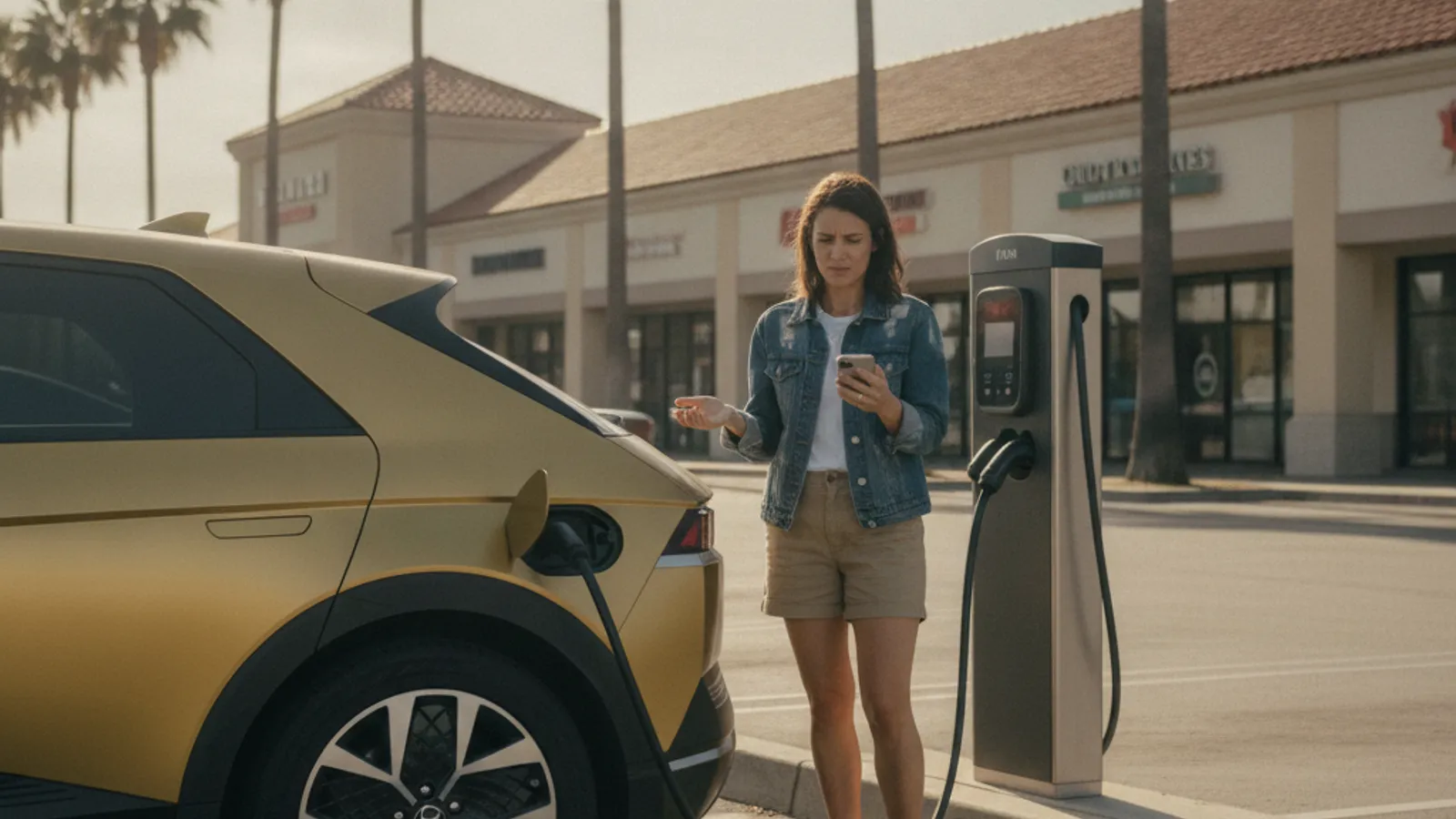
When a public EV charger is not working, treat it as a range problem, not a kiosk puzzle. Koreatown and Hollywood apartment drivers already live on those public stalls. Unplug, try one other stall, then decide from the lot whether you’ve still got enough miles to leave.
Central LA renters live on public stalls
Most City of Los Angeles housing is older. Census ACS figures for 2019 to 2023 show 71.0% of Los Angeles homes were built before 1980. A lot of that stock is apartments along Wilshire, Western, Vermont, and Hollywood Boulevard. If you rent, you probably can’t add a wall plug. LADWP does run a Residential EV Charger Rebate Program. That rebate is for people who can install. Many Koreatown and Hollywood drivers can’t.
West Hollywood sits on the same apartment belt. 80.5% of its housing is also pre-1980. Clean Power Alliance buys generation there. Southern California Edison still delivers the power. None of that helps at 9 p.m. when the grocery stall won’t start.
Koreatown and Hollywood are City of Los Angeles, so the meter is LADWP. West Hollywood isn’t. Your rescue doesn’t change with the utility.
You already know the pattern. You roll in with a tight buffer after dinner on 6th, or after a show off Hollywood Boulevard. Someone’s on the working stall. The open one throws an error. The night depends on public charging. The stall you needed is already down.
Start from the lot, not from the road
Do this in order. Give it a few minutes. Then stop.
Check the network app before you keep tapping the screen. ChargePoint, EVgo, and Electrify America all show stall status. If the stall’s already red or marked unavailable, you’ve got your answer. A connected charger that never starts is a different failure.
Restart the session from your phone. Force-close the app. Open it again. Start from there, not from the kiosk. A lot of dead-kiosk moments are a dropped handshake with the billing server. The cabinet can be fine. Your phone session isn’t.
Try a second payment path. An expired card or a lapsed plan looks like dead hardware. Use the RFID fob if you carry one. Or switch cards in the app. Do that before you blame the stall.
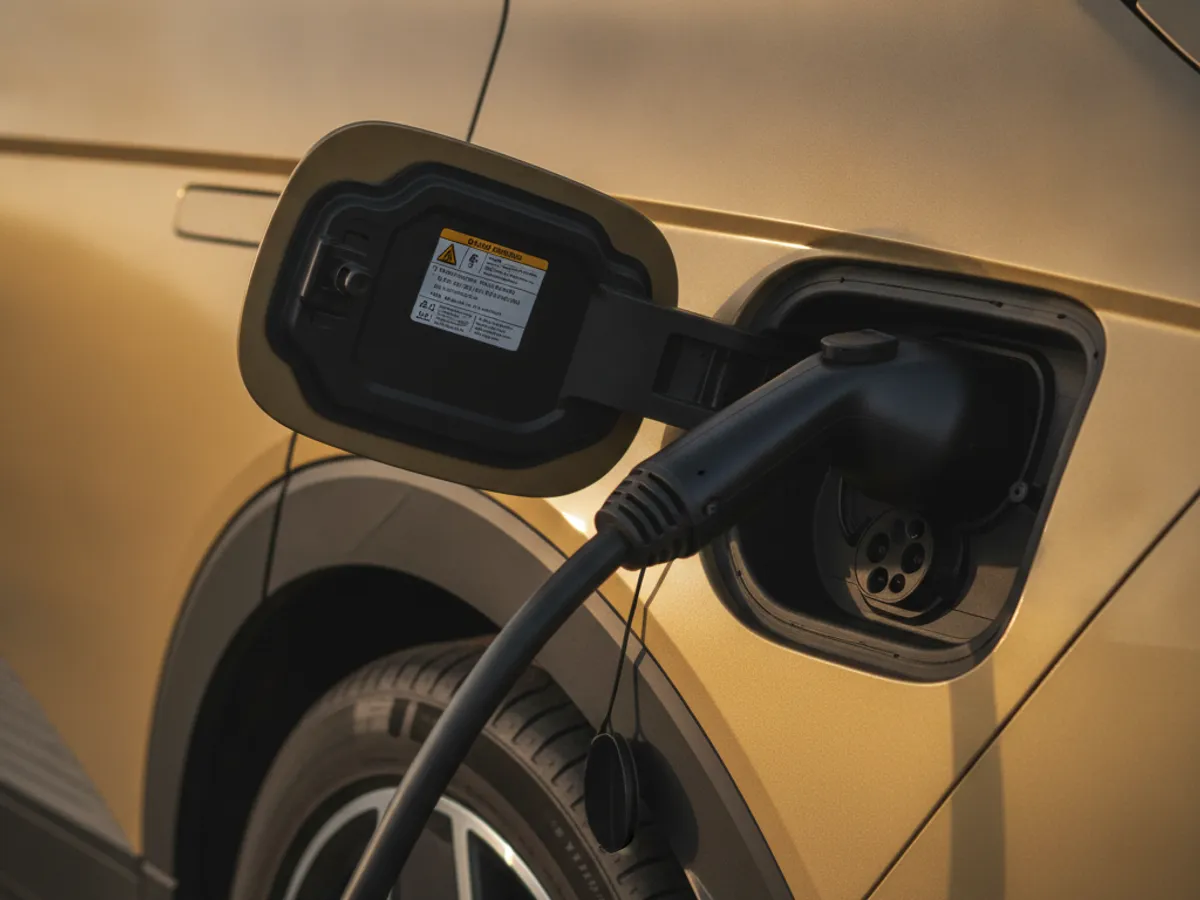
Then handle the cable. Unplug all the way. Look at the pins. A lazy seat can stop a session. Plug in firmly until it latches. If the handle feels hot, cracked, or sticky, don’t force it.
Move one stall over if you can. Fast-charge cabinets often share power. One dark screen doesn’t mean the whole bank is down. If the second stall also fails, you’re done with this lot.
Sometimes the stall is fine and the car still won’t take power. Dark screens and a charge port that won’t open point at the 12V. A 12V failure bricks the car even when the drive battery still has range. Don’t chase another kiosk if the car itself won’t wake.
A few minutes of this is enough. After that, you’re spending range you don’t have.
Why the stall failed while you were standing there
Tesla builds and maintains Superchargers as one network. ChargePoint, EVgo, and Electrify America often sit on someone else’s property. A shopping center or garage owner may own the hardware. The network runs the software and the billing. When a stall dies, two companies have to agree who fixes it. We couldn’t confirm a public repair-time figure for Los Angeles County lots. Ask the network in the app who owns that cabinet if you need it for a ticket.
The cable takes a beating. Driver after driver yanks the same connector. They drop it on concrete. They jam it into the wrong port. Inland heat is harder on the electronics than a marine-layer afternoon. The San Fernando and San Gabriel Valleys run hotter than the Westside. A Koreatown lot in late summer sits in that same basin heat. Cabinets fail faster when they run hot. That’s a pattern, not a published outage count for this neighborhood. We don’t have a verified failure rate for Hollywood or Koreatown kiosks. Treat each stall as unproven until the session actually starts.
Network signal is the quiet failure. A DC fast charger has to reach a server to bill you. If that link drops, a perfect cable still sits there dead. That’s why the app restart comes before you abandon the site.
Confirm the next stall before you roll
Don’t trust the car’s map as your only source. Open PlugShare or the network app from the seat. Read the latest check-ins. A driver who was just here will flag a dead stall before your nav redraws. See our list of charging apps to check before you run out.
If a Supercharger is in range, check that site in the Tesla app. Some Superchargers now include Magic Dock, which can take a non-Tesla directly. We didn’t confirm which Los Angeles County Supercharger sites have Magic Dock on the day this was written. Look it up in the app for the site you can actually reach. A full or down Supercharger needs the same pause. Confirm it’s working before you spend the last bar getting there.
Don’t drop onto the 101 toward Universal, or south toward the 10, on a guess. Confirm the stall from the lot. Then move.
LAX is a different kind of backup, and only if you’re already in that orbit. Terminal structures P1 through P7 offer Level 2 and DC fast charging. The Economy Parking garage lists 514 active EV chargers. That doesn’t help a Koreatown renter on Vermont. It does help if you’re flying and the airport stall you wanted is down. A week in that garage can still leave you with a dead 12V, even with chargers on site. The 12V isn’t the drive pack. A 12V failure won’t wake the car no matter how many kiosks surround it.
Griffith Observatory and Universal Studios Hollywood are the outing version of the same trap. You parked for the view or the park. You come back to a car that won’t take a charge, or won’t wake at all. Stay with the car. Don’t wander the structure hunting for a rumored working stall on a dying estimate.
West Hollywood drivers hit the same public-stall life. If that’s home base, keep the West Hollywood charging page handy for the local layout. Downtown garage strandings are their own mess. Mobile charging in downtown Los Angeles covers that setting.
Low range isn’t a scavenger hunt
A working backup only helps if you can reach it. Traffic on the 101, the 110, or Sunset will eat the cushion your car promised. Cabin AC on a hot basin evening does the same. Recurrent Auto has published that heat and air conditioning cut real range below the sticker number. Don’t treat a single-digit arrival estimate as a plan.
Sit still. Confirm the next stall is actually up. Then move. Chasing a maybe on fumes is how a broken kiosk becomes a freeway problem.
If you do stall on a freeway, California Vehicle Code 21718 generally bans stopping on a freeway. A disabled vehicle that’s already summoned help is an exception. Put on hazards. Stay out of traffic. California Vehicle Code 21809 is the move-over rule. Other drivers must change lanes or slow for a stopped emergency or tow vehicle with lights on.
Don’t wait for Metro Freeway Service Patrol to charge the car. FSP is free. It’s a Caltrans, CHP, and LA Metro program. Dial 511 and say Motorist Aid. Published help includes a gallon of gas and a tire change. It also includes a free tow to a CHP-chosen safe spot. We checked FSP’s pages on September 18, 2026. They don’t list mobile EV charging or an empty-pack boost. An empty EV may get towed off the freeway. It won’t get charged there.
CHP can also rotate a tow for a disabled vehicle. City of Los Angeles impounds run through Official Police Garages. Specific OPG fees weren’t verified here. Confirm those on lapdonline.org or lacity.gov if a tow already happened.
Private lots have their own risk. California Vehicle Code 22658 covers towing off private property. It requires posted signage. It also requires a release if you return before the car leaves. Don’t leave a dead EV sitting in a posted garage while you hunt chargers on foot.
If you’re choosing to roll, read what to do before you stall. Stretching the last bar is a parked decision, not a moving one.
Stop looking and call for a charge on site
Call for help instead of the next lot when any of this is true.
You’ve already tried two stalls, or two networks, in this lot. The session won’t start.
Your estimate is already tight, and you can’t confirm a working stall you can actually reach.
You’ve got a hard start time. A shift. A gate at Universal. A flight out of LAX. You can’t spend the evening hopping kiosks.
You’re not in a place you want to keep driving around. Late, unfamiliar, or a structure with bad cell service counts.
That’s the job mobile EV charging is built for. Charge Pro LA is a referral line. It matches you with an independent local operator. The brand doesn’t own trucks, employ technicians, or set prices. The operator brings a 240V Level 2 source to the car. Teslas take a native NACS plug. Other EVs use a CCS or J1772 adapter. A typical on-site boost adds about 10 to 20 miles. That’s 15 to 30 minutes of charging. It isn’t a promise of when someone arrives.
The operator quotes you before any work starts. They bill you directly. If the car won’t wake, the problem may be the 12V, not an empty pack. The same call can route you toward a 12V jump or replacement on site. You don’t have to find a working public station at all.
Towing a silent EV through central Los Angeles should stay the last move. You still have to get the car to a working charger after the hook. A Level 2 boost where you already sit skips that second ordeal.
Call Charge Pro LA before the last bar is gone
A dead public stall isn’t on you. If you’ve tried another stall, restarted the app, and the car still won’t take power, stop spending range. Call (858) 925-5546. We connect you with a local operator. They can bring charge to the lot you’re in, anywhere in Los Angeles County.
Frequently asked questions
Why won’t a public EV charger start a session?
Most of the time it’s the connector, the app handshake, or payment, not a dead transformer. Re-seat the cable. Restart the network app. Try the stall next to you. If the app already shows the stall down, believe it and switch plans.
Is it the charger or my car when a session fails?
Usually the stall or the network. If the car charges at home or at a different site, this cabinet is the problem. A true vehicle fault tends to throw a message on your dash. A silent kiosk with no dash error is almost always the station.
What should you do if you can’t reach another stall?
Stay with the car. Confirm there isn’t a working stall you can actually reach. Then call for a mobile Level 2 boost instead of rolling out on a guess. Charge Pro LA refers independent operators across Los Angeles County. They quote before they start, and they bill you directly.