When an EV is running low on battery in Los Angeles County, treat leftover percent as a warning. Sepulveda Pass, the Grapevine, SR-14, and PCH can turn a trusted guess-o-meter into a shoulder stop. Do the next steps before the car decides for you.
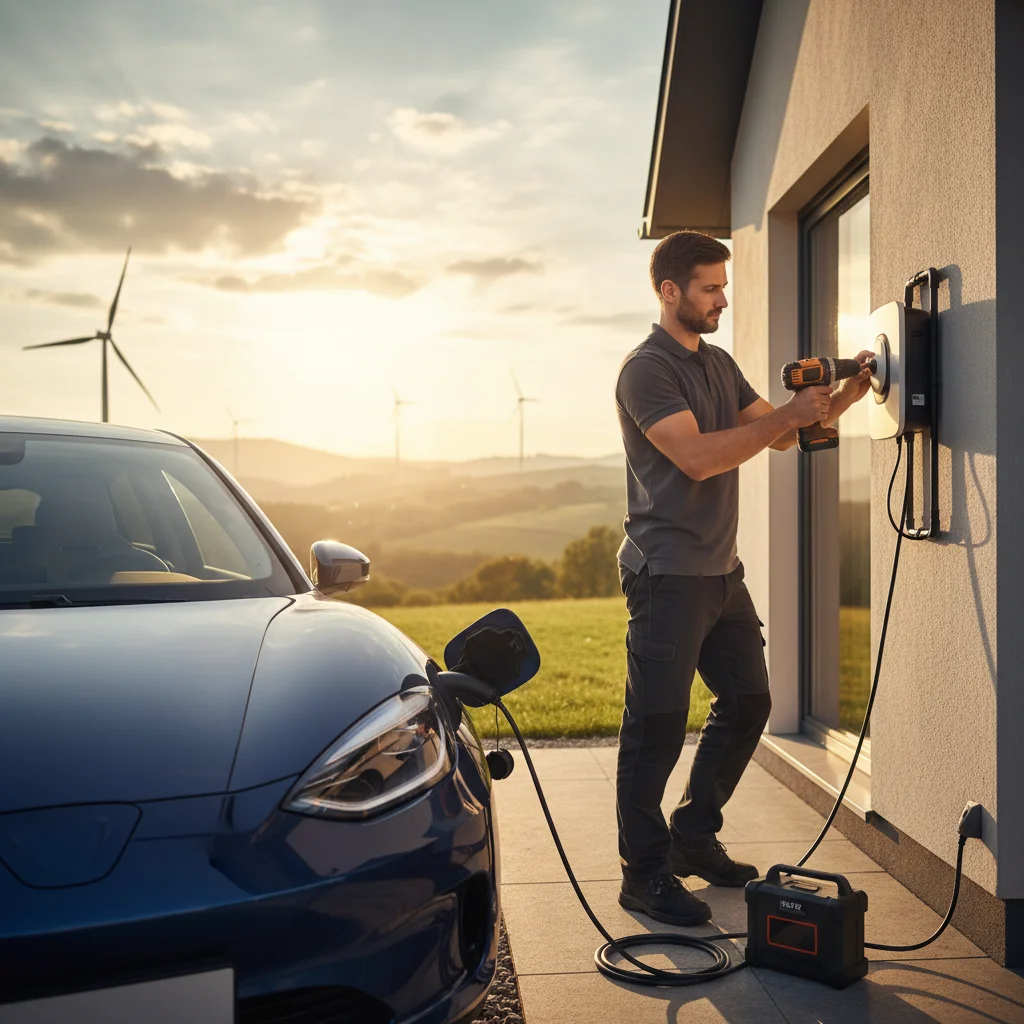
Four corridors that change leftover-mile math
The Westside and the San Fernando Valley meet on I-405 at Sepulveda Pass. That climb looks short on a map. On a low pack it’s a real job. A northbound run from Santa Monica or Culver City toward Glendale or Burbank works the car harder than the dash suggests. Our note on out of charge on the 405 at Sepulveda Pass covers that stretch.
North of Castaic, I-5 becomes the Grapevine. The grade out of the Santa Clarita Valley is the county’s defining range test. Santa Clarita had 229,021 residents in the 2019-2023 ACS count. Castaic and Stevenson Ranch feed the same climb. Don’t wait for single digits if you’re pointed at Tejon Pass. Read empty pack on the Grapevine north of Castaic before you leave town already thin.
SR-14 is the Antelope Valley run. Acton, Palmdale, and Lancaster sit past a long grade. The climate there isn’t coastal. Recurrent Auto research was read on 2026-09-18. Across 30-plus models, EVs keep about 78 percent of range at 32F. At 20F they keep about 70 percent. Cabin heat is the main drain. Summer heat and heavy air conditioning cut range the other way. The San Fernando and San Gabriel Valleys already run hotter than the coast. The Antelope Valley adds both ends of that swing. On the 14 near Acton with a thin pack, start with this SR-14 rescue note.
Pacific Coast Highway through Malibu is a different trap. You’re not climbing Tejon. You’re on a two-lane coastal road with tight places to pause. Malibu’s ACS count is 10,516. Topanga sits inland of that same mountain edge. A low percentage here is a visibility problem. Stalled on PCH in Malibu walks that pull-over choice.
A leftover percentage can look fine on a flat street. It can shrink on a grade, in heat, or against a canyon wind. Santa Ana winds and the marine layer change how hard the cabin works.
What the number on the dash actually means
The percentage you see is usable state of charge. It’s not the physical floor of the cells. Makers keep a buffer below the zero you can read. That buffer exists so a deep discharge does not wreck the pack. It’s not a hidden tank you should plan to spend.
At 10 percent, start routing to a charger you can confirm. Keep driving normally.
At 5 percent, stop shopping for the perfect stall. Take the first charger that will actually start a session.
At 1 percent, stop guessing. Brands differ on how far a car will limp after that. Check the owner’s manual and the maker’s support page for your model. Don’t test the bottom of the buffer on a grade.
The U.S. Department of Energy’s Alternative Fuels Data Center tracks real-world range. That range often runs below the EPA sticker in stop-and-go traffic. That’s the traffic on the 405, the 10, and the 110. Plan with that gap. Confirm the current wording at afdc.energy.gov.
A dead 12-volt battery can mimic an empty pack. Lights stay dark. Handles will not wake. If the car will not unlock, start with the 12-volt.
How brands cut power near empty
Drivers call the last power-limit state turtle mode. Each brand names it differently. The car protects what’s left by cutting acceleration, top speed, and extra loads.
Tesla
Tesla’s display uses a turtle icon. Official language is a very low charge state. Power drops and hard merges get harder. Keep driving after the warning and the car can crawl, then stop. Confirm the sequence for your Model 3, Y, S, or X on Tesla’s support pages.
Rivian
Rivian shows a turtle icon on the R1T and R1S. Output drops. Air suspension often locks at a fixed height to cut drag.
Ford
Ford calls the state low power mode on the F-150 Lightning and the Mustang Mach-E. It can arrive while you still see remaining range. Expect softer acceleration and prompts to shut HVAC.
Hyundai
The Ioniq 5, Ioniq 6, and Kona Electric limit output near empty. Don’t probe the last percent on I-5 north of Castaic or on the 14.
Once power-limit mode is on, you’re not commuting. You’re finishing a short move to a safe stop or a working plug.
Loads to cut while you still have a choice
Every kilowatt you stop using is distance you might still reach.
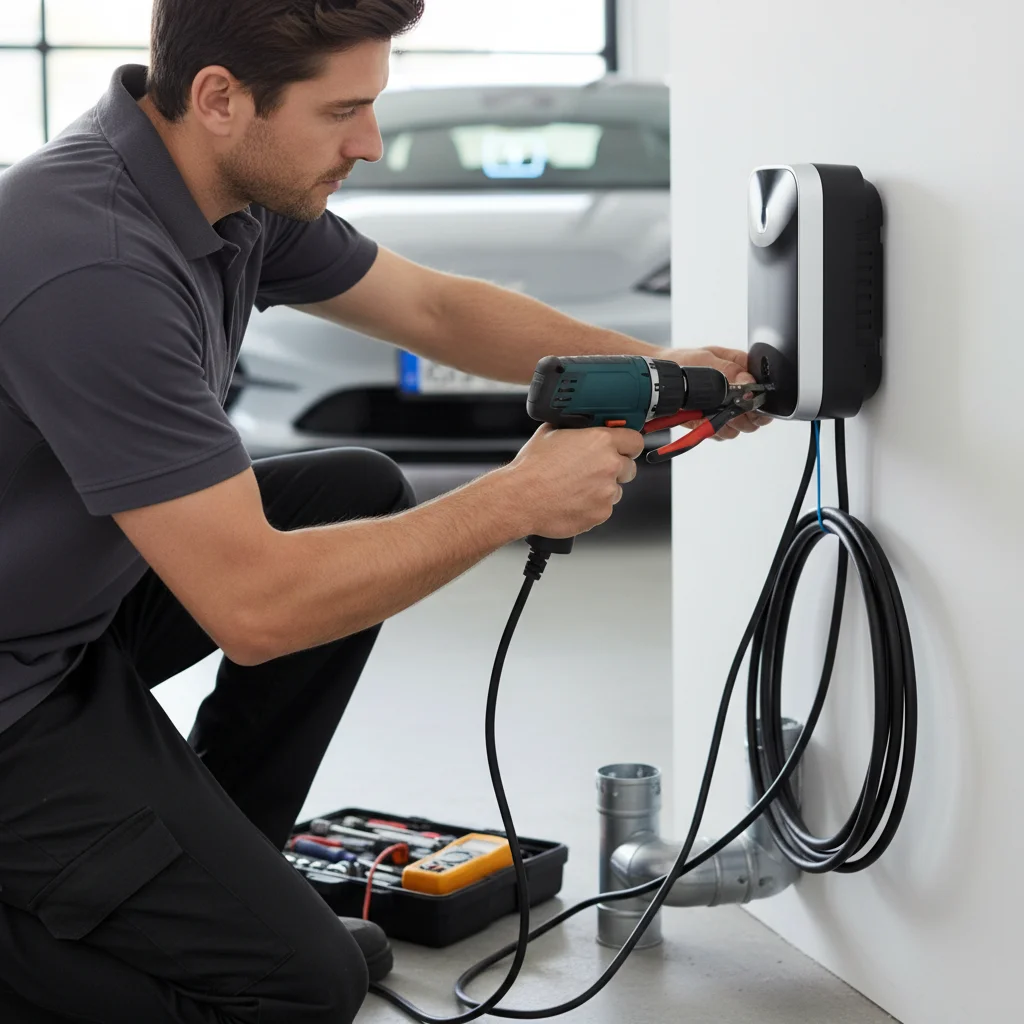
Climate control is the first switch. Recurrent’s heat and A/C research, read 2026-09-18, ties cabin load to the biggest optional drain. Heavy A/C in valley heat still costs range. Vent-only is uncomfortable. It’s also the fastest save you control.
Heated seats and a heated wheel are still a drain. Turn them off for the next few miles. Dim the screens. Kill rear displays and streaming.
Speed is the other big lever after climate. Drag rises fast as you go faster. If traffic and safety allow, ease off. On a grade, don’t floor it to finish the hill.
Finding a charger that will actually take you
Working beats the closest pin on a map. Start with in-car navigation. Tesla routing is built around Supercharger status. Ford, Hyundai, and Rivian pull live stall data into the dash. Use that before you unlock your phone.
PlugShare is the backup when a pin looks wrong. Recent check-ins tell you if a stall has been dark. You don’t need a full charge. You need enough range to stop making emergency choices.
Los Angeles International is one site with a published inventory. LAWA parking pages, read 2026-09-18, list Level 2 and DC fast charging in terminal structures P1 through P7. The Economy Parking garage lists more than 4,000 stalls and 514 active EV chargers.
For a faster scan of apps before a grade, see EV charging apps to check before you’re stranded.
LADWP serves the City of Los Angeles. Southern California Edison serves most of the rest of the county. Clean Power Alliance buys generation for many cities while SCE still delivers the power.
If you’re already on the freeway
California Vehicle Code 21718 was read on leginfo.legislature.ca.gov on 2026-09-18. It generally bars stopping on a freeway. A disabled vehicle is an exception when you’ve summoned help, when you need to avoid injury or damage, or when an officer directs you. A stranded EV that has called for assistance fits that exception.
CVC 21809 is the move-over law. Other drivers must change lanes or slow when they pass a stopped emergency vehicle, tow truck, or Caltrans vehicle with flashing lights. That law is there for you once you’re on the shoulder.
CVC 22651 lists when an officer may remove a vehicle. That includes a freeway stop left unattended for more than four hours. Don’t walk away from a live lane and assume the car can wait.
Metro Freeway Service Patrol is the free roving help on congested LA County freeways. Caltrans, CHP, and LA Metro run it. Dial 511 and say Motorist Aid. The published list, verified on metro.net and chp.ca.gov on 2026-09-18, covers a gallon of gas, a radiator refill, a taped hose, and a tire change. It also tows a disabled vehicle at no charge to a safe spot CHP chooses. That list doesn’t name mobile EV charging or an out-of-charge pack fill. An empty EV can still get the free tow to a safe location. It won’t get a Level 2 boost from the patrol as those materials are written.
Metro ExpressLanes run on I-10 and I-110. A FasTrak transponder on a funded account is required to enter. The published FAQ, read 2026-09-18, doesn’t spell out a disabled-vehicle procedure inside those lanes. If you’re low on an ExpressLane segment, get to a safe, legal stop as traffic allows. Then call for help.
When to stop and ask for a mobile boost
Sometimes the remaining number and the next working stall do not match. Find a parking lot or a wide visible shoulder. Get off the travel lane before the car quits in traffic.
Charge Pro LA is a referral line. We match stranded EV drivers with independent local mobile rescue operators across Los Angeles County. We don’t own trucks. We don’t employ technicians. We don’t set a price or an arrival time. The operator quotes you before work starts and bills you directly.
The pros we connect you with bring a 240-volt Level 2 source to the car. Teslas take a native NACS plug. Other EVs use a CCS or J1772 adapter. A typical on-site session adds about 10 to 20 miles of range in 15 to 30 minutes of charging. That’s charging time, not a promise of when someone shows up. They can also jump or replace a dead 12-volt battery on site for Tesla and every major EV brand.
If you’re parked and too empty to risk another mile, use out-of-charge recovery. If you only need enough energy to roll to a working stall, use mobile EV charging.
Call (858) 925-5546 when you’re stopped and the pack, or the 12-volt, will not get you off the shoulder. We’ll connect you with a local operator. The quote you hear is theirs.