If your EV dies on Pacific Coast Highway in Malibu, you’re in live traffic. Treat it as a stall with almost no shoulder. You’re on about twenty-one miles of SR-1. Turn the hazards on and roll as far right as you still can. Then request a mobile Level 2 boost so you can leave under your own power. CVC 21809 starts to shape nearby lanes after help arrives. That means a tow truck or service vehicle showing flashing lights. Until then, you’re a dark car in moving traffic.
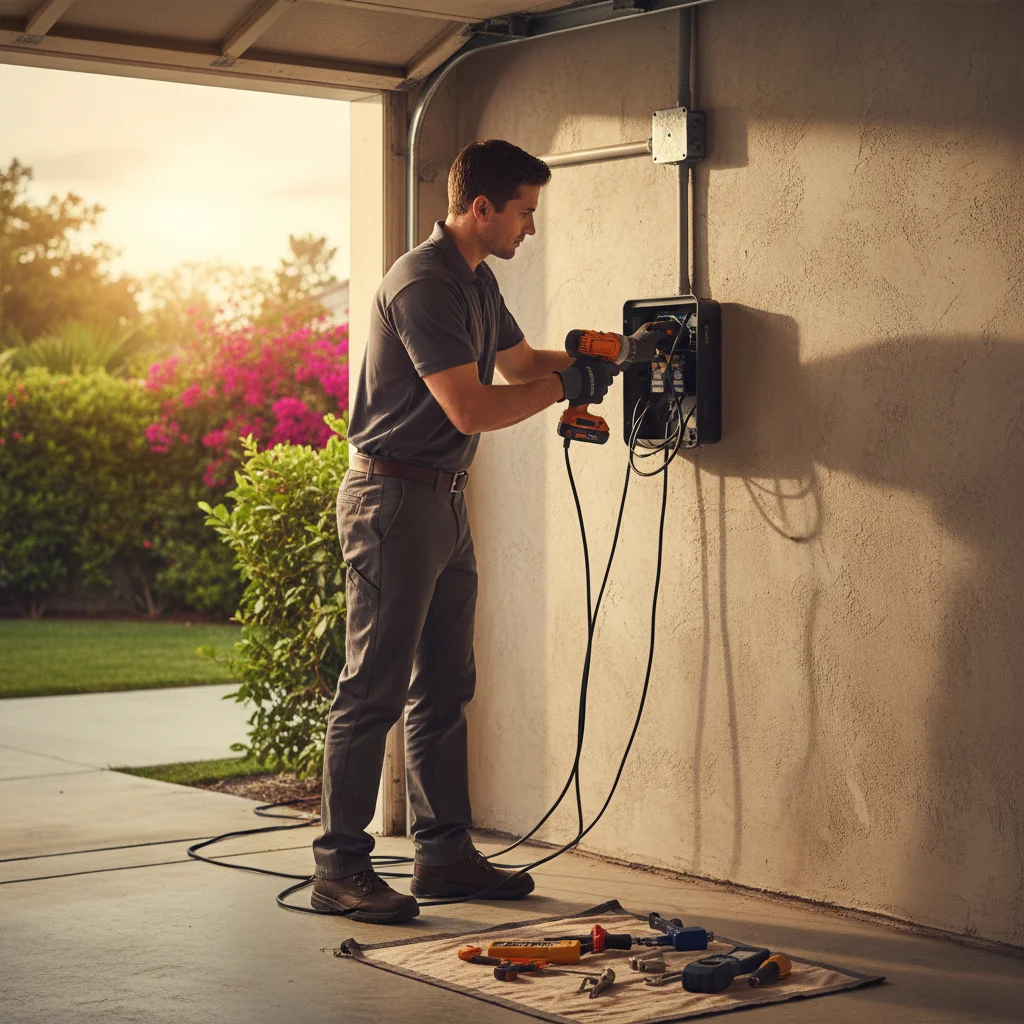
Malibu PCH is a long, thin stall, not a parking problem
Malibu is a long coastal city, not a compact beach grid. The Census ACS 2019-2023 count is 10,516 people. The 2024 estimate is 10,298, on about 19.85 square miles. Most of it sits in a strip along the water. Canyon mouths feed SR-1 from the mountains.
SR-1 is the spine along this coast. It runs from the Santa Monica line through the Civic Center toward Point Dume. Malibu Canyon Road, also called Las Virgenes, drops in from the interior. Kanan Dume Road does the same farther west. Topanga Canyon Boulevard, SR-27, meets the coast on the east end. Decker Canyon is another mountain feed onto the highway.
Those connectors don’t drive like a Westside surface street. Grades are steep, and fog plus onshore wind keep PCH speeds down. Weekend traffic crawls, and that crawl spends energy. You also spend energy hunting a spot at Malibu Colony or Paradise Cove. Heat isn’t the main range story on this coast: sustained low-speed driving is. The climb back over the Santa Monica Mountains is the other drain. A car can still show miles on flat PCH. It can still fail on the first canyon grade.
Pepperdine sits above the highway near this stretch of SR-1. Big Rock, Malibu Park, and the Civic Center dump you back onto PCH. There’s almost no shoulder to hide on. That’s why a zero-range warning here is a traffic problem. It’s not just an errand delay.
The local city guide is EV roadside assistance in Malibu. Keep this piece for the highway and the canyon junctions.
CVC 21809, and the rules that actually apply
California Vehicle Code 21809 is the move-over law. It applies when you approach a stopped emergency vehicle with flashing lights. It also covers a tow truck or a Caltrans vehicle in the same state. If it’s safe, you move to a non-adjacent lane. If you can’t change lanes, you slow to a reasonable speed.
The statute protects a working scene with lights. It doesn’t turn a silent stalled EV into a closed lane. Your hazards help, but they aren’t a tow truck’s flashers.
CVC 21718 bars stopping, parking, or leaving a vehicle standing on a freeway. A disabled vehicle fits when you’ve summoned another vehicle to help. It also fits when you must avoid injury or damage. A peace officer’s direction is another listed exception. That’s the freeway rule, not a PCH-specific exception. Pacific Coast Highway through Malibu is SR-1, a state highway with driveways and signals.
CVC 22651 lists when an officer or authorized employee may remove a vehicle. Obstruction of traffic is on that list. So is a car left unattended on a highway for 72 hours or more. The freeway unattended clock is four hours. If you’re blocking a lane on PCH, obstruction is the clause that matters right now.
California doesn’t publish a single statewide tow-rate cap. Non-consensual tow and storage rules tie to CVC 22658. They also tie to CHP or local law-enforcement approved rates. No verifiable flat figure turned up in that review of state law. Confirm the current charge with the company and the agency before you pay.
What to do in the first minutes
The moment the car starts to sag, hit the hazards. Drift right while you still have steering and a little roll. A turnout or a driveway apron is better than a travel lane.
Big Rock and the tighter cuts near the Civic Center leave little room. Point Dume and Malibu Colony have more local pavement if you can still creep. If you can still roll into a lot or a side road, do that.
Don’t step into the traffic stream to check the bumper. If you’re still next to moving cars, stay belted in the cabin. If you’re fully clear of the pavement, you can wait outside the door line.
Call for out-of-charge recovery if the pack is empty. A random tow is the last useful move on this road. A flatbed still has to load you in live traffic. Then you’re somewhere else, waiting on a stall. Read why towing a dead EV in Los Angeles County is the last call. Read it before you wave at the first truck.
If a CHP officer or a local peace officer arrives, have a plan. Say you’ve requested a mobile charge and give the landmark. A vague plan is how vehicles get rotated off a narrow highway. CVC 22651 is the removal authority for obstruction.
Canyon roads that finish a low pack
A lot of Malibu zeros don’t happen on the water. They happen on the way to PCH, or on the way home.
Topanga Canyon Boulevard, SR-27, is a winding mountain road. It runs between the 101 and the coast. The grade is long, sustained, and hard on a low pack. Cooler canyon air is secondary to the elevation change. The shoulder on that grade is poor. If you stop between the village, Fernwood, and the highway, you’re mid-canyon. See EV roadside assistance in Topanga for that connector.
Malibu Canyon Road is the Las Virgenes drop toward the Civic Center. It comes down from Calabasas and Agoura Hills. Low speed on that climb is expensive in an EV. Kanan Dume Road serves Point Dume and the western beaches, then merges onto PCH. Decker Canyon is another interior feed with the same pattern.
Don’t save your last bar for the easy coast. The coast is the thin road, and the mountains are the bill. Linger at Pepperdine or Paradise Cove only if you can still climb out.
Empty pack versus a 12-volt that won’t wake
Not every dead EV on this corridor is out of range. The 12-volt battery runs the computers, the contactors, and the latches. If that battery is flat, the car can sit silent. It can still have miles in the pack. A black screen and no ready state point at 12-volt trouble. The car drove, then slowed, then stopped on a zero-range message. Treat that pattern as an empty pack.
Operators we connect you with can jump or replace a dead 12-volt on site. They can also bring a 240-volt Level 2 source to the charge port. Teslas take a native NACS plug. Other EVs use a CCS or J1772 adapter. They handle Tesla and every major EV brand.
A typical Level 2 session adds about 10 to 20 miles of range. That takes 15 to 30 minutes of charging. That clock is plug time, not an arrival window. The operator quotes you before work starts and bills you directly.
Charge Pro LA is a referral line. We match stranded drivers with independent local mobile rescue operators. We perform no work and own no trucks. We own no equipment and employ no technicians. We set no prices and publish no arrival window. We hold no trade license for the work.
Why a mobile boost fits this highway better than a tow
Mobile EV charging brings the charger to the bumper. The point is enough range to leave the shoulder. You leave in the car you arrived in. After that you drive to a stall you can confirm.
A tow on PCH has to work with almost no shoulder. The truck still has to stage in traffic. Loading an EV the wrong way can damage the drivetrain. Even a correct flatbed leaves you at a charger you didn’t choose.
Metro Freeway Service Patrol won’t solve an empty pack here. FSP is a free joint program of Caltrans, CHP, and LA Metro. It roams congested Los Angeles County freeways. Published help is gas, a tire change, and a free tow. The drop is a CHP-chosen safe spot. That list doesn’t include mobile EV charging. Don’t wait on it for a charge on SR-1.
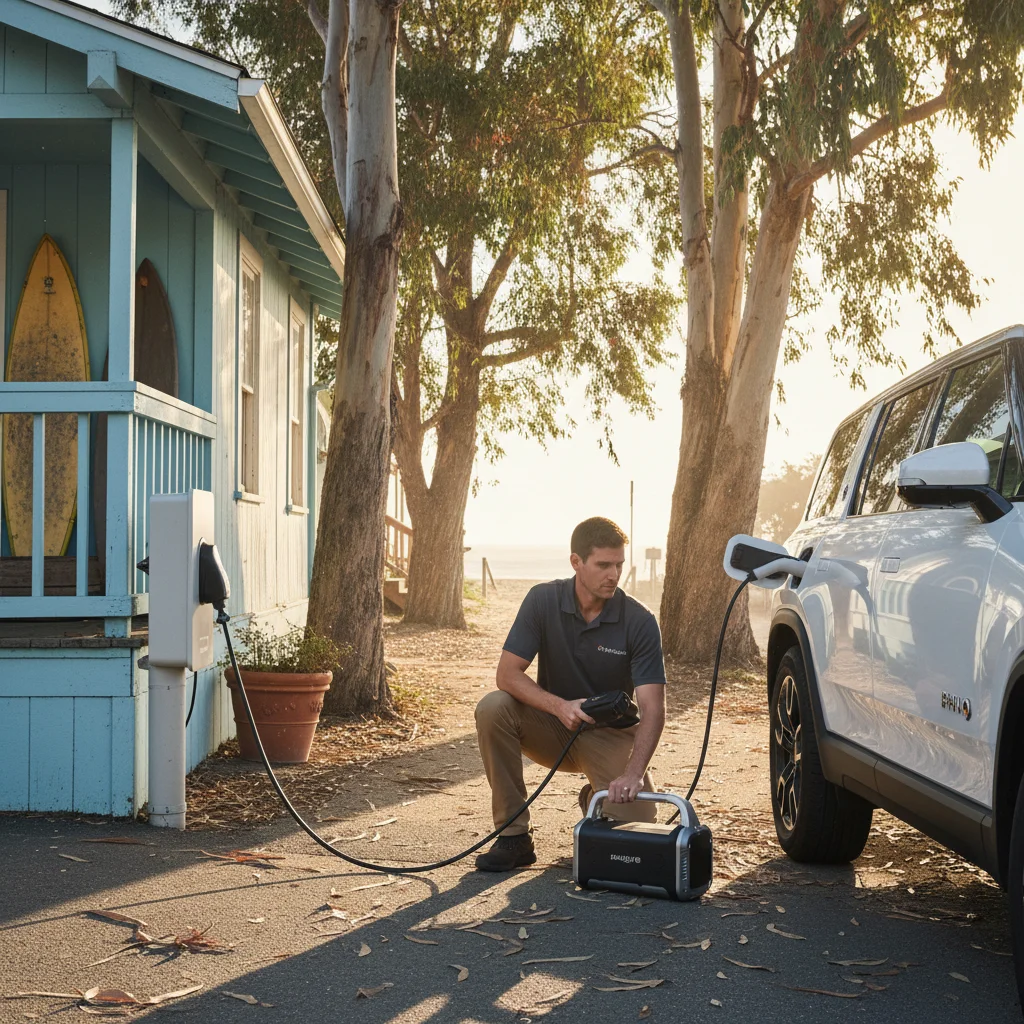
How a Malibu day actually spends the pack
Beach miles on this coast aren’t highway miles. You creep the Civic Center and idle at Point Dume. You circle Malibu Colony for a space. Each loop is small, but together they spend the buffer you thought you had. Then you still have to climb. Those canyon roads ask for a hard, low-speed pull. Fog keeps PCH in a crawl with little regen to give back.
Malibu is a Clean Power Alliance community, so CPA buys the generation. Southern California Edison still delivers the power and reads the meter. That split doesn’t change a roadside rescue.
Check a charging app only if you still have enough roll. Use it to confirm a stall before you drive there. If you can’t verify a working plug, stay put. Don’t spend the last miles on a detour you can’t prove.
Give the operator a landmark that exists on a map. Pepperdine, the Civic Center, Big Rock, Point Dume, or Paradise Cove will do. A canyon junction works as a landmark too. Say ocean side or mountain side, and whether you’re in a lane. Name the brand and whether the pack is empty or the car won’t wake.
The pros we connect you with are licensed and insured. Charge Pro LA isn’t the party doing the work. We serve every city in Los Angeles County. Place context is on the Malibu charging hub. County-wide steps are in what Los Angeles County EV drivers should do when stranded.
When you’re ready to request a match, call (858) 925-5546. An independent operator quotes the job before anything starts. You pay that operator, and nobody here can promise a clock. Get the car as far right as it will go. Keep the hazards on and stay out of the traffic stream. That’s when CVC 21809 starts to move other drivers out of the lane beside you.