You’re out of charge on I-5 near Santa Clarita. This valley is the last flat charging before the Grapevine and the SR-14 climb. If remaining range is already thin, don’t take either grade on a guess. Pull fully onto the shoulder and turn the hazards on. Then call for a mobile Level 2 boost.
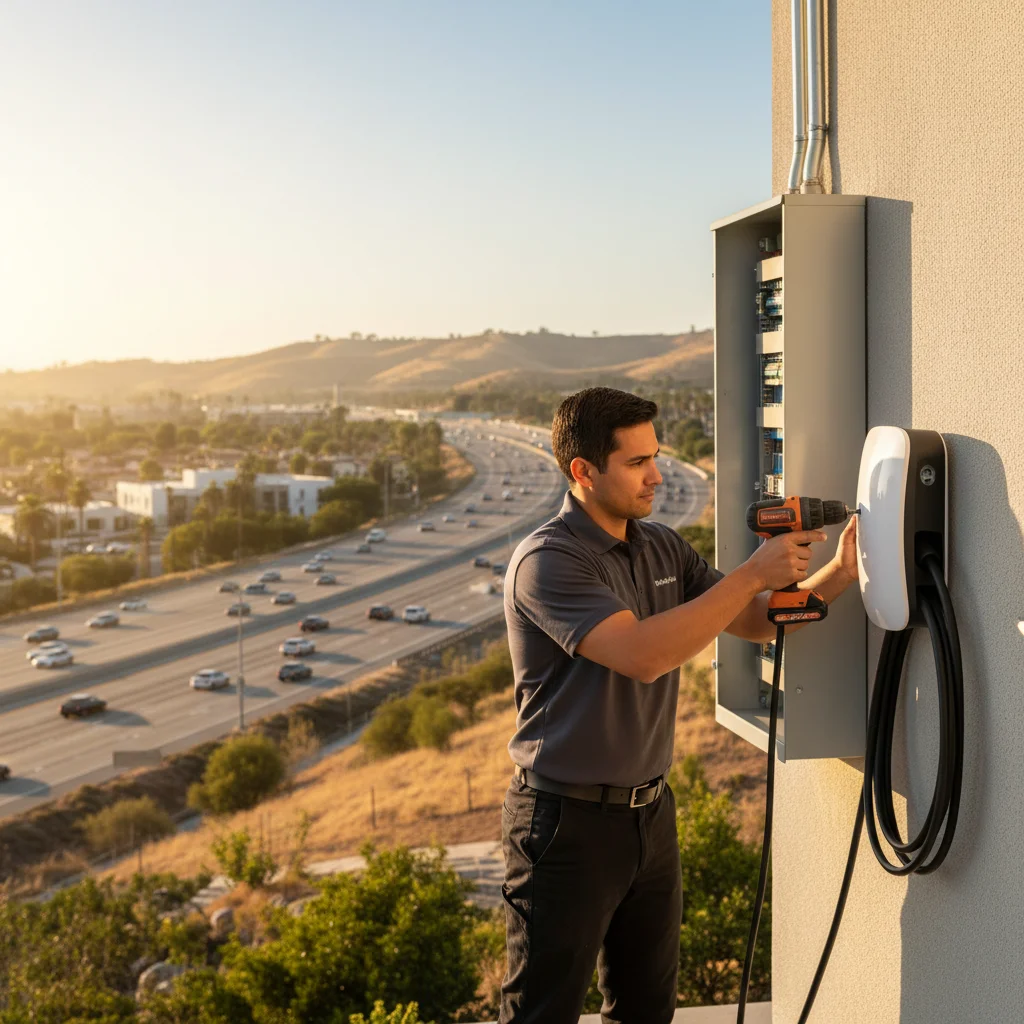
This valley sits under two mountain grades
Santa Clarita is the launch point for I-5 north over Tejon Pass, the Grapevine. It’s also the start of SR-14 east into the high desert. The Golden State Freeway and the Antelope Valley Freeway meet at the Newhall Pass. From Valencia, Newhall, Saugus, and Canyon Country, both climbs start close. They’re long grades, not short ramps.
The Census puts the city at 229,021 residents in the 2019-2023 ACS. The 2024 estimate is 229,159. It’s 73.614 square miles, so Santa Clarita is not one exit. The Six Flags district and the Westfield Valencia district add weekend surges. Weekday commutes already use the same ramps. McBean Parkway, Soledad Canyon Road, and Sierra Highway feed the same freeways.
Stevenson Ranch is the I-5 hillside community just south of the city. Pico Canyon, The Old Rd, and Stevenson Ranch Parkway are the names to give. Castaic sits farther north, last town before the Grapevine. Lake Hughes Road, Parker Road, and Hasley Canyon are the local cuts. Castaic Lake and the truck-stop row sit along the same freeway. Empty here, you’re still on the last flat charging before the mountains.
Hot, dry summers and cool nights mark this climate. Cabin AC plus the climbs north and east is why packs sag here. Recurrent Auto’s published research links heat and heavy air-conditioning to real range loss. That matches what the Grapevine does to a pack that looked fine in Valencia.
Why the pack dies on this stretch
Drivers set range habits on flatter San Fernando Valley miles. Then they hit this transition zone. San Fernando and Burbank sit south of the Newhall Pass. Santa Clarita is already the step before the mountains. A commute that felt easy at noon can come home tight. Hours of AC spend the same buffer.
Six Flags Magic Mountain traffic is the other local pattern. Park lots fill, ramps stack, and low-range cars sit in heat. That’s a stranding setup even before anyone aims at Tejon Pass. Long commutes out of this valley spend that buffer too.
Northbound, the risk is the Grapevine out of Castaic. Summer heat on that sustained grade drains packs fast. Winter can bring snow and chain controls at the summit. Eastbound, SR-14 toward Acton, Palmdale, and Lancaster is the second mountain. Same valley, two different ways to run out.
Hasley Canyon and Val Verde sit on the Castaic edge, not on the pass. Southern Oaks and the Pico Canyon district sit on the Stevenson Ranch side. Those names help more than a vague valley pin. The Newhall Pass interchange is the hinge. Miss a charge there and both mountains are in play.
Don’t treat leftover dashboard miles as a promise once you leave the flats. Confirm a public stall in your charging app before you commit to either pass. If you’re already at zero on the Golden State, skip the scavenger hunt. Stay visible, then get kilowatts brought to the car.
What the law allows on the shoulder
California Vehicle Code 21718 bans stopping or parking on a freeway. It also bans leaving a vehicle standing there. A disabled vehicle is an exception when you’ve summoned help. It’s also an exception if you need to avoid injury or damage. An officer can direct you to stop too. An EV that’s out of charge with help already called fits that exception. Get as far right as the pavement allows, then stay there.
Hazards go on before you open a door. If you step out, use the passenger side. Don’t stand between the car and live traffic. Don’t walk the shoulder toward the next exit. Wait with the vehicle.
Other drivers must move over or slow under CVC 21809. It covers a stopped emergency vehicle, tow truck, or Caltrans vehicle with flashing lights. That rule exists because a freeway shoulder is still a live traffic zone. Your job is to be obvious and still.
Dial 511 and say “Motorist Aid” so CHP has you in the system. Metro’s Freeway Service Patrol is a joint Caltrans, CHP, and LA Metro program. It’s free to motorists on congested Los Angeles County freeways. Published help includes a gallon of gas and a tire change. They can refill a radiator or tape a hose. They can tow you free to a safe spot CHP chooses. The published list doesn’t include mobile EV charging or a pack refill. FSP can clear you off a bad shoulder. It won’t put miles back in the battery.
Don’t treat the stop as overnight parking. Under CVC 22651, officers may remove a vehicle unattended on a freeway for four-plus hours. An occupied car with lights on and help coming isn’t an abandoned one. Still, the shoulder is temporary.
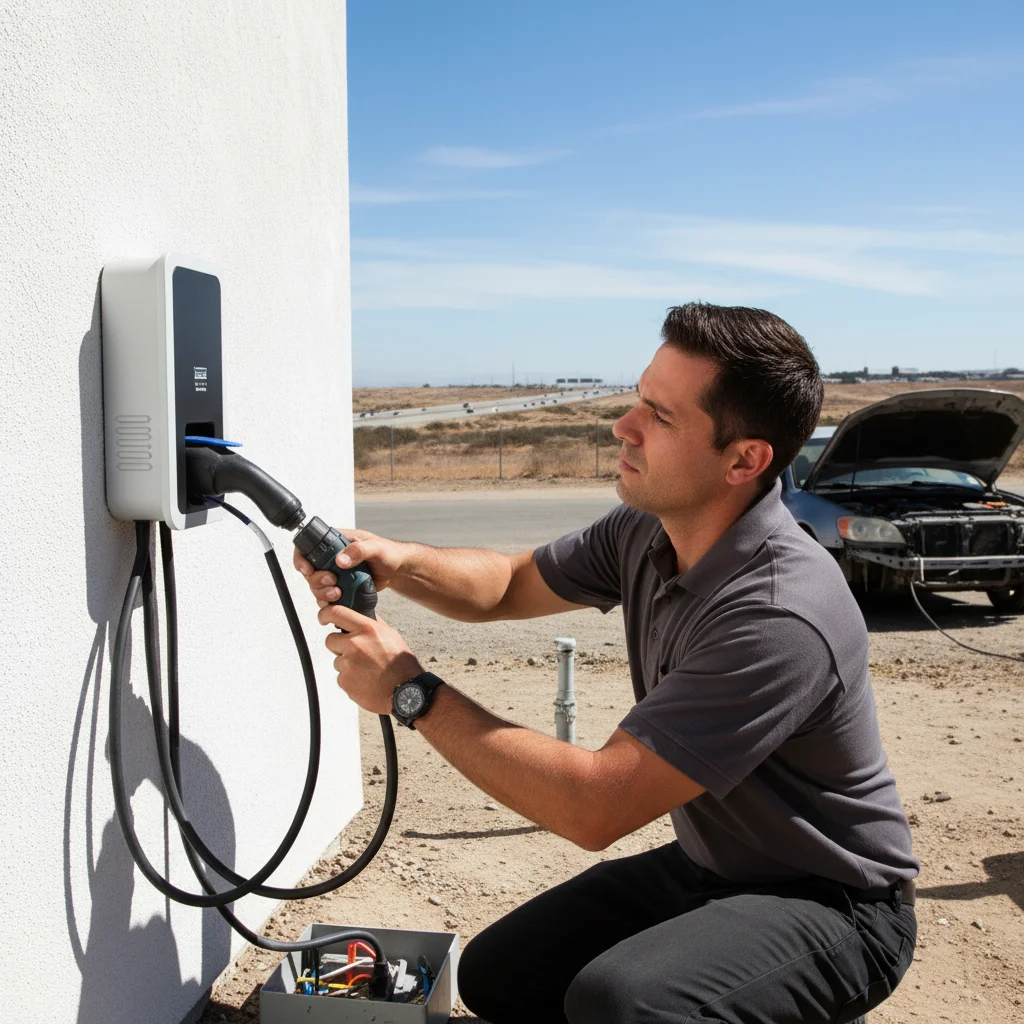
What a mobile Level 2 rescue actually is
Charge Pro LA is a referral line, not a yard with trucks. We match stranded EV drivers with independent local mobile rescue operators. We don’t perform the work or own the equipment. We don’t set the price either. The operator quotes you before anything starts, then bills you directly.
The operators we connect you with bring a 240-volt Level 2 source to the car. Teslas use a native NACS plug. Other EVs use a CCS or J1772 adapter. A typical session adds 10 to 20 miles of range. That takes 15 to 30 minutes of charging. That’s plug time, never a promise of when someone arrives. It’s usually enough to leave the shoulder. Then you can reach a stall you confirm in your app.
If the car is dark and won’t wake, it may not be the pack. The 12-volt battery runs the computers that let the pack work. Operators can jump or replace a dead 12V on site. Tesla and every major EV brand are in scope. That includes Rivian, Ford, Hyundai, Kia, and GM. Name the model so the right adapter is on the truck.
A gasoline jump pack won’t fill a traction battery. FSP’s gallon of gas is the same mismatch. You need Level 2 energy at the charge port. Or you need a 12V wake-up if the computers are asleep. Those are different jobs. Tell the operator which one you’re looking at.
For a pack that’s actually empty on I-5, out-of-charge recovery is the matching call. Broader EV roadside assistance covers the 12V case and a car that won’t unlock. It also covers this corridor when you’re not sure which battery failed. What’s on a mobile EV rescue truck walks through the hardware on that truck. The pros we connect you with are licensed and insured. Charge Pro LA isn’t the licensee on the job.
Give a location a truck can actually find
Santa Clarita covers 73.614 square miles. “I’m somewhere in the valley” burns time. Say northbound or southbound I-5. Give the last exit you passed. Use McBean Parkway, Pico Canyon, The Old Rd, or the Newhall Pass. The Six Flags ramps or Castaic work too. Nav coordinates work when the mile post is unreadable. Right shoulder versus a gore point matters too.
Add year, make, model, and color. Then state of charge, or the fact that the screens are dead. Three percent and still in Drive is a pack problem. A silent car is often 12V. If CHP is already on scene, say so. The operator can then approach how the officer wants.
For valley-specific next steps, start with EV roadside assistance in Santa Clarita. If you’re already north of town, use the Grapevine note near Castaic. South of the city, use the Stevenson Ranch note on the 5. If you turned onto the 14, use the Acton corridor piece.
Charge on the flat, then climb
The habit that belongs here is simple. Finish charging in this valley before you take I-5 north or SR-14 east. Santa Clarita, Stevenson Ranch, and Castaic are the last flat charging before those grades. If you skip that and hit zero on the Golden State, stay put. Call from the shoulder. Don’t limp onto the Grapevine on a number you no longer trust. Don’t limp up SR-14 that way either.
A tow is the backup, not the opener. If the car takes a Level 2 plug, you can often leave on your own. FSP’s free tow to a CHP-chosen safe spot is still there. Use it if the location is unsafe, or the car won’t take a charge. Either way, you’re not solving this with a gallon of gas.
If you’re out of charge on I-5 near Santa Clarita, call (858) 925-5546. We’ll connect you with a local operator who quotes the job before plugging in.