Valley heat and a weak public stall both cut EV charging off at a random percentage. Your car didn’t pick that number. The pack got too warm, or the stall dropped power mid-session. A stop at the same percent every time is a limit you set. A stop at 39% one afternoon and 72% the next isn’t a setting. It’s the session ending before you got the number you wanted.
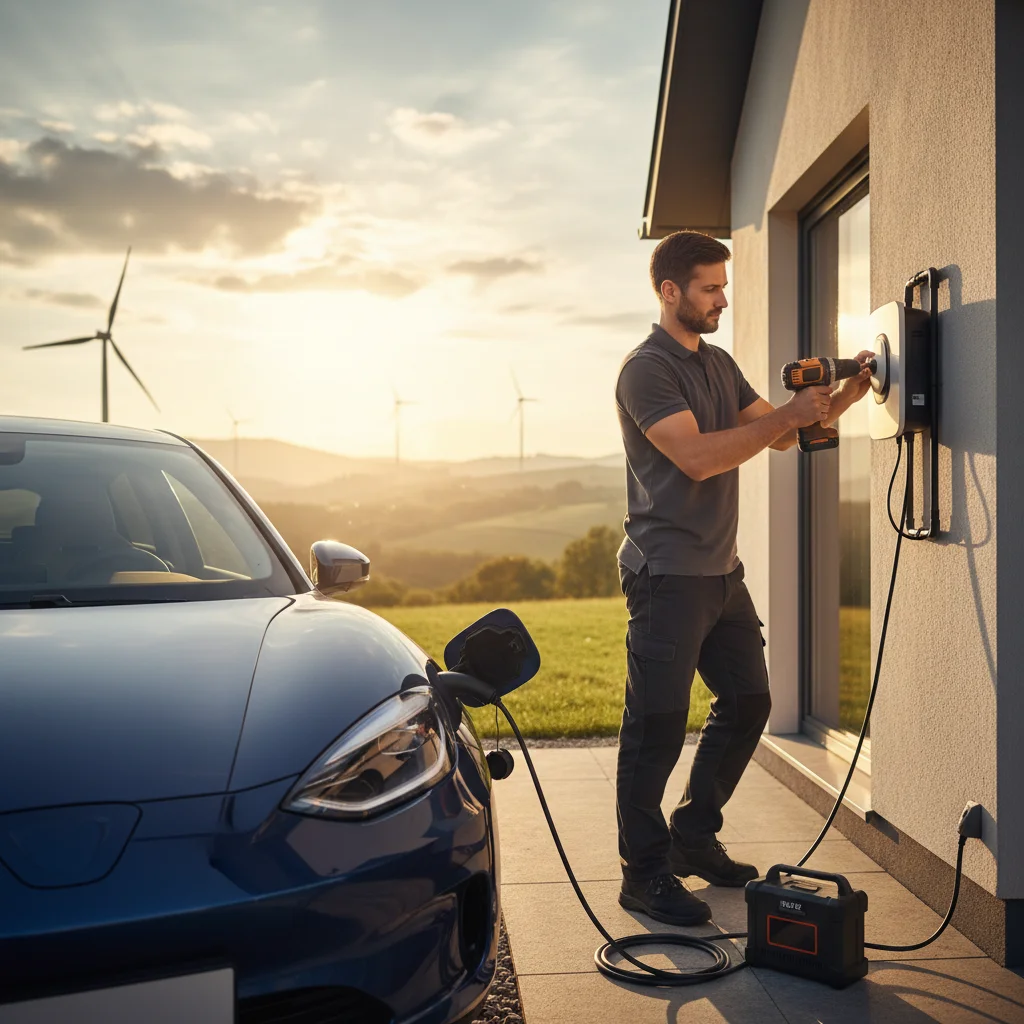
A charge limit isn’t a random stop
Check the car’s app or the center screen before you chase faults. Most EVs let you cap daily charging in the 70 to 90 percent range. That cap is there to protect pack health over years of use. If every session ends on that number, the car followed your rule. Random stops don’t match that cap. They land at different percentages after a hot drive or a public DC plug.
Heat in the valleys, and a stall that folds
Los Angeles County isn’t one climate. The San Fernando Valley and the San Gabriel Valley run hotter than the coast. Glendale, Burbank, and San Fernando sit inland of the marine layer. Pasadena, El Monte, and West Covina bake along the 210 and the 10. Lancaster and Palmdale in the Antelope Valley see triple-digit summer heat. A pack that sat in that sun is already warm when you plug in.
Charging adds more heat on top of the drive. The battery management system, or BMS, watches pack temperature, not the percent on screen. It slows the rate first. If the pack keeps climbing, it pauses the session until things cool. From the driver’s seat that pause looks random, but it isn’t. A cool overnight park in a Burbank garage can take a long session. After a midday run up the 5 toward Santa Clarita, that pack can quit early.
The 405 through Sepulveda Pass makes this easy to miss. You leave Santa Monica or Culver City with a pack that still feels fine. You crest into the Valley with cabin AC working the whole climb. Then a public stall dies at a percent you didn’t choose. After a Santa Ana afternoon in Calabasas, the same car can quit even earlier.
A weak stall produces the same messy percentages. Public DC cabinets share power with the plug next to yours. On a hot afternoon the hardware derates to protect itself. The session can crawl, then quit, at whatever percent you’d reached. It’s the stall folding in heat. If the plug says connected and nothing is moving, start with the stall. Our guide on a public charger that’s connected but not charging covers that stall-side failure.
Coastal lots in Redondo Beach and Manhattan Beach often sit under May Gray or June Gloom. The same EV can finish a session on the coast. It can quit early after canyon grades in Topanga. Geography is the pattern, not a glitch in the app.
Heat and cabin AC also cut real range below the sticker number. Published range-loss studies show summer heat and heavy AC load reduce range. There’s more in how to care for an EV battery through LA heat, cold, and grades.
Tell a hot pack from a bad stall
If home Level 2 finishes the way it should, the car is taking a charge. If only a public DC stall dies at odd percentages, treat the station as the suspect. Move to another stall if one’s open. A slower Level 2 session is a clean test. If that session completes, the car is probably fine.
If every plug quits at odd numbers, including home Level 2, start with heat. Cool mornings in shade that still cut off at random percentages aren’t a typical thermal pause.
A weak 12V can interrupt charging in a way that looks random too. The high-voltage pack may still show plenty of range. The 12-volt system is what keeps the charging computer awake. When it sags, the session can die halfway. Our guide on when an EV 12V dies walks through that failure.
What the dashboard pattern usually means
| What you see | Likely cause | First check |
|---|---|---|
| Same percent every session | Charge limit in the car | App or screen charge cap |
| Different percents after a hot drive | BMS pausing for pack temperature | Rest in shade, then retry |
| Different percents only on public DC | Stall derating or shared cabinet load | Another stall, or Level 2 |
| Random stops on cool mornings too | 12V sag or a charging fault | 12V health, then a shop if it repeats |
| Stops and won’t restart | Fault at the car or the stall | Treat it as a failure, not a pause |
What to do when the session dies early
When heat is the cause, waiting beats tapping every menu. After a hot drive, let the car sit before you start a DC session. Shade or a garage cools the pack more than people expect in Valley sun. Early morning or evening charging often finishes when a midafternoon session won’t.
Terminal parking in structures P1 through P7 at LAX offers Level 2 and DC fast charging. The Economy garage has more than 4,000 stalls, including 514 active EV chargers. A pack that’s already hot from the 405 can still pause at a random percent there. A car that sat a week can refuse to wake on a dead 12V, even if the stall works.
If you’re on a freeway shoulder, California Vehicle Code 21718 lets a disabled vehicle stay put once you’ve called for help. Metro’s Freeway Service Patrol can bring gas, change a tire, or tow you free to a CHP-chosen safe spot. Its published motorist-assistance list names gas, a radiator refill, and a tire change. It doesn’t list mobile EV charging.
When you need miles, not another failed plug
A session that keeps cutting short can leave you under the range you planned. Sitting at a dead stall hoping the percent will climb isn’t a plan. Mobile EV charging matches you with an independent local operator who brings a 240-volt Level 2 source to the car. Teslas get a native NACS plug. Other brands use a CCS or J1772 adapter. A typical on-site boost adds about 10 to 20 miles of range in 15 to 30 minutes of charging. That’s charging time. It isn’t an arrival time. The operator quotes you before work starts and bills you directly. Charge Pro LA is the referral line. We don’t own the truck, and we don’t set the price.
Valley drivers who keep hitting this after Sepulveda Pass can start with mobile EV charging across the San Fernando Valley. If you’re already low, see EV running low: what to do before you stall in Los Angeles County.
When the weather isn’t the story
Repeating random stops on cool days, in shade, and on home Level 2 point past temperature. That can be a failing onboard charger, a BMS fault, or a weak 12V. Charge Pro LA doesn’t repair battery management hardware. The operators we connect you with can get you enough range to reach a shop.
Frequently asked questions
Why does my EV stop charging at a different percentage every time?
The BMS pauses when the pack is too warm from driving or from Valley heat. A public stall can also derate and drop the session at whatever percent you’d reached. Neither event is tied to one number, so the stop looks random.
Is it bad for the battery if charging stops early from heat?
The pause is the protection. The BMS is stopping heat stress, not failing. Letting the pack cool, then finishing later, is the safer path.
Could a random charging stop mean something is wrong with the car?
It can, if temperature and the stall don’t explain it. Cool mornings and a home Level 2 that still quit are the tell. Have the 12V checked if that pattern holds.
If a cut-off session left you without enough range to move, call Charge Pro LA at (858) 925-5546. We’ll connect you with a local mobile rescue operator who can quote an on-site Level 2 boost.