The Hyundai Ioniq 5 battery size is 58.0 kWh on the Standard Range pack and 77.4 kWh on Long Range. Those are gross figures. Usable energy sits closer to 54.0 kWh and 74.0 kWh. EPA stickers list 220 miles, 303 miles, or 260 miles by drivetrain. That sticker is not commute range in Los Angeles County. Foothill climbs and summer air conditioning take a real bite. The dash after a San Gabriel Valley day is the number that counts.
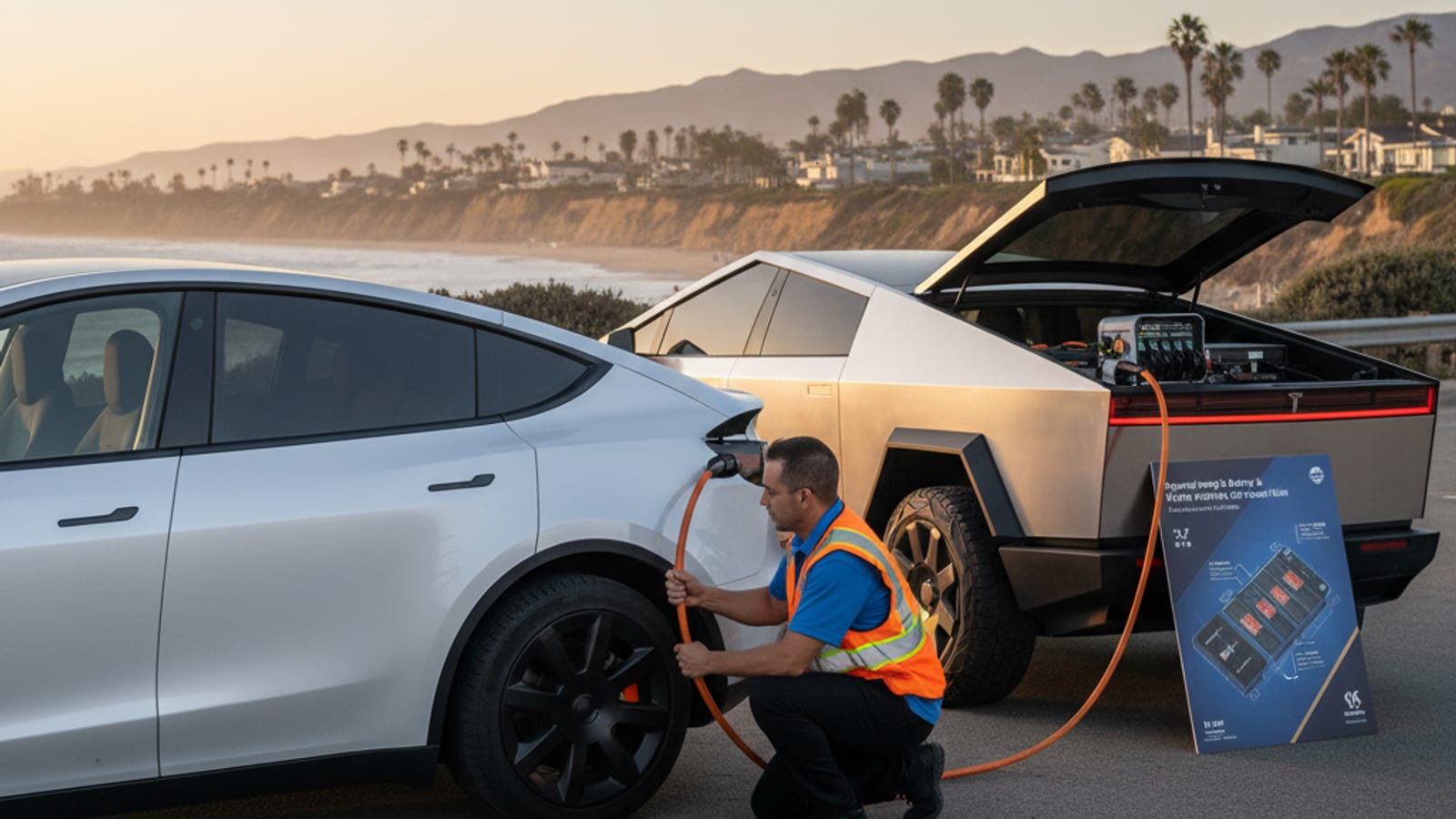
Sticker miles are a lab number, not a foothill number
Hyundai publishes EPA range so shoppers can compare cars. It’s not a forecast for the 210 or the 5. The Ioniq 5 stores the same kilowatt-hours in Pasadena as on a test loop. Hills, heat, and cabin cooling change how fast that energy leaves.
Recurrent Auto studied temperature across more than 30 EV models. Packs kept about 78% of rated range at 32°F. At 20°F the average fell to about 70%. Cabin heat drove most of that loss. This county is not a snow belt. Lancaster and Palmdale still get near-freezing winter nights. Heater load shows up on an Ioniq 5 there the same as anywhere.
Summer is the local story. Recurrent notes that heat and heavy air conditioning cut real range. A heat pump can add roughly 10% range at 32°F versus a resistive heater. It doesn’t cancel a long climb with the AC running. The San Fernando and San Gabriel Valleys run hotter than the coast. Santa Monica sits in the marine layer. Azusa and Glendora sit against the foothills. Same county. Different drain.
If you bought the car on a 303-mile Long Range RWD sticker, treat that as a ceiling. Daily use here lands lower. Route, grade, and cabin cooling decide how much lower.
What Hyundai Ioniq 5 battery size actually measures
The search is noisy because two packs exist. Both are lithium-ion. Both feed an 800-volt architecture that many rivals still skip. That design is why DC peak rates look so high on paper.
Ignore the brochure gross number first. Usable energy is what you drive on. Hyundai holds a buffer at both ends of the pack. That buffer protects the cells. You never spend the full 58.0 or 77.4 kWh. The car meters about 54.0 kWh on Standard Range and about 74.0 kWh on Long Range. Those are the tanks.
Standard Range pack
The smaller pack is 58.0 kWh gross. Usable capacity is about 54.0 kWh. It’s usually paired with one rear motor. EPA range is about 220 miles, with some year-to-year trim shift. Peak output is about 168 horsepower and 258 lb-ft of torque. That’s enough for surface streets and a freeway merge. It’s a thin margin for Grapevine days plus a desert errand.
A 220-mile sticker can cover a short city loop in Long Beach or a Westside errand day. Add a foothill commute, summer AC, and a detour, and the margin shrinks. The Standard Range still DC-charges quickly. Fast charging can’t add energy the pack never stored.
Long Range pack
The 77.4 kWh pack is the one most shoppers pick. Usable energy is about 74.0 kWh. Rear-drive Long Range cars carry a 303-mile EPA figure on 2022-2024 models. All-wheel-drive Long Range cars sit near 260 miles. The extra motor is why. AWD makes about 320 horsepower and 446 lb-ft. RWD Long Range is about 225 horsepower and 258 lb-ft. You feel AWD in a canyon. You also spend more energy holding speed on a grade.
Gross capacity is the same 77.4 kWh on both Long Range drivelines for those years. Drivetrain, not tank size, splits 303 from 260. If your driveway is in Calabasas or Agoura Hills, AWD can be the right wet-road call. Budget the range hit before you trust the larger sticker.
Specs at a glance
| Spec | Standard Range RWD | Long Range RWD | Long Range AWD |
|---|---|---|---|
| Gross pack | 58.0 kWh | 77.4 kWh | 77.4 kWh |
| Usable pack (approx.) | 54.0 kWh | 74.0 kWh | 74.0 kWh |
| EPA range (2022-2024) | 220 miles | 303 miles | 260 miles |
| Peak power | 168 hp | 225 hp | 320 hp |
| Peak torque | 258 lb-ft | 258 lb-ft | 446 lb-ft |
| Level 2 AC max | 10.9 kW | 10.9 kW | 10.9 kW |
| DC peak (rated) | up to 239 kW | up to 239 kW | up to 239 kW |
| 0-60 mph | about 7.4 sec | about 7.3 sec | about 4.7 sec |
EPA numbers and peak charge rates shift a little by year and test conditions. Usable kWh is an approximation. Hyundai doesn’t publish one locked buffer in every brochure. Treat the table as a map, not a lab sheet.
Gross capacity, usable capacity, and the buffer
Gross capacity is the pack’s physical energy. Usable capacity is what the car lets you spend. The gap is on purpose. Deep bottom-end discharge and a constant 100% top both stress lithium-ion cells. Hyundai keeps you off those edges. On the Ioniq 5, usable energy is typically around 95% of gross. That’s why 77.4 kWh on the sheet feels like 74.0 kWh on the road.
Range isn’t only battery size. Speed, grade, payload, tire pressure, and climate load all matter. A Long Range AWD on the 5 north of Castaic isn’t the same car. A Long Range RWD on a cool coastal morning burns slower. Same usable kWh. Different burn rate.
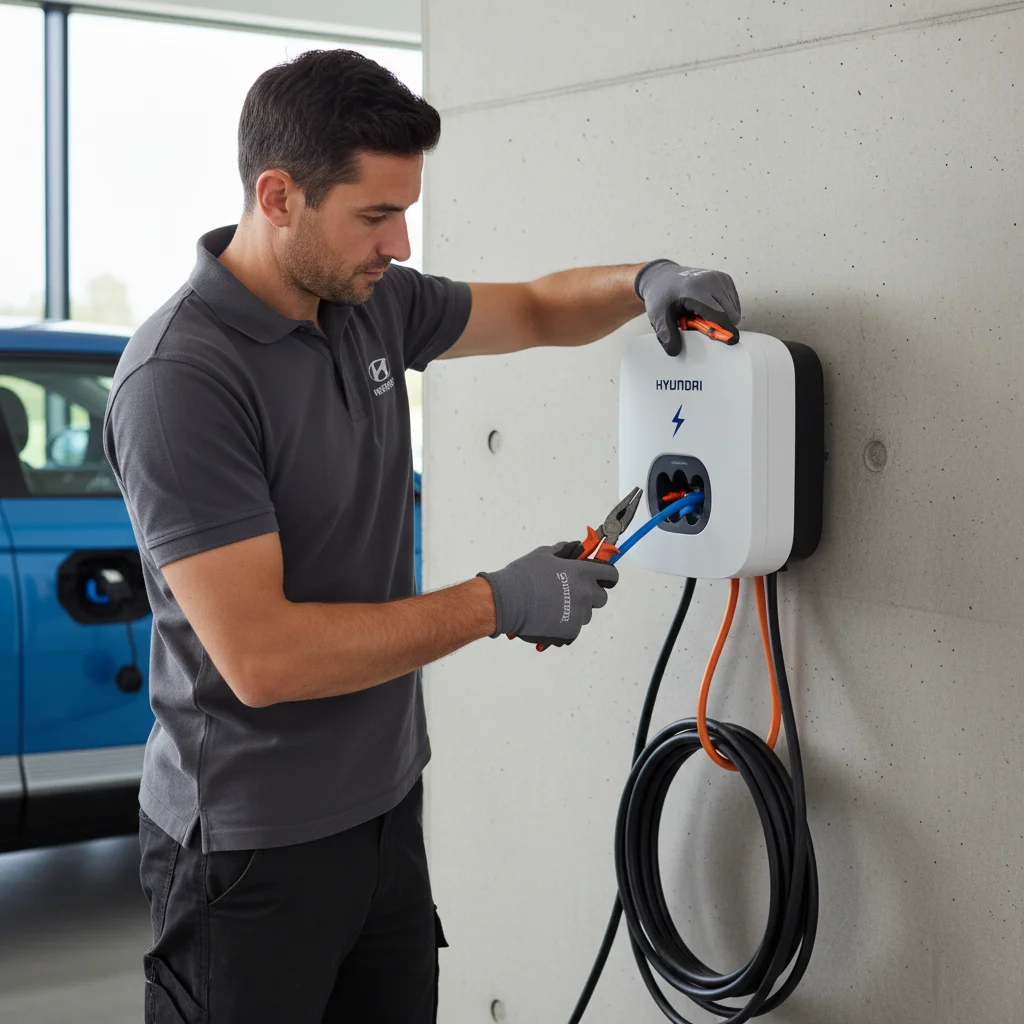
Foothill climbs, passes, and the miles they cost
Los Angeles County isn’t one driving surface. The coast, the basin, East County, the South Bay, and the high desert don’t ask the same things of a pack.
San Gabriel foothills
Azusa’s ACS population is 49,318. About 64.9% of residents are Hispanic or Latino. About 69.3% of housing predates 1980. Glendora sits next door with 51,350 people. Both cities back up to the San Gabriel Mountains. A commute that climbs toward the foothills asks more of the Ioniq 5. A flat basin run asks less. Regenerative braking returns some energy on the way down. It doesn’t refund the whole climb.
If a weekday ends low in Azusa, make a plan. Our note on foothill grades in Azusa walks through that call. Pasadena has 136,462 people on the 210 and the 110. Caltech’s campus isn’t a mountain summit. The canyon roads around it still climb.
The 405 at Sepulveda Pass
Sepulveda Pass is the climb between the Westside and the San Fernando Valley. You feel it when the road tilts. Cabin AC in summer stacks on that grade. A Westside start in Santa Monica can look easy on paper. Santa Monica has 91,535 people. The pass is where the buffer can vanish. If the pack hits zero on that corridor, use out of charge on the 405 at Sepulveda Pass.
I-5 north, Santa Clarita, and the Grapevine
Santa Clarita’s ACS count is 229,021. Only about 30.4% of housing predates 1980. That’s newer than much of the basin. Geography still wins. The long grade north out of Castaic on I-5 is this county’s defining EV-range corridor. People call that climb the Grapevine. It’s a sustained pull, not a short hill. A Long Range pack helps. It doesn’t make the grade free.
Castaic has 18,479 people. Stevenson Ranch has 21,317. Both sit on the approach. If the battery is falling on that stretch, read out of charge on the 5 near Santa Clarita before you burn the last bar.
Antelope Valley heat and cold
Lancaster has 170,013 people. Palmdale has 165,487. Palmdale’s Hispanic or Latino share is 62.8%. This is high desert, not basin weather. Triple-digit summer heat is normal. Winter nights can sit near freezing. Both ends tax an EV. Heat plus AC is the summer pattern. Heater load is the winter one. Recurrent’s 32°F and 20°F figures matter more here than they do in Redondo Beach.
Acton has 7,721 people on the 14 between the Valley and that desert. A low pack on the 14 is a different problem. A low pack in a Westside garage is another. Same hyundai ioniq 5 battery size. Different remaining miles.
East County freeways and peninsula grades
The 10, the 60, and the 57 cut the San Gabriel Valley and the Gateway Cities. Pomona has 148,391 people, 71.4% Hispanic or Latino. West Covina has 107,436. El Monte has 107,066. Slow traffic with the AC on still spends energy. Grade plus heat plus a crawl is the local mix.
On the South Bay side, Torrance has 143,499 people. Long Beach has 458,491. Rancho Palos Verdes sits on peninsula grades. The pack notices a climb even when the air is cooler. Downtown Los Angeles has 3,857,897 people in the city ACS count. A garage stall after a USC or UCLA day can hide a 12V problem you didn’t expect.
Griffith Observatory and Universal Studios Hollywood are long sits in a lot. The traction pack can still have miles left. The 12V can still be dead when you return. Same pattern shows up after a week at LAX. Chargers in a structure don’t fix a failed 12V.
Coast versus inland climate
NWS Los Angeles/Oxnard describes the coastal marine layer as May Gray and June Gloom. Santa Ana winds are part of the same pattern. Those winds can run hot and dry inland. The coast stays milder. An Ioniq 5 that lives in Manhattan Beach or Redondo Beach often sees a gentler climate load. The same car in Pomona works harder.
Cabin cooling still draws from the traction pack. On a slow crawl on the 10, the compressor can run a long time. Malibu has 10,516 people along the Santa Monica Mountains. Topanga has 8,781. Canyon grades there are real. We won’t guess charger spacing on PCH. Check your apps, then leave a buffer.
How you put energy back in the pack
Battery size only helps if you can refill it. The Ioniq 5 takes AC and DC. The speeds aren’t the same.
Level 1 overnight
A 120-volt household outlet adds roughly 2 to 4 miles per hour. That’s a trickle. For a 74.0 kWh usable Long Range pack, it’s not a daily plan. It can keep a light-use car from sliding backward. It won’t refill a foothill commute by morning.
Level 2 at 240 volts
The Ioniq 5 accepts up to 10.9 kW on Level 2. In practice that’s about 35 to 40 miles of range per hour. Efficiency that day changes the number. Empty to full on that rate is often 7 to 8 hours for Long Range. That’s charging time at the plug. It’s not a promise about a truck. For the hour-by-hour split, see how long a Hyundai Ioniq 5 takes to charge.
Home charging is where utility territory matters. This county has no single electric company.
The City of Los Angeles is LADWP territory. LADWP is the largest municipal utility in the United States. It publishes a Residential EV Charger Rebate Program. That program is toward a Level 2 home charger and a dedicated EV meter. It also lists a Used Electric Vehicle Rebate Program and a commercial charger rebate. LADWP offers a dedicated EV time-of-use rate that needs a separate EV meter. Confirm current rules and any amounts on ladwp.com. We don’t publish dollar figures. A referral line doesn’t set your rate.
Most of the rest of the county is Southern California Edison. SCE publishes Charge Ready Home toward Level 2 installation. It also lists a Pre-Owned EV Rebate and EV rate plans. Confirm those on sce.com. Older point-of-sale names from third parties aren’t something we’ll quote as current.
Many SCE cities buy generation through the Clean Power Alliance. CPA was founded in 2017 and serves 38 communities. SCE still delivers the power, maintains the lines, and reads the meter. You’ll see two line items. Member cities here include Agoura Hills, Alhambra, Arcadia, and Beverly Hills. Also Calabasas, Carson, Culver City, Downey, and Hawthorne. Malibu, Manhattan Beach, Redondo Beach, and Santa Monica are on the list too. So are West Hollywood, Whittier, and unincorporated Los Angeles County. CPA doesn’t change who can charge a stranded Ioniq 5 on the curb. It does change whose name is on the generation charge.
Some cities run their own wires. Azusa Light and Water serves Azusa. Pasadena Water and Power serves Pasadena. Glendale Water and Power and Burbank Water and Power cover those cities. We name those utilities here. We haven’t confirmed each EV rebate name on their own sites in this research. We won’t invent program titles. Ask the utility before you budget a panel upgrade.
A lot of Glendora housing, 79.2% pre-1980, and Whittier housing, 88.9% pre-1980, predates modern EV circuits. An older panel doesn’t mean you’re stuck. It does mean a 10.9 kW wall unit may need electrical work. Confirm that with a local electrician, not with a rescue dispatcher.
Operators we send use Level 2 on the roadside too. Typical on-site charging time adds about 10 to 20 miles in 15 to 30 minutes. That’s enough to roll, not a full pack.
DC fast charging
The 800-volt system can take a peak of up to 239 kW on a compatible DC stall. Under good conditions, 10% to 80% can land in about 18 minutes. Heat, a busy stall, or a lower-power cabinet will slow that. The port is CCS. With an adapter, many NACS stalls can work, including a share of Tesla Superchargers. Carry the adapter if you rely on those cabinets.
Los Angeles International is run by Los Angeles World Airports. It publishes EV charging in Central Terminal Area structures P1 through P7. Those stalls include Level 2 and DC fast charging, by reservation or first-come. The LAX Economy Parking garage lists more than 4,000 stalls and 514 active EV chargers. A week in airport parking can still leave a dead 12-volt battery. Chargers in the structure don’t wake a failed 12V. The traction pack and the 12V aren’t the same problem.
We won’t guess how far the next public cabinet is from your pin. Check apps before a long grade. If a stall is down or full, a mobile Level 2 boost is a different tool.
Metro ExpressLanes run on I-10 and I-110. A FasTrak transponder tied to a funded account is required to enter. A vehicle without one is billed by plate under Pay-As-You-Go. Motorcycles are exempt. Confirm current rules on metroexpresslanes.net. We haven’t verified a published disabled-vehicle procedure inside those lanes. We won’t invent one.
When the car is a brick and the pack isn’t empty
An empty traction pack and a dead 12-volt battery look similar from the sidewalk. The car won’t wake. The fixes aren’t the same. The Ioniq 5 still uses a 12V to close contactors and run computers. If that small battery has failed, DC fast charging won’t start. Jump or replace the 12V on site first. Our Ioniq 5 12V checks cover that sequence.
If the high-voltage pack is simply at zero, you need energy into the CCS port. A jump pack on the 12V won’t refill 74.0 kWh.
If you hit zero on a county road
California Vehicle Code 21718 generally bars stopping on a freeway. A disabled vehicle is an exception when you’ve summoned help. It’s also an exception when you must avoid injury or damage, or when an officer directs you. Call for help. Put on hazards. Stay out of live lanes.
CVC 21809 is the move-over law. If you approach a stopped emergency vehicle, tow truck, or Caltrans vehicle with flashing lights, you move over. Change to a non-adjacent lane if it’s safe. Otherwise slow to a reasonable speed. That rule protects you on the shoulder.
Metro Freeway Service Patrol is free. It’s a joint program of Caltrans, CHP, and LA Metro. Dial 511 and say Motorist Aid. FSP’s published list includes a gallon of gas, a radiator refill, a taped hose, and a tire change. It also tows a disabled vehicle at no charge to a safe spot CHP chooses. It doesn’t list mobile EV charging or an out-of-charge pack fill. An empty Ioniq 5 sits outside that published gas-and-tire menu, other than the tow to a safe location.
CHP can also send a rotation tow. We haven’t verified local rotation details here. Private-property tows fall under CVC 22658, including signage and owner-return rules. We don’t publish tow rates. California doesn’t set one statewide cap we could confirm.
Charge Pro LA is a referral line. We don’t own trucks. We don’t employ technicians. We don’t hold a contractor licence. We match you with independent local mobile rescue operators. The operator quotes you before work starts and bills you directly. The pros we connect you with are licensed and insured.
What those operators bring is a 240-volt Level 2 source to the car. For an Ioniq 5 they use a CCS adapter, or J1772 if that’s what the port needs. Typical charging time adds about 10 to 20 miles of range in 15 to 30 minutes. That’s time on the plug. It isn’t an arrival clock. The point is enough energy to roll to a stall or a driveway. It isn’t a full 74.0 kWh fill on the shoulder.
Mobile EV charging and non-Tesla EV rescue are the service pages that match this car.
Habits that stretch the pack you already have
Keep daily charging in a mid band when you can, often around 20% to 80%. Save a 100% top for a known long day. Don’t make a habit of sitting at 0%. Precondition while plugged in on hot Valley afternoons. Then the pack isn’t fighting heat the moment you leave. Check tire pressure. Soft tires waste energy you already stored.
Use regenerative braking, including i-Pedal if you like one-pedal driving, on descents off the foothills. Smooth throttle on the 5 and the 405 spends less than repeated full-depth acceleration. High speed on a grade is a range killer. None of this changes the hyundai ioniq 5 battery size. It changes how far that size goes.
Hyundai publishes battery coverage on its own site. Confirm the current warranty language there. We won’t restate term lengths we couldn’t verify for this page.
Frequently asked questions
What is the Hyundai Ioniq 5 battery size?
Standard Range is 58.0 kWh gross, about 54.0 kWh usable. Long Range is 77.4 kWh gross, about 74.0 kWh usable. EPA stickers then split by drivetrain: about 220 miles, 303 miles, or 260 miles on 2022-2024 cars.
Why do foothill commutes show less range than the sticker?
The pack size doesn’t shrink in Azusa or on Sepulveda Pass. Climbs and summer AC raise the burn rate. Recurrent’s research shows heat and cabin climate cut real-world range. Valleys run hotter than the coast. Plan with the dash, not the window label.
What should you do if the Ioniq 5 is empty?
Stay out of traffic. Call for help so you fit CVC 21718’s disabled-vehicle exception. FSP can tow to a safe spot. It doesn’t publish a pack charge. A local operator can add a Level 2 boost on site. If the car won’t wake at all, check the 12V first.
If you need that match in Los Angeles County, call Charge Pro LA at (858) 925-5546. An operator quotes before anything starts. We serve every city in the county. We don’t perform the work ourselves.