Hyundai Ioniq 5 charging time on a roadside Level 2 boost is 15 to 30 minutes of charging. That figure is charging time, never an arrival time. Home overnight charging and a DC fast stall use different clocks. On a Los Angeles County shoulder, the roadside clock is the one that matters.
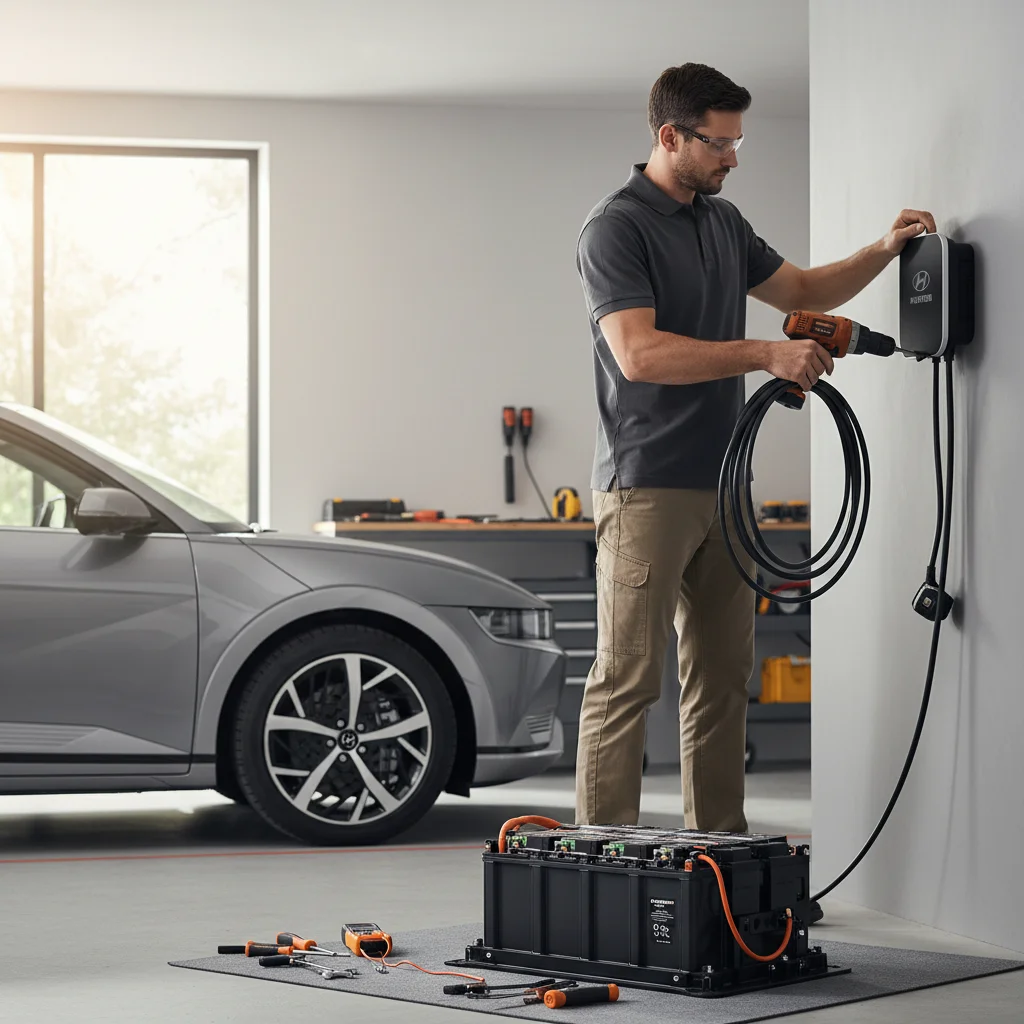
Charging time depends on which plug you use
There’s no single clock on this car. A wall outlet, a 240-volt home unit, a DC fast stall, and a mobile Level 2 truck all fill the pack at different rates.
AC charging is limited by the onboard charger, at home or on the curb. The 800-volt architecture only shows its speed at a DC fast charger that can feed it. A mobile rescue doesn’t try to fill the pack to 80 percent. The operator adds enough range to get you off the shoulder.
The stranded clock: 15 to 30 minutes of charging
Charge Pro LA is a referral line. We match stranded EV drivers with independent local operators. We don’t own trucks, and we don’t charge the car ourselves. The operator quotes you before work starts, then bills you directly.
Those operators bring a 240-volt Level 2 source to the car. On an Ioniq 5, that usually means CCS, or a J1772 adapter if the port needs it. A typical session adds about 10 to 20 miles of range in 15 to 30 minutes of charging. That window is how long the cable stays on the car. It isn’t a promise about when someone shows up.
You’re not trying to hit 80 percent on the shoulder. You’re trying to roll to a safer stop. EV charging levels for stranded drivers explains what a Level 2 boost actually adds.
Why this county makes that clock matter
Los Angeles County isn’t one driving pattern. A Westside trip through Santa Monica drains the pack one way. A South Bay loop through Torrance or Long Beach drains it another. The I-5 north through Santa Clarita toward the Grapevine is a sustained climb. Sepulveda Pass on the 405 sits between the Westside and the San Fernando Valley.
Heat and cold both cut real range below the window sticker. Recurrent Auto’s published testing across many models puts average retained range near 78 percent at 32F. Summer heat plus air conditioning does similar damage on the other end. Lancaster and Palmdale see triple-digit summer days and near-freezing winter nights.
If the car dies on the freeway, California Vehicle Code 21718 generally bans stopping there. A disabled vehicle that’s already called for help fits the exception. CVC 21809 is the move-over law. Other drivers must change lanes or slow for a stopped service vehicle with lights on. Stay out of the travel lanes if you can.
Metro’s Freeway Service Patrol is free on congested LA County freeways. It’s a joint program of Caltrans, CHP, and LA Metro. FSP can bring a gallon of gas, change a flat, refill a radiator, or tow you to a CHP-chosen safe spot. Dial 511 and say Motorist Aid. The published list doesn’t include mobile EV charging. An empty Ioniq 5 pack is outside that gasoline toolkit, other than the free tow.
Home Level 2: the overnight clock
Most Ioniq 5 owners who charge at home use a 240-volt Level 2 unit. Hyundai’s published figures put a full charge around 5 to 6 hours on the Standard Range pack. The Long Range pack is around 6 to 7 hours. Plug in after dinner, and a normal commute is usually ready by morning.
A regular 120-volt household outlet still works. That’s Level 1, and it’s slow. A fill from empty can run past a full day.
This county doesn’t run on one electric utility. LADWP serves the City of Los Angeles and publishes EV charger rebates plus a dedicated EV time-of-use rate. Southern California Edison delivers power across most of the rest of the county. Clean Power Alliance buys generation for many cities, including Santa Monica, Culver City, Redondo Beach, and unincorporated county areas. SCE still runs the wires in those CPA cities. Glendale, Burbank, Pasadena, and Azusa each run a municipal utility. Ask the utility on your bill which EV rate it currently offers. We don’t publish dollar figures here.
Older housing is a panel question for a home install. East Los Angeles has 86.2 percent of housing built before 1980. Long Beach sits at 79.6 percent. That share doesn’t tell you whether your panel can take a 240-volt circuit. A licensed electrician has to look. If the wall unit isn’t in yet and the car is already empty, a mobile Level 2 boost is the backup. Compare the two in home 240-volt charging vs a mobile Level 2 boost.
DC fast charging: where 800 volts actually helps
Most mainstream EVs still use a 400-volt pack. The Ioniq 5 is built on an 800-volt system. Higher voltage lets the car take more DC power without the pack and cables heating as fast. That advantage doesn’t follow you home. A Level 2 wall unit delivers AC at a rate the onboard charger can accept.
Hyundai’s published specs put a 10 to 80 percent DC charge at around 18 minutes under ideal conditions. Ideal means a mild pack temperature and a stall that’s actually delivering its rated power. The car takes power fastest in the middle of the window, then tapers as it nears full. That’s why a road-trip stop usually targets about 80 percent.
Standard Range and Long Range don’t hold the same energy. See Hyundai Ioniq 5 battery size and the range you actually see for those pack figures.
What stretches a session past the spec sheet
A cold pack accepts DC power more slowly. A coastal night under May Gray or June Gloom is milder than a winter night in Palmdale. Cabin AC on a Grapevine climb will spend miles you thought you had.
A stall putting out less than its rated power caps you below what the car could take. Starting a DC session already high in the pack adds fewer miles. None of that rewrites the roadside Level 2 math. A mobile 240-volt boost is still 15 to 30 minutes of charging, aimed at about 10 to 20 miles.
US Ioniq 5 cars shipped with CCS. Adapters exist for NACS stalls, but speed through an adapter isn’t a given. Check your model year before you count on a specific plug. Operators we connect you with bring CCS or J1772 for non-Tesla EVs.
When the percent isn’t moving at all
A slow session and a dead session aren’t the same problem. If the cable won’t release, start with how to free a stuck Ioniq 5 charging cable.
If the car won’t wake, check the 12-volt battery before you assume the traction pack is empty. A week in an airport garage can kill the 12V even when the lot has chargers. LAX terminal structures P1 through P7 offer Level 2 and DC fast charging. The Economy Parking garage has 514 active EV chargers. That still doesn’t protect a dead 12V. Use the Hyundai Ioniq 5 12V checks before you call for a tow.
How a mobile boost is quoted here
If you’re out of range in Los Angeles County, start with mobile EV charging. Non-Tesla EV rescue is the same referral path for an Ioniq 5. We refer drivers across Los Angeles County. The operator looks at the car, quotes the job, and bills you. We don’t set prices, and we don’t publish an arrival window.
Call (858) 925-5546 when you want us to connect you with a local independent operator.
Frequently asked questions
How long is a roadside Level 2 charge on an Ioniq 5?
Operators typically add about 10 to 20 miles in 15 to 30 minutes of charging. That’s time on the cable, never an arrival time.
How long does an Ioniq 5 take on home Level 2?
Hyundai’s published figures put a full charge around 5 to 6 hours for Standard Range. Long Range is around 6 to 7 hours. Starting percent and wall-unit output both change that window.
Why is DC charging so much faster than home charging on this car?
The Ioniq 5 uses an 800-volt pack that can take high DC power at a capable stall. Home Level 2 is AC, limited by the onboard charger. The 800-volt design doesn’t shorten the overnight clock.